KI-Beratung Beta

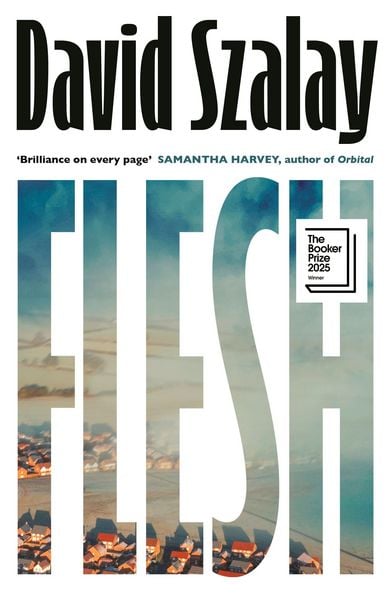
Produktbild: Flesh

Flesh

3

18,09 €

inkl. gesetzl. MwSt., zzgl. Versandkosten


  • Kostenlose Lieferung ab 30 € Einkaufswert
  • Versandkostenfrei für Bonuscard-Kund*innen

Beschreibung

Produktdetails

Einband

Gebundene Ausgabe

Erscheinungsdatum

06.03.2025

Verlag

Vermilion

Seitenzahl

368

Maße (L/B/H)

23,9/16,1/3,5 cm

Gewicht

585 g

Farbe

Graugrün / Weiß

Sprache

Englisch

ISBN

978-0-224-09978-3

Beschreibung

Produktdetails

Einband

Gebundene Ausgabe

Erscheinungsdatum

06.03.2025

Verlag

Vermilion

Seitenzahl

368

Maße (L/B/H)

23,9/16,1/3,5 cm

Gewicht

585 g

Farbe

Graugrün / Weiß

Sprache

Englisch

ISBN

978-0-224-09978-3

Herstelleradresse

Libri GmbH
Europaallee 1
36244 Bad Hersfeld
DE

Email: gpsr@libri.de

Kundinnen und Kunden meinen

Informationen zu Bewertungen

Zur Abgabe einer Bewertung ist eine Anmeldung im Konto notwendig. Die Authentizität der Bewertungen wird von uns nicht überprüft. Wir behalten uns vor, Bewertungstexte, die unseren Richtlinien widersprechen, entsprechend zu kürzen oder zu löschen.

Die Bewertungen sind nach Format, Anzahl Sterne und Datum sortiert.

  • pearl-on-the-rox

    Orell Füssli Book Circle Community

    4/5

    01.03.2026

    eBook (ePUB 3)

    The Booker Winner That Keeps You Distant

    After hearing so much about Flesh by David Szalay and its Booker Prize win, I was curious to see what the hype was about. Szalay’s writing is very controlled and simple. He doesn’t use fancy words or big dramatic scenes. Instead, he tells the story through small actions, body language and quiet moments. He doesn’t explain everything, so the reader has to pay attention and figure out some things on their own. Many critics like this style because it feels realistic and thoughtful. The book explores ideas about modern men, power, social class and relationships, but in a subtle way rather than with big speeches or clear explanations. The book also feels very careful and planned. Every scene seems to have a reason for being there and nothing feels random. You can tell Szalay knows exactly what kind of story he wants to tell. This gives the book a strong focus and a disciplined style. But this careful distance also made it harder for me to feel connected to the story. I could understand the main character, István, and what he was going through, but I didn’t feel strong emotions for him. Sometimes his feelings were hard to understand because the book doesn’t explain them much. This made parts of the story feel a bit cold or distant. Overall, I understand why Flesh is so highly praised. It’s thoughtful, well-made and impressive - even if it’s not a book I fully connected.

  • Bewertung

    4/5

    12.02.2026

    Buch (Taschenbuch)

    Interesting style

    I liked the book, it's honest and unpretentious. I appreciated the author's trusts, at least I felt like I was trusted to get it, without unnecessary clutter I could make my mind, freely, about this character, his life, his feelings. It left me thinking about my very own life and choices and I adore a book that stays with me even after I have turned the last page.

  • Benedikt

    4/5

    25.12.2025

    Buch (Taschenbuch)

    Ja a Study in Restraint and Unease

    David Szalay’s Flesh is a novel defined by reduction: in language, in gesture, and in emotional exposition. The prose is deliberately pared down, almost austere, and it is precisely this restraint that gives the book its distinctive power. Szalay writes in clean, economical sentences, stripping scenes of excess description and leaving much unsaid. As a result, the novel reads quickly, yet never lightly; its apparent simplicity conceals a dense psychological and moral complexity. This reduced style shapes the reading experience in a decisive way. Because Szalay refuses to guide the reader with explicit judgments or emotional signposts, every interaction feels charged with tension. Meaning emerges not from explanation but from implication, from what characters do—or fail to do—rather than what they articulate. The language creates space, and in that space the reader is compelled to reflect, to interpret, and sometimes to feel deeply unsettled. At the center of *Flesh* lies an intentionally **ambivalent protagonist**, one who resists easy categorization. Szalay constructs this character in such a way that identification is constantly interrupted by doubt. At moments, the protagonist appears vulnerable, even sympathetic; at others, distant, opaque, or morally troubling. This oscillation makes it impossible to settle definitively on one side. The reader is drawn into a state of ethical uncertainty, mirroring the character’s own lack of clarity and emotional detachment. In this sense, *Flesh* is less about plot than about perception and judgment. Szalay confronts the reader with the discomfort of withholding verdicts, asking us to sit with contradiction rather than resolve it. The novel’s restrained language and moral ambiguity combine to create a quietly disturbing, intellectually demanding work—one that lingers precisely because it refuses to offer easy answers.

Kundinnen und Kunden meinen

5

0

4

3

3

0

2

0

1

0

Bewertungen (3)

Weitere Artikel finden Sie in

Die Leseprobe wird geladen.
  • Produktbild: Flesh