KI-Beratung Beta

Gutscheinbedingungen

**Gültig am 27.11.2026 auf Spielzeug, Schreibwaren, Filme, Geschenke & Trends, Musik, tolino eReader & Zubehör, Hörbücher und Hörbuch-Downloads, nicht preisgebundene Bücher und Kalender online auf thalia.at und in der Thalia App. Einzelne Artikel können ausgeschlossen sein. Aufgrund der Buchpreisbindung sind deutschsprachige Bücher und eBooks ausgenommen. Zusätzlich ausgenommen sind Abos & Flatrates, Games, Geschenkkarten/-boxen, Shelfies, Software, Zeitschriften sowie einzelne Artikel von tonies®. Pro Einkauf einmal einlösbar. Click & Collect nur bei Onlinevorabzahlung möglich. Keine Barauszahlung. Nicht kombinierbar mit anderen Aktionen und Gutscheinen. Gutschein wird auf max. 500€ Bestellwert angerechnet. Nicht gültig für Versandkosten und Services.

Produktbild: The Routledge International Handbook of Deindustrialization Studies

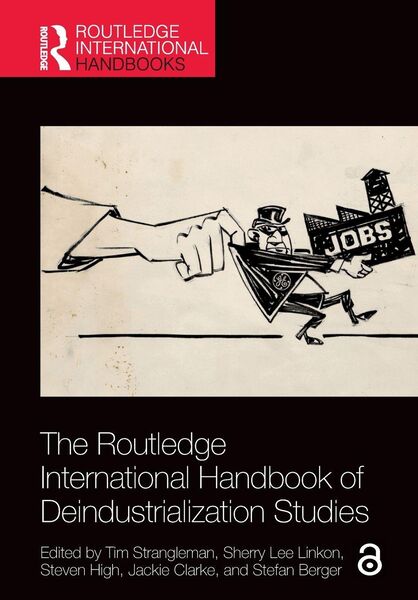
The Routledge International Handbook of Deindustrialization Studies

85,99 €

inkl. gesetzl. MwSt., Versandkostenfrei


Beschreibung

The Routledge International Handbook of Deindustrialization Studies is a timely volume that provides an overview of this interdisciplinary field that emerged in response to the widespread decline of manufacturing and heavy industry from the 1980s onward. Edited by prominent figures in the field, the...

Beschreibung

The Routledge International Handbook of Deindustrialization Studies is a timely volume that provides an overview of this interdisciplinary field that emerged in response to the widespread decline of manufacturing and heavy industry from the 1980s onward. Edited by prominent figures in the field, the volume brings together many of the leading scholars from a range of countries across the globe to offer a multifaceted overview of deindustrialization and its impact.

Deindustrialization has been cited as one of the factors behind the rise of the far right, and to a lesser extent the far left, across Europe, the rise and success of Trumpism in the US, and the Brexit vote as well as the more recent and sudden erosion of UK Labour's 'Red Wall' of the North of England. This collection brings together scholars of deindustrialization around the globe and from a wide variety of academic disciplines including history, sociology, politics, geography, economics, anthropology, literature, arts practice, photography, heritage, and cultural studies. In doing so, the volumeexplores the roots of deindustrialization across the world, highlights the key themes and issues in the field, illustrates the intersectional and interdisciplinary character of the field, and shows how deindustrialization lies at the heart of many of the key political, cultural, social, and economic issues of our time.

Written in a clear and accessible style, the Handbook is a comprehensive interdisciplinary volume for this young but maturing field. The volume is a valuable resource for students, teachers, and researchers interested in industrial decline, closure, and the multifaceted impacts they cause. It speaks to readers across the arts, humanities, and social and political sciences concerned with deindustrialization broadly defined.

Portrait

Tim Strangleman is Emeritus Professor of Sociology at the University of Kent, UK, where he is also Director of the Work, Employment and Economic Life research cluster. He has researched and published widely on issues of work, class, community, and deindustrialization. He has carried out work in the coal mining, rail, health, ship building, engineering, papermaking, and brewing industries, drawing on oral history, archives, and visual material. He is the author of Work Identity at the End of the Line? Privatisation and Culture Change in the UK Railway Industry (2004) and Voices of Guinness: An Oral History of the Park Royal Brewery (2019). He is also the co-author of Work and Society: Sociological Approaches, Themes and Methods (2008) and the co-editor of The Routledge Handbook of Working-Class Studies (2021). He is also a co-investigator on the Deindustrialization and the Politics of Our Time (DéPOT) project.

Sherry Lee Linkon is a Professor of English and American Studies at Georgetown University, USA, where, with campus and community colleagues, she developed the Steel Valley Voices digital archive of interviews and artifacts reflecting the experiences of 24 racial and ethnic groups in the Youngstown area. Her most recent book, The Half-Life of Deindustrialization (2018), examines early twenty-first century working-class narratives reflecting the continuing effects of economic restructuring in the US. With John Russo, she also co-authored Steeltown USA: Work and Memory in Youngstown (2002) and co-edited New Working Class Studies (2005). Her current research examines literature and photography reflecting Black women's perspectives on the legacies of deindustrialization. She is also a co-investigator on the Deindustrialization and the Politics of Our Time (DéPOT) project.

Steven High is Professor of History at Concordia University, Canada and Principal Investigator of the Deindustrialization and the Politics of Our Time (DéPOT) project. He has published extensively on the history and politics of deindustrialization in the US and Canada. His book, Industrial Sunset: The Making of North America's Rust Belt (2003), won prizes from the American Historical Association and other organizations. He is also the author of Corporate Wasteland: The Landscape and Memory of Deindustrialization (with photographer David Lewis, 2007) and One Job Town: Work, Memory and Betrayal in Northern Ontario (2018), and the co-editor of The Deindustrialized World: Confronting Ruination in Postindustrial Places (2017).

Jackie Clarke is Senior Lecturer in French Studies at the University of Glasgow, UK, where she is also a member of the Centre for Gender History. She is also a co-investigator on the Deindustrialization and the Politics of Our Time (DéPOT) project. Her research explores questions about work, consumption, deindustrialization, and gender in contemporary France. She is the co-editor of a special issue on gender and deindustrialization in International Labor and Working Class Studies (2024).

Stefan Berger is Professor of Social History and Director of the Institute for Social Movements at Ruhr-Universität Bochum, Germany. He is also Executive Chair of the Foundation History of the Ruhr and an Honorary Professor at Cardiff University, UK. He is the author of History and Identity: How Historical Theory Shapes Historical Practice (2022) and editor of Constructing Industrial Pasts: Heritage, Historical Culture and Identity in Regions Undergoing Structural Economic Transformation (2020). He is a co-investigator on the Deindustrialization and the Politics of Our Time (DéPOT) project, an international partnership project funded by the Canadian Social Sciences and Humanities Research Council (SSHRC).

Produktdetails

Einband

Taschenbuch

Erscheinungsdatum

20.07.2026

Abbildungen

schwarz-weiss Illustrationen, Raster,schwarz-weiss, Zeichnungen, schwarz-weiss, Tabellen, schwarz-weiss

Herausgeber Tim Strangleman + weitere

Produktdetails

Einband

Taschenbuch

Erscheinungsdatum

20.07.2026

Abbildungen

schwarz-weiss Illustrationen, Raster,schwarz-weiss, Zeichnungen, schwarz-weiss, Tabellen, schwarz-weiss

Herausgeber
Verlag Taylor and Francis
Seitenzahl

506

Maße (L/B/H)

24,1/16,9/3 cm

Gewicht

820 g

Sprache

Englisch

ISBN

978-1-03-231153-1

Herstelleradresse

Libri GmbH
Europaallee 1
36244 Bad Hersfeld
DE

Email: gpsr@libri.de

Noch keine Bewertungen vorhanden

Verfassen Sie die erste Bewertung zu diesem Artikel

Helfen Sie anderen Kundinnen und Kunden durch Ihre Meinung.

Kundinnen und Kunden meinen

Bewertungen (0)

Die Leseprobe wird geladen.
  • Produktbild: The Routledge International Handbook of Deindustrialization Studies
  • Introduction

    Part I: Concepts and Theories

    Introduction: Concepts and Theories

    1. Theorizing Deindustrialization

    2. Reflections on the Half-Life

    3. Deindustrialization as Global History

    4. Moral Economy and Industrial Culture

    5. Racializing Deindustrialization Studies

    Part II: Political Economy of Deindustrialization

    Introduction: Political Economy of Deindustrialization

    6. Uneven Development, the World System, and Lumpenization: Bringing Marxian Political Economy Back into Deindustrialization Studies

    7. The Racial Dimensions of (De)industrialization

    8. The Region as an Analytical Framework for Deindustrialization Studies: Regional Economic Development in Atlantic Canada

    9. Deindustrialization and Nationhood

    10. Challenging and Politicizing Deindustrialization?

    11. Anticipating Just Transitions: Ecological Crisis and Future Deindustrialization

    Part III: Communities, Identities, Affects

    Introduction: Communities, Identities, Affects

    12. Community, Affect and Deindustrialization

    13. Deindustrialization and Racialized Communities: A Historical Perspective

    14. Class, Gender, and Industrial Structures of Feeling after Socialism: Post-industrial Lives in the Post-Yugoslav Space

    15. Metallic Vitalities: Smog, Steel and Stigma in a De-industrial Town

    16. Deindustrialization, Leisure & Feeling Communities

    17. "Dad, why did you bring me to a gay steel mill?" Notes Towards a Queer Study of Deindustrialization

    Part IV: The Critical Cultural Work of Representations

    Introduction: The Critical Cultural Work of Representations

    18. Black Spatial Agency and Cultural Justice: Race, Ruins, and Gentrification in Detroit

    19. Uncovering the Discovery of the Ruhr: Representations of Deindustrialization in Germany's Former Industrial Heartland

    20. Making the Human Wreckage Visible: Deindustrialization in Kate Beaton's Ducks

    21. The Sound of Deindustrialization

    22. Garment Workers Through the Lens of Loss: The Long Shadow of Deindustrialization in South Asian Films

    Part V

    Introduction: Memories, Memorialization, and the Heritage of Deindustrialization

    23. Industrial Memory Landscapes in Urban Planning Processes - Comparative Perspectives from Germany, Luxembourg, and France

    24. Memorialization of Industrial Pasts in Post-Socialist Countries

    25. The Memorialization of Class in Industrial Heritage Initiatives

    26. Uncovering Gender Tracks: Erasure and Railway Industrial Heritage Initiatives Across the World

    27. Industrial Heritage from the South: Decolonial Approaches to the Social Construction of Heritage and Preservation Practices

    Conclusion