
KI-Beratung Beta

  • Produktbild: The Routledge International Handbook of Deindustrialization Studies
  • Produktbild: The Routledge International Handbook of Deindustrialization Studies

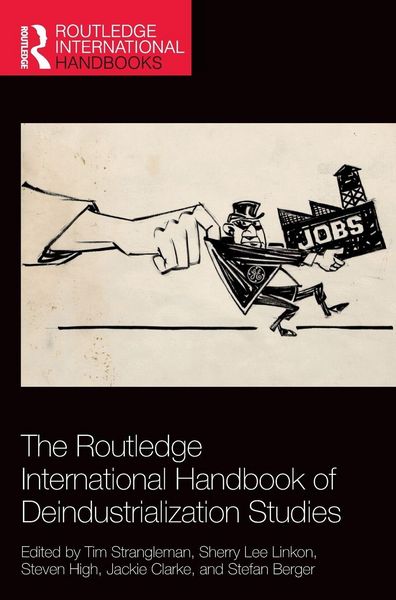
The Routledge International Handbook of Deindustrialization Studies

346,99 €

inkl. gesetzl. MwSt., Versandkostenfrei


Beschreibung

The Routledge International Handbook of Deindustrialization Studies is a timely volume that provides an overview of this interdisciplinary field that emerged in response to the widespread decline of manufacturing and heavy industry from the 1980s onward. Edited by prominent figures in the field, the...

Beschreibung

The Routledge International Handbook of Deindustrialization Studies is a timely volume that provides an overview of this interdisciplinary field that emerged in response to the widespread decline of manufacturing and heavy industry from the 1980s onward. Edited by prominent figures in the field, the volume brings together many of the leading scholars from a range of countries across the globe to offer a multifaceted overview of deindustrialization and its impact.

Deindustrialization has been cited as one of the factors behind the rise of the far right, and to a lesser extent the far left, across Europe, the rise and success of Trumpism in the US, and the Brexit vote as well as the more recent and sudden erosion of UK Labour's 'Red Wall' of the North of England. This collection brings together scholars of deindustrialization around the globe and from a wide variety of academic disciplines including history, sociology, politics, geography, economics, anthropology, literature, arts practice, photography, heritage, and cultural studies. In doing so, the volumeexplores the roots of deindustrialization across the world, highlights the key themes and issues in the field, illustrates the intersectional and interdisciplinary character of the field, and shows how deindustrialization lies at the heart of many of the key political, cultural, social, and economic issues of our time.

Written in a clear and accessible style, the Handbook is a comprehensive interdisciplinary volume for this young but maturing field. The volume is a valuable resource for students, teachers, and researchers interested in industrial decline, closure, and the multifaceted impacts they cause. It speaks to readers across the arts, humanities, and social and political sciences concerned with deindustrialization broadly defined.

Produktdetails

Einband

Gebundene Ausgabe

Erscheinungsdatum

23.04.2025

Abbildungen

48 SW-Abb., 45 SW-Fotos, 3 SW-Zeichn., 7 Tabellen

Herausgeber Tim Strangleman + weitere

Produktdetails

Einband

Gebundene Ausgabe

Erscheinungsdatum

23.04.2025

Abbildungen

48 SW-Abb., 45 SW-Fotos, 3 SW-Zeichn., 7 Tabellen

Herausgeber
Verlag Taylor & Francis
Seitenzahl

524

Maße (L/B/H)

25/17,5/3,3 cm

Gewicht

1017 g

Sprache

Englisch

ISBN

978-1-03-231152-4

Herstelleradresse

Libri GmbH
Europaallee 1
36244 Bad Hersfeld
DE

Email: gpsr@libri.de

Noch keine Bewertungen vorhanden

Verfassen Sie die erste Bewertung zu diesem Artikel

Helfen Sie anderen Kundinnen und Kunden durch Ihre Meinung.

Kundinnen und Kunden meinen

Bewertungen (0)

Die Leseprobe wird geladen.
  • Produktbild: The Routledge International Handbook of Deindustrialization Studies
  • Produktbild: The Routledge International Handbook of Deindustrialization Studies
  • Introduction

    Part I: Concepts and Theories

    Introduction: Concepts and Theories

    1. Theorizing Deindustrialization

    2. Reflections on the Half-Life

    3. Deindustrialization as Global History

    4. Moral Economy and Industrial Culture

    5. Racializing Deindustrialization Studies

    Part II: Political Economy of Deindustrialization

    Introduction: Political Economy of Deindustrialization

    6. Uneven Development, the World System, and Lumpenization: Bringing Marxian Political Economy Back into Deindustrialization Studies

    7. The Racial Dimensions of (De)industrialization

    8. The Region as an Analytical Framework for Deindustrialization Studies: Regional Economic Development in Atlantic Canada

    9. Deindustrialization and Nationhood

    10. Challenging and Politicizing Deindustrialization?

    11. Anticipating Just Transitions: Ecological Crisis and Future Deindustrialization

    Part III: Communities, Identities, Affects

    Introduction: Communities, Identities, Affects

    12. Community, Affect and Deindustrialization

    13. Deindustrialization and Racialized Communities: A Historical Perspective

    14. Class, Gender, and Industrial Structures of Feeling after Socialism: Post-industrial Lives in the Post-Yugoslav Space

    15. Metallic Vitalities: Smog, Steel and Stigma in a De-industrial Town

    16. Deindustrialization, Leisure & Feeling Communities

    17. "Dad, why did you bring me to a gay steel mill?" Notes Towards a Queer Study of Deindustrialization

    Part IV: The Critical Cultural Work of Representations

    Introduction: The Critical Cultural Work of Representations

    18. Black Spatial Agency and Cultural Justice: Race, Ruins, and Gentrification in Detroit

    19. Uncovering the Discovery of the Ruhr: Representations of Deindustrialization in Germany's Former Industrial Heartland

    20. Making the Human Wreckage Visible: Deindustrialization in Kate Beaton's Ducks

    21. The Sound of Deindustrialization

    22. Garment Workers Through the Lens of Loss: The Long Shadow of Deindustrialization in South Asian Films

    Part V: Memories, Memorialization, and the Heritage of Deindustrialization

    Introduction: Memories, Memorialization, and the Heritage of Deindustrialization

    23. Industrial Memory Landscapes in Urban Planning Processes - Comparative Perspectives from Germany, Luxembourg, and France

    24. Memorialization of Industrial Pasts in Post-Socialist Countries

    25. The Memorialization of Class in Industrial Heritage Initiatives

    26. Uncovering Gender Tracks: Erasure and Railway Industrial Heritage Initiatives Across the World

    27. Industrial Heritage from the South: Decolonial Approaches to the Social Construction of Heritage and Preservation Practices

    Conclusion