KI-Beratung Beta

Gutscheinbedingungen

**Gültig bis 18.11.2026 auf englischsprachige Klassiker (klassiker-32728) online auf thalia.at und in der Thalia App. Einzelne Artikel können ausgeschlossen sein. Ausgenommen sind preisgebundene Artikel & eBooks. Pro Einkauf einmal einlösbar. Click & Collect nur bei Onlinevorabzahlung möglich. Keine Barauszahlung. Nicht kombinierbar mit anderen Aktionen und Gutscheinen. Gutschein wird auf max. 500€ Bestellwert angerechnet. Nicht gültig für Geschenkkarten, Versandkosten und Services.

Produktbild: Microalgal Biofuels

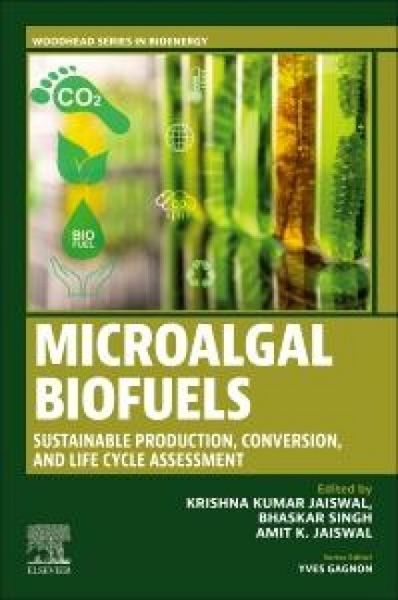
Microalgal Biofuels Sustainable Production, Conversion, and Life Cycle Assessment

232,99 €

inkl. gesetzl. MwSt., Versandkostenfrei


Beschreibung

Microalgal Biofuels: Sustainable Production and Conversion is a comprehensive guide to the latest advancements in microalgal biofuels. The book provides systematic coverage of the processes of biofuel production, from microalgae biomass resources to biomass conversion processes and catalytic materials....

Beschreibung

Microalgal Biofuels: Sustainable Production and Conversion is a comprehensive guide to the latest advancements in microalgal biofuels. The book provides systematic coverage of the processes of biofuel production, from microalgae biomass resources to biomass conversion processes and catalytic materials. It delves into the critical topic of sustainability, addressing LCA approaches to evaluate the environmental impacts of microalgal-based biofuels. It provides practical information and guidance on the latest strategies, opportunities, and challenges in the transition to sustainable bioenergy. This is an invaluable reference for students, researchers, and industrial practitioners working on biofuels, biotechnology, bioprocess engineering, and biomass conversion.
Divided into four sections, the first section introduces the principles of microalgal biology and cultivation, including an overview of the different types of microalgae, their growth requirements, and the cultivation systems used for large-scale production. The second section explains the conversion of microalgal biomass into biofuels, including biodiesel, bioethanol, biogas, and hydrogen. Each chapter in this section covers a different biofuel pathway, highlighting the technological advancements, challenges, and opportunities for scaling up production. The third section of the book explores the sustainability aspects of microalgal biofuel production, including the use of waste streams and the integration of biofuel production with other industries. This section also covers the LCA approaches used to evaluate the environmental impacts of microalgal biofuels and the strategies for enhancing their sustainability. The fourth and final section of the book examines the commercialization and prospects of microalgal biofuels. This section covers the market potential of microalgal biofuels, the regulatory landscape, and the challenges and opportunities for the industry.

Portrait

Dr. Krishna Kumar Jaiswal obtained his Ph.D. in Green Energy Technology and postdoctoral experiences with a broad area of research in bioenergy and biofuels. He is working as an Assistant Professor at Pondicherry University, India. Dr. Krishna's research and teaching focus on bioprocess engineering, nanotechnology, and biofuels technologies in the Department of Green Energy Technology. He is actively researching and developing new technologies for bioprocessing and biofuels. He is also a subject expert for the National Testing Agency (Govt. of India), India. He has published over 65+ research papers in reputed journals and is an active life member of several renowned scientific societies, an editorial board member, and a reviewer of several reputed scientific journals. He also serves as a member of Boards of Studies, various Doctoral Committees, and other Administrative Positions for different Universities.

Dr. Bhaskar Singh received his Ph.D. from the Indian Institute of Technology (BHU), Varanasi, UP, India, in 2010. He also holds an M. Phil. from Pondicherry (Central) University, India, with a gold medal (2006). He is currently serving as an Assistant Professor at the Centre for Environmental Sciences, Central University of Jharkhand, Ranchi, India. Dr. Singh is currently engaged in teaching in the thrust areas of environmental sciences like environmental earth science, natural resources, environmental chemistry, environmental pollution monitoring and, control technologies, etc. He is a reviewer of several international journals, viz., Fuel, Renewable Energy, and Renewable & Sustainable Energy Reviews. His current interests lie in the application of algal biomass for biodiesel synthesis, development of heterogeneous and green catalysts, and corrosion aspects of biodiesel fuel. He has published more than 40 research and review papers in peer-reviewed and high-impact international journals and 14 book chapters by international publishers. He has co-edited & co-authored 3 books.

Dr. Amit K. Jaiswal is an esteemed academic and researcher currently serving as a Lecturer at the School of Food Science and Environmental Health, Technological University Dublin (TU Dublin)-City Campus, Ireland. Recognised globally for his scholarly contributions, Dr Jaiswal has been recognised among the top 1% of the world's most cited academics in 2023 and 2024 by Clarivate Analytics, a distinction given to researchers who have demonstrated exceptional influence in their fields over the past decade. In addition, Stanford University has listed him among the top 2% of scientists worldwide for four consecutive years (2021-24). Dr Jaiswal's research focuses on converting lignocellulosic biomass and algae (micro- and macroalgae) into biofuels, biomaterials, and biochemicals through innovative process development, techno-economic analysis, and life cycle assessment. He brings extensive expertise in bio-based materials, such as lignin and microcellulose/nanocellulose, and their applications in sustainable food packaging, water purification, and adhesives. His proficiency in green extraction techniques, including deep eutectic solvents (DES) and ultrasound-assisted processes, enables the valorisation of agri-food biomass into high-value products. With more than 125 peer-reviewed publications, 50 book chapters, and five edited books, Dr. Jaiswal's contributions to scientific literature have significantly impacted food science and biotechnology. His work has received over 10,000 citations, with an h-index exceeding 50. He also serves on the editorial boards of key international journals, including Food Quality and Safety (Oxford University Press), Foods, Biomass (MDPI) and JSFA Reports (Wiley).
Produktdetails

Einband

Taschenbuch

Erscheinungsdatum

31.01.2025

Herausgeber Krishna Kumar Jaiswal + weitere
Verlag Elsevier Science & Technology

Produktdetails

Einband

Taschenbuch

Erscheinungsdatum

31.01.2025

Herausgeber
Verlag Elsevier Science & Technology
Seitenzahl

450

Maße (L/B/H)

23,5/19,1/3,1 cm

Gewicht

1347 g

Sprache

Englisch

ISBN

978-0-443-24110-9

EU-Ansprechpartner

Elsevier B.V.
Radarweg 29
1043 NX Amsterdam
NL
productsafety@elsevier.com

Herstelleradresse

Elsevier Science & Technology
London Wall 125
EC2Y 5AS London
GB
tradeorders@elsevier.com

Noch keine Bewertungen vorhanden

Verfassen Sie die erste Bewertung zu diesem Artikel

Helfen Sie anderen Kundinnen und Kunden durch Ihre Meinung.

Kundinnen und Kunden meinen

Bewertungen (0)

Die Leseprobe wird geladen.
  • Produktbild: Microalgal Biofuels
  • Section - I: Microalgae Biomass Resources
    1. Introduction to biofuels and microalgal biofuels
    2. Strategies for bioenergy and biofuels from algae biomass
    3. Algal farming approaches: Raceway ponds and photobioreactor for biomass generation
    4. Non-cellulosic and lignocellulosic biomass for biofuels
    5. Biochemical molecules of microalgae and their functional energy applications
    6. Biorefinery approach for biofuels to obtain high-value chemicals from microalgae
    7. Opportunities and challenges in the transition of microalgae biomass to biofuels

    Section - II: Biomass Conversion Processes
    8. Bioprocess engineering and Bioenergy conversion systems
    9. Biochemical conversions of microalgae biomass for biofuel production
    10. Thermochemical conversion of microalgae biomass for biofuel production
    11. Microalgal bio-electrochemical conversions of biohydrogen fuels
    12. Waste-to-biofuel conversion technologies
    13. High-value chemicals from biomass conversion processes

    Section - III: Catalytic Materials for Biomass to Biofuels Conversion
    14. Catalytic materials for biomass to biofuels conversion-
    15. Enzymatic deconstruction of complex biomass for organic molecules
    16. Biocatalysts for hydrolysis and liquefaction of lignocellulosic biomass
    17. Catalytic materials for thermochemical conversions process for biofuels
    18. Novel approaches in cost-reduction and scale-up of biofuel production

    Section IV: Sustainability in Algae Biofuels Production
    19. Environmental impacts of algae biofuels production
    20. Applications of microalgal biofuels
    21. Social and economic impacts of algae biofuels production
    22. Climate change mitigation potential of algae biofuels
    23. Sustainability certification and standards for algae biofuels production
    24. Life cycle assessment of algae biofuels or LCA approaches in microalgal based biofuels towards sustainability and carbon neutrality
    25. Case studies on microalgal biofuels status and exploration