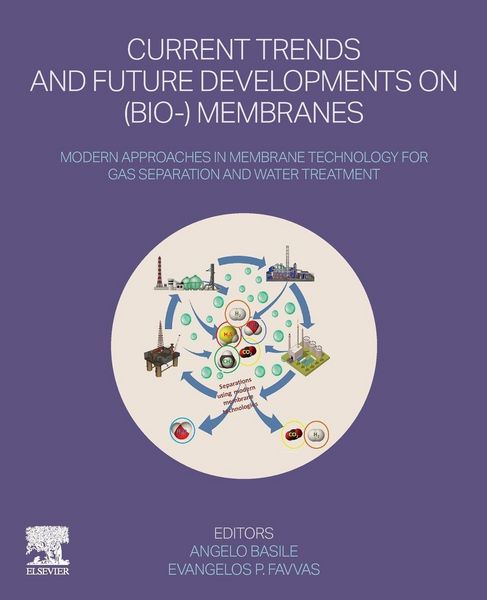
Current Trends and Future Developments on (Bio-) Membranes Modern Approaches in Membrane Technology for Gas Separation and Water Treatment
-
- Hardcover
- Taschenbuch ausgewählt
- eBook
-
Sprache:Englisch
-
Verlag:Elsevier Science & Technology
- Elsevier Science & Technology 163,99 €
- Elsevier Science & Technology 186,99 €
- Elsevier Science & Technology 202,99 €
- Elsevier Science & Technology 202,99 €
- Elsevier Science & Technology 202,99 €
- Elsevier Science & Technology 204,99 €
- Elsevier Science & Technology 204,99 €
- Elsevier Science & Technology 204,99 €
- Elsevier Science & Technology 204,99 €
- Elsevier Science & Technology 204,99 €
- Elsevier Science & Technology 204,99 €
- Elsevier Science & Technology 205,99 €
- Elsevier Science & Technology 205,99 € ausgewählt
- Elsevier Science & Technology 205,99 €
- Elsevier Science & Technology 207,99 €
- Elsevier Science & Technology 207,99 €
- Elsevier Science & Technology 207,99 €
- Elsevier Science & Technology 207,99 €
- Elsevier Science & Technology 207,99 €
- Elsevier Science & Technology 219,99 €
205,99 €
inkl. gesetzl. MwSt.,
Beschreibung
Produktdetails
Einband
Taschenbuch
Erscheinungsdatum
21.11.2023
Herausgeber
Angelo Basile + weitereVerlag
Elsevier Science & TechnologySeitenzahl
576
Maße (L/B/H)
23,5/19,1/3 cm
Gewicht
978 g
Sprache
Englisch
ISBN
978-0-323-99311-1
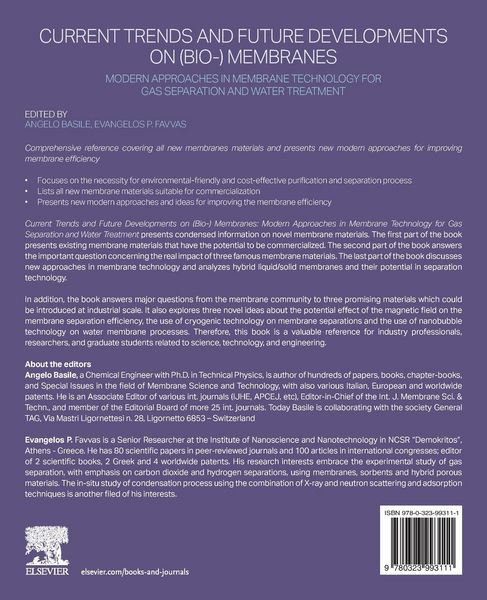
Modern Approaches in Membrane Technology for Gas Separation and Water Treatment presents condensed information on novel and promising membrane materials. The book answers some major questions from the membrane community about three promising materials that are to be introduced at industrial scale. It introduces recent, out of the box, ideas concerning the application of new methods capable to enhance the membrane separation efficiency. Sections cover potential commercialization, important question on three famous membrane materials, and new approaches in membrane technology.
Finally, the book describes and discusses three novel ideas about the potential effect of the magnetic field on membrane separation efficiency, the use of cryogenic technology on membrane separations, and the use of nanobubble technology on water membrane processes.
Noch keine Bewertungen vorhanden
Verfassen Sie die erste Bewertung zu diesem Artikel
Helfen Sie anderen Kundinnen und Kunden durch Ihre Meinung.
Kurze Frage zu unserer Seite
Vielen Dank für Ihr Feedback
Wir nutzen Ihr Feedback, um unsere Produktseiten zu verbessern. Bitte haben Sie Verständnis, dass wir Ihnen keine Rückmeldung geben können. Falls Sie Kontakt mit uns aufnehmen möchten, können Sie sich aber gerne an unseren Kund*innenservice wenden.
zum Kundenservice