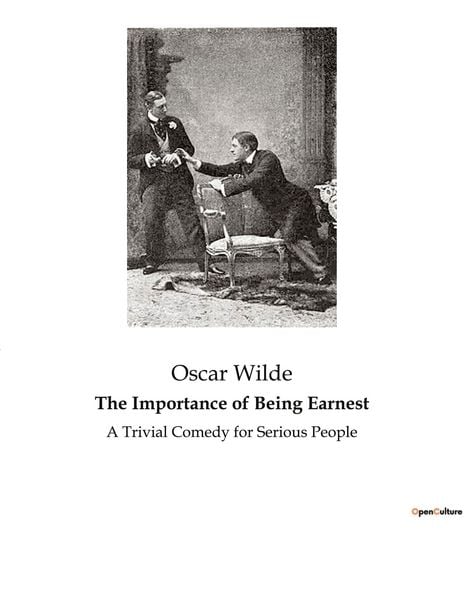
In Algernon Moncrieff's London flat, Jack Worthing arrives with a second name and a carefully managed social life, and a talk over tea, cucumber sandwiches, and calling cards turns at once into a playful test of manners. Wilde begins with polished ease, then lets the small rituals of visiting, dining, and asking after Lady Bracknell carry the comic force. Even the servants' exchanges and the notebook of household expenses help reveal how polished speech can hide private habits and social games. The first act is built around talk that seems light yet keeps shifting toward private arrangements, marriage plans, and the value placed on a name. Algernon questions Jack about his double life, while Lady Bracknell's entrance turns the room into a place where rank, income, and family background are weighed with icy precision. A simple visit becomes a scene of appraisal, where a proposal can rise or fall on a surname, an address, or the contents of a handbag. Wilde gives the play much of its force through objects that stay close to the action. Cigarettes, muffins, diaries, calling cards, cigarette cases, and a travel bag are handled as if they were part of the characters' speech. When a black leather bag appears, it is not a mere prop but a source of confusion, recognition, and comic pressure. Such details keep the plot grounded in visible things, while the dialogue turns them into signs of reputation, memory, and mistaken ownership. Miss Prism and the Reverend Chasuble widen the play's social field by bringing schoolroom propriety and clerical caution into the same conversation. Their remarks on education, duties, and small courtesies sit beside the young people's romantic schemes, giving the comedy another register. Cecily's lessons, the rector's visits, and the governess's influence show how habits of conduct are formed long before marriage enters the scene. Wilde lets these figures speak with restrained seriousness, then places them within a story driven by appetite for surprise and verbal play. The language moves with speed and control, and the pleasure of the piece lies in its sharp reversals. A remark about food becomes a comment on class; a polite introduction turns into a claim of identity; a declaration of love rests on the wrong name. Jack and Algernon trade lines that sound airy but expose vanity, habit, and self-interest. The stage directions, too, matter: tea trays, furniture, and pauses in conversation all help the audience follow a comedy built from speech, timing, and visible etiquette. Wilde gives Lady Bracknell the force of social authority, while Gwendolen, Miss Prism, and the Reverend Chasuble each expose a different rule of conduct; a black travel bag, cigars, muffins, and visiting cards keep the comic plot in motion. The language is sharp, brief, and polished, with one-liners, reversals, and social remarks that mock respectability, inheritance, and marriage proposals, as every polished phrase opens the door to another misunderstanding. The dialogue moves with speed and sparkle, building a satire of polite society in which names, manners, inheritance, and marriage proposals matter as much as feelings, and every remark invites a fresh misunderstanding. Dear reader, this small comedy offers more than a bright exchange of names and visits: it invites you to hear how rules of address, habits of speech, and the pressure of polite opinion can turn even a tea table into a stage. Jack, Algernon, Gwendolen, Cecily, Lady Bracknell, Miss Prism, and Chasuble each bring a distinct tone, and the result is a play that stays vivid from the first false name to the last crowded room.