Gutscheinbedingungen

**Gültig nur für Bestellungen an die Wunsch-Poststation bis 10.06.2026 auf Spielzeug, Schreibwaren, Filme, Geschenke & Trends, Musik, tolino eReader & Zubehör, Hörbücher und Hörbuch-Downloads (außer Abo), nicht preisgebundene Bücher und Kalender online auf thalia.at und in der Thalia App. Einzelne Artikel können ausgeschlossen sein. Aufgrund der Buchpreisbindung sind deutschsprachige Bücher und eBooks ausgenommen. Zusätzlich ausgenommen sind preisgebundene Artikel, Abos & Flatrates, eBooks, Games, Geschenkkarten/-boxen, Shelfies, Software, Zeitschriften sowie einzelne Artikel von tonies®. Pro Einkauf einmal einlösbar. Kein Click & Collect möglich. Keine Barauszahlung. Nicht kombinierbar mit anderen Aktionen und Gutscheinen. Gutschein wird auf max. 500€ Bestellwert angerechnet. Nicht gültig für Versandkosten und Services.

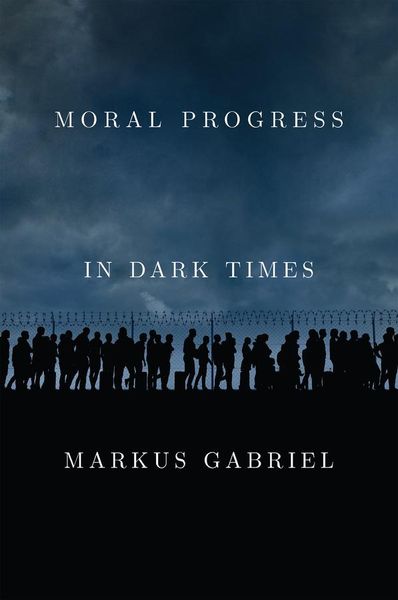
Produktbild: Moral Progress in Dark Times

Moral Progress in Dark Times Universal Values for the 21st Century

31,99 €

inkl. gesetzl. MwSt., Versandkostenfrei


Beschreibung

Produktdetails

Einband

Gebundene Ausgabe

Erscheinungsdatum

02.12.2022

Verlag

John Wiley & Sons Inc

Seitenzahl

280

Maße (L/B/H)

23,4/15,8/2,8 cm

Gewicht

572 g

Auflage

1. Auflage

Übersetzt von

Wieland Hoban

Sprache

Englisch

ISBN

978-1-5095-4948-1

Beschreibung

Rezension

"This book is a passionate defense of moral realism against the now standard relativism on the topic, written in Gabriel's usual clear prose. His gift for illuminating examples and anecdotes, combined with his thorough philosophical knowledge and hyper-alertness to world events, ensure that Moral Progress in Dark Times speaks directly to the conscience of the twenty-first-century citizen."
--Graham Harman
 
"In this book, Markus Gabriel seeks a possible resurrection of history from the normative foundations of a moral realism. In this search, we discover something like a non-Eurocentric universal history, based on the existence of universalizable moral facts capable of transcending specific contexts and guiding us through dark times. Aware of the challenges of this new universalism, Gabriel does not shy away from any controversy and invites us to a debate where the question is no less than the possibilities of a new enlightenment."
--Vladimir Safatle
 
"[T]he book's themes that morality is real and grounded in facts, that scientific-technological progress should be guided by ethics, and that this requires heavy-duty interdisciplinary cooperation (including a role for the humanities!) as well as a fundamental belief in truth and human dignity, are desperately needed in our current historical moment."
--Notre Dame Philosophical Reviews
 
"What is so impressive about Gabriel's book is both its readability and that he is able to stand up for a form of European Enlightenment in German philosopher Immanuel Kant's universalism, which is needed now more than ever."
--The Sociological Review
 
"a challenging, provocative book"
--Midwest Book Review

Produktdetails

Einband

Gebundene Ausgabe

Erscheinungsdatum

02.12.2022

Verlag

John Wiley & Sons Inc

Seitenzahl

280

Maße (L/B/H)

23,4/15,8/2,8 cm

Gewicht

572 g

Auflage

1. Auflage

Übersetzt von

Wieland Hoban

Sprache

Englisch

ISBN

978-1-5095-4948-1

Herstelleradresse

Libri GmbH
Europaallee 1
36244 Bad Hersfeld
DE

Email: gpsr@libri.de

Kundinnen und Kunden meinen

0 Bewertungen

Informationen zu Bewertungen

Zur Abgabe einer Bewertung ist eine Anmeldung im Konto notwendig. Die Authentizität der Bewertungen wird von uns nicht überprüft. Wir behalten uns vor, Bewertungstexte, die unseren Richtlinien widersprechen, entsprechend zu kürzen oder zu löschen.

Die Bewertungen sind nach Format, Anzahl Sterne und Datum sortiert.

Verfassen Sie die erste Bewertung zu diesem Artikel

Helfen Sie anderen Kund*innen durch Ihre Meinung

Kundinnen und Kunden meinen

0 Bewertungen filtern

Die Leseprobe wird geladen.
  • Produktbild: Moral Progress in Dark Times
  • Preface to the English edition
     
    Introduction
     
    Chapter 1: What Values Are, and Why They Are Universal
     
    The Good, the Bad and the Neutral: Basic Moral Rules
     
    Moral Facts
     
    The Limits of Free Speech: How Tolerant Is Democracy?
     
    Morality Trumps Majority
     
    Cultural Relativism: The Law of the Strongest
     
    Boghossian and the Taliban
     
    There Are No Judeo-Christian Values - And Why Islam Is Clearly Part of Germany
     
    North Korea and the Nazi Machine
     
    Value Pluralism and Value Nihilism
     
    Nietzsche's Ghastly Confusion(s)
     
    Chapter 2: Why There Are Moral Facts but Not Ethical Dilemmas
     
    Universalism is not Eurocentrism
     
    Ageism Towards Children and Other Moral Deficits in Everyday Life
     
    Moral Tension
     
    Susceptibility to Error, a Fictional Messiah and the Nonsense of Postmodern Arbitrariness
     
    Moral Feelings
     
    Doctors, Patients, Indian Police Officers
     
    The Categorical Imperative as Social Glue
     
    'A?' Don't Contradict Yourself!
     
    Self-Evident Moral Truths and the Descriptive Problem of Ethics
     
    Why the Federal Chancellor Is Not the Leader
     
    The Day of Judgement, or, How We Can Recognize Moral Facts
     
    With or Without God in the Kingdom of Ends
     
    Beating Children Was Never Good, Not Even in 1880
     
    Chapter 3: Social Identity - Why Racism, Xenophobia and Misogyny Are Evil
     
    Habitus and Stereotypes: All Resources Are Scarce
     
    Lifting the Veil of Dehumanization: From Identity Politics to Difference Politics
     
    Coronavirus: Reality Strikes Back
     
    A Different Side of Thuringia: In Jena, Racism Is Debunked
     
    The Value of Truth (Without a Hall of Mirrors)
     
    Stereotypes, Brexit and German Nationalism
     
    The Effectiveness of Presumed Communities
     
    The Society of Populism
     
    The Contradictions of Left-Wing Identity Politics
     
    Everyone is the Other: From Identity Politics to Difference Politics (and Beyond)
     
    Indifference Politics: On the Way to Colour-Blindness
     
    Chapter 4: Moral Progress in the Twenty-First Century
     
    Slavery and Sarrazin
     
    (Supposedly) Different Conceptions of Humans Do Not Justify Anything, Least of All Slavery
     
    Moral Progress and Regression in the Time of the Coronavirus
     
    The Limits of Economism
     
    Biological Universalism and the Viral Pandemic
     
    For a Metaphysical Pandemic
     
    Morality Altruism
     
    Human Beings: Who We Are and Who We Want to Be
     
    Ethics for Everyone
     
    Epilogue
     
    Glossary
     
    Notes
     
    Index