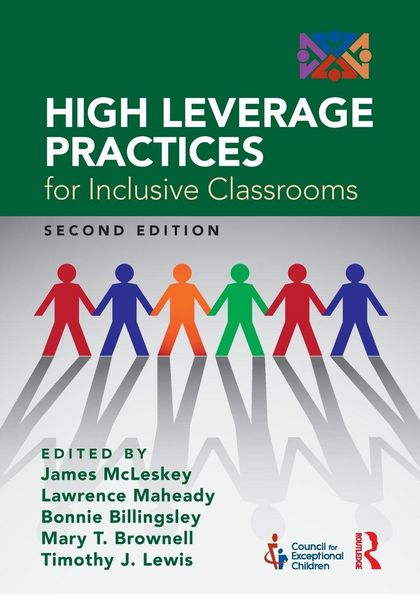
High Leverage Practices for Inclusive Classrooms
-
- Hardcover
- Taschenbuch ausgewählt
- eBook
-
Sprache:Englisch
-
Verlag:Taylor & Francis
43,99 €
inkl. gesetzl. MwSt.,
Beschreibung
Produktdetails
Einband
Taschenbuch
Erscheinungsdatum
31.03.2022
Abbildungen
55 SW-Abb., 4 SW-Fotos, 51 SW-Zeichn., 45 Tabellen
Herausgeber
Timothy J. Lewis + weitereVerlag
Taylor & FrancisSeitenzahl
384
Maße (L/B/H)
25,4/17,8/2,1 cm
Gewicht
721 g
Auflage
2. Auflage
Sprache
Englisch
ISBN
978-0-367-70230-4
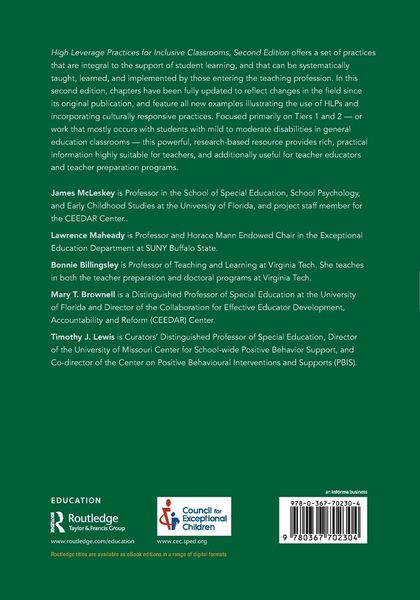
High Leverage Practices for Inclusive Classrooms, Second Edition offers a set of practices that are integral to the support of student learning, and that can be systematically taught, learned, and implemented by those entering the teaching profession. In this second edition, chapters have been fully updated to reflect changes in the field since its original publication, and feature all new examples illustrating the use of HLPs and incorporating culturally responsive practices. Focused primarily on Tiers 1 and 2-or work that mostly occurs with students with mild to moderate disabilities in general education classrooms-this powerful, research-based resource provides rich, practical information highly suitable for teachers, and additionally useful for teacher educators and teacher preparation programs.
Noch keine Bewertungen vorhanden
Verfassen Sie die erste Bewertung zu diesem Artikel
Helfen Sie anderen Kundinnen und Kunden durch Ihre Meinung.
Kurze Frage zu unserer Seite
Vielen Dank für Ihr Feedback
Wir nutzen Ihr Feedback, um unsere Produktseiten zu verbessern. Bitte haben Sie Verständnis, dass wir Ihnen keine Rückmeldung geben können. Falls Sie Kontakt mit uns aufnehmen möchten, können Sie sich aber gerne an unseren Kund*innenservice wenden.
zum Kundenservice