KI-Beratung Beta

Gutscheinbedingungen

**Gültig am 25.11.2026 auf fremdsprachige Bücher online auf thalia.at und in der Thalia App. Einzelne Artikel können ausgeschlossen sein. Ausgenommen sind preisgebundene Artikel & eBooks. Pro Einkauf einmal einlösbar. Click & Collect nur bei Onlinevorabzahlung möglich. Keine Barauszahlung. Nicht kombinierbar mit anderen Aktionen und Gutscheinen. Gutschein wird auf max. 500€ Bestellwert angerechnet. Nicht gültig für Geschenkkarten, Versandkosten und Services.

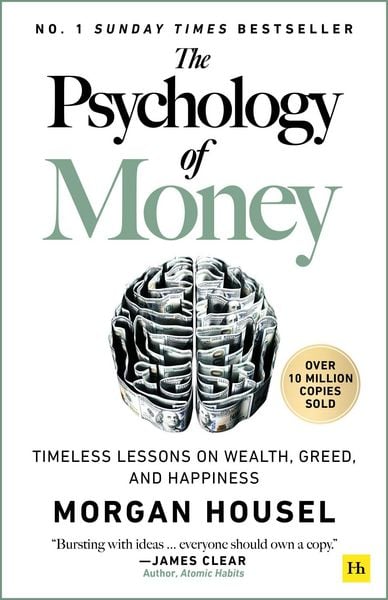
Produktbild: The Psychology of Money: Timeless Lessons on Wealth, Greed, and Happiness

The Psychology of Money: Timeless Lessons on Wealth, Greed, and Happiness

2

22,80 €

inkl. gesetzl. MwSt., zzgl. Versandkosten


  • Kostenlose Lieferung ab 30 € Einkaufswert
  • Versandkostenfrei für Bonuscard-Kund*innen

Beschreibung

The Sunday Times Number One Bestseller. Over 10 million copies sold around the world. The original book from Morgan Housel, the New York Times and Sunday Times bestselling author of Same As Ever and The Art of Spending Money. As featured on the Dr Chatterjee podcast Feel Better, Live More and The Diary...

Beschreibung

The Sunday Times Number One Bestseller.
Over 10 million copies sold around the world.
The original book from Morgan Housel, the New York Times and Sunday Times bestselling author of Same As Ever and The Art of Spending Money.
As featured on the Dr Chatterjee podcast Feel Better, Live More and The Diary of a CEO podcast with Steven Bartlett.

Doing well with money isn't necessarily about what you know. It's about how you behave. And behavior is hard to teach, even to really smart people.
Money - investing, personal finance, and business decisions - is typically taught as a math-based field, where data and formulas tell us exactly what to do. But in the real world people don't make financial decisions on a spreadsheet. They make them at the dinner table, or in a meeting room, where personal history, your own unique view of the world, ego, pride, marketing, and odd incentives are scrambled together.
In The Psychology of Money, award-winning author Morgan Housel shares 19 short stories exploring the strange ways people think about money and teaches you how to make better sense of one of life's most important topics.

Produktdetails

Verkaufsrang

2775

Einband

Taschenbuch

Altersempfehlung

ab 18 Jahr(e)

Erscheinungsdatum

08.09.2020

Produktdetails

Verkaufsrang

2775

Einband

Taschenbuch

Altersempfehlung

ab 18 Jahr(e)

Erscheinungsdatum

08.09.2020

Verlag Pan Macmillan
Seitenzahl

250

Maße (L/B/H)

20,9/12,8/2,5 cm

Gewicht

290 g

Farbe

Weiß / Anthrazit

Sprache

Englisch

ISBN

978-0-85719-768-9

Herstelleradresse

Libri GmbH
Europaallee 1
36244 Bad Hersfeld
DE

Email: gpsr@libri.de

Kundinnen und Kunden meinen

Informationen zu Bewertungen

Zur Abgabe einer Bewertung ist eine Anmeldung im Konto notwendig. Die Authentizität der Bewertungen wird von uns nicht überprüft. Wir behalten uns vor, Bewertungstexte, die unseren Richtlinien widersprechen, entsprechend zu kürzen oder zu löschen.

Die Bewertungen sind nach Format, Anzahl Sterne und Datum sortiert.

  • Bewertung

    5/5

    03.08.2022

    Buch (Taschenbuch)

    Absolut empfehlenswert!

    Housel geht auf verschiedene Aspekte ein, die bis dato in Büchern selten angeschaut und diskutiert wurden: So kann bspw. niemand die Zukunft voraussagen, da es zu viele Unbekannten gibt. Finanzielle Entscheidungen basieren zudem eher auf der psychologisch-emotionalen Entscheidungen und nicht auf exakten mathematischen. Weiter ist eine für andere sinnvolle Entscheidung für mich eine falsche, da bei mir die Variablen anders sind.

  • Bewertung

    aus Zofingen

    4/5

    04.02.2023

    Buch (Taschenbuch)

    A concise manual for getting your finances healthy in the long run...

    In nineteen concise chapters the author talks about the difference between richness and wealth, about some important issues of spending, saving and investing, issues which are not often talked about in such a consistent way. In the twentieth chapter the author gives insight in his own financial strategies and financial situation. In the last chapter - Postscript - the author takes a closer look with the gained knowledge about money at the financial situation of the US since World War II. The conclusion is not new or shocking (get out of debt and take profit by compounding (start when you’re young). I found it an interesting read.

Kundinnen und Kunden meinen

5

1

4

1

3

0

2

0

1

0

Bewertungen (2)

Die Leseprobe wird geladen.
  • Produktbild: The Psychology of Money: Timeless Lessons on Wealth, Greed, and Happiness