KI-Beratung Beta

Gutscheinbedingungen

**Gültig bis 30.11.2026 auf Spielzeug, Schreibwaren, Filme, Geschenke & Trends, Musik, tolino eReader & Zubehör, Hörbücher und Hörbuch-Downloads, nicht preisgebundene Bücher und Kalender online auf thalia.at und in der Thalia App. Einzelne Artikel können ausgeschlossen sein. Aufgrund der Buchpreisbindung sind deutschsprachige Bücher und eBooks ausgenommen. Zusätzlich ausgenommen sind Abos & Flatrates, Games, Geschenkkarten/-boxen, Shelfies, Software, Zeitschriften sowie einzelne Artikel von tonies®. Pro Einkauf einmal einlösbar. Nur gültig mit im Onlineshop hinterlegter Bonuscard. Click & Collect nur bei Onlinevorabzahlung möglich. Keine Barauszahlung. Nicht kombinierbar mit anderen Aktionen und Gutscheinen. Gutschein wird auf max. 500€ Bestellwert angerechnet. Nicht gültig für Versandkosten und Services.

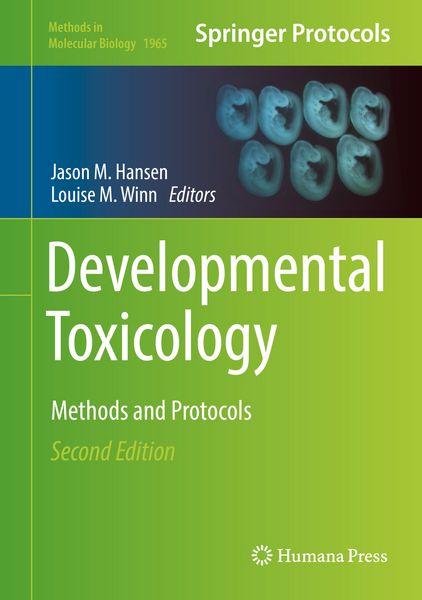
Produktbild: Developmental Toxicology
Band 1965 - 12%

Developmental Toxicology Methods and Protocols

12% sparen

144,99 € UVP 164,99 €

inkl. gesetzl. MwSt., Versandkostenfrei


Beschreibung

This thorough edition explores numerous methodological approaches that can be extremely informative for our understanding of the developmental toxicant mechanisms, characterization of developmental outcomes, and development of potential interventions that are clinically relevant. Presenting both staple...

Beschreibung

This thorough edition explores numerous methodological approaches that can be extremely informative for our understanding of the developmental toxicant mechanisms, characterization of developmental outcomes, and development of potential interventions that are clinically relevant. Presenting both staple and state-of-the-art approaches, the book focuses on numerous cellular models (induced pluripotent stem cells, neural crest culture, etc.), some less frequently used but important animal models (chick, zebrafish), in vitro
approaches using whole embryos (rat, mouse and rabbit), and specific outcome methodologies to assess changes on the morphological to molecular level. Written for the highly successful
Methods in Molecular Biology
series, chapters include the kind of detail and expert implementation advice that allows for smooth processes in the lab. 
Authoritative and practical,
Developmental Toxicology: Methods and Protocols, Second Edition
serves as an ideal aid to support further investigation into the specific mechanisms and outcomes of developmental exposures.

Produktdetails

Einband

Gebundene Ausgabe

Erscheinungsdatum

09.05.2019

Abbildungen

XI, 436 p. 155 illus., 104 illus. in color.

Herausgeber Jason M. Hansen + weitere

Produktdetails

Einband

Gebundene Ausgabe

Erscheinungsdatum

09.05.2019

Abbildungen

XI, 436 p. 155 illus., 104 illus. in color.

Herausgeber
Verlag Springer Us
Seitenzahl

436

Maße (L/B/H)

26/18,3/3 cm

Gewicht

970 g

Auflage

Second Edition 2019

Sprache

Englisch

ISBN

978-1-4939-9181-5

Herstelleradresse

Libri GmbH
Europaallee 1
36244 Bad Hersfeld
DE

Email: gpsr@libri.de

Noch keine Bewertungen vorhanden

Verfassen Sie die erste Bewertung zu diesem Artikel

Helfen Sie anderen Kundinnen und Kunden durch Ihre Meinung.

Kundinnen und Kunden meinen

Bewertungen (0)

  • Produktbild: Developmental Toxicology

  • In Vitro Models in Developmental Toxicology.- Use of Primary Mouse Embryonic Fibroblasts in Developmental Toxicity Assessments.- Induced Pluripotent Stem Cells (iPSCs) in Developmental Toxicology.- Neural Crest Cell Models of Development and Toxicity: Cytotoxicity Assay Using Human Pluripotent Stem Cell-Derived Cranial Neural Crest Cell Model.- Micromass Methods for the Evaluation of Developmental Toxicants.- The Murine Limb Bud in Culture as an In Vitro Teratogenicity Test System.- Embryonic Mid-Facial Palatal Organ Culture Methods in Developmental Toxicology.- Ex Vivo Fetal Whole Ovarian Culture Model: An Essential Tool for Studies in Reproductive Toxicology and Pharmacology.- Hepatotoxicity in Zebrafish Larvae.- Drosophila as a Model for Developmental Toxicology: Using and Extending the Drosophotoxicology

    Model.- The Chicken Embryo as a Model in Developmental Toxicology.- The
    Xenopus tropicalis
    Model for Studies of Developmental and Reproductive Toxicity.- Mouse Whole Embryo Culture.- Rat Whole Embryo Culture.- Rabbit Whole Embryo Culture.- Genome Editing in Zebrafish Using CRISPR-Cas9: Applications for Developmental Toxicology.- Identifying Toxicant-Interacting Genes Using Forward-Genetic Screening in Zebrafish.- Assessment of Histiotrophic Nutrition Using Fluorescent Probes.- Examining Gene Expression Patterns through Whole Mount In Situ Hybridization.- Confocal Laser Scanning Microscopy of Morphology and Apoptosis in Organogenesis-Stage Mouse Embryos.- Measurement of the Oxidative DNA Lesion 8-Oxoguanine (8-oxoG) by ELISA or by High-Performance Liquid Chromatography (HPLC) with Electrochemical Detection.- Quantifying Activity for Repair of the DNA Lesion 8-Oxoguanine by Oxoguanine Glycosylase 1 (OGG1) in Mouse Adult and Fetal Brain Nuclear Extracts Using Biotin-Labeled DNA.- Western Analysis of Breast Cancer 1 Protein (BRCA1).- Regulation and Control of AP-1 Binding Activity in Embryotoxicity.- Characterization of Epigenetic Histone Activation/Repression Marks in Sequences of Genes by Chromatin Immunoprecipitation-Quantitative Polymerase Chain Reaction (ChIP-qPCR).- The Application of High-Resolution Ultrasound for Assessment of Cardiac Structure and Function Associated with Developmental Toxicity.- Assessment of Gross Fetal Malformations:  The Modernized Wilson Technique and Skeletal Staining.