Gutscheinbedingungen

**Gültig bis 12.08.2026 auf fremdsprachige Bücher online auf thalia.at und in der Thalia App. Einzelne Artikel können ausgeschlossen sein. Ausgenommen sind preisgebundene Artikel & eBooks. Pro Einkauf einmal einlösbar. Click & Collect nur bei Onlinevorabzahlung möglich. Keine Barauszahlung. Nicht kombinierbar mit anderen Aktionen und Gutscheinen. Gutschein wird auf max. 500€ Bestellwert angerechnet. Nicht gültig für Geschenkkarten, Versandkosten und Services.

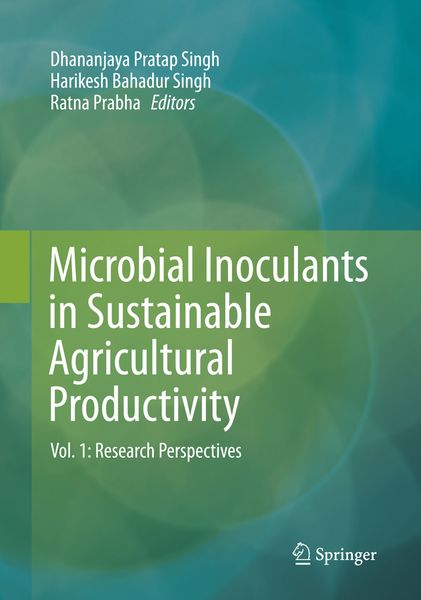
Produktbild: Microbial Inoculants in Sustainable Agricultural Productivity
- 12%

Microbial Inoculants in Sustainable Agricultural Productivity Vol. 1: Research Perspectives

12% sparen

144,99 € UVP 164,99 €

inkl. gesetzl. MwSt., Versandkostenfrei


Beschreibung

Produktdetails

Einband

Taschenbuch

Erscheinungsdatum

07.04.2018

Abbildungen

XVIII, 343 p. 37 illus., 25 illus. in color.

Herausgeber

Dhananjaya Pratap Singh + weitere

Verlag

Springer India

Seitenzahl

343

Maße (L/B/H)

25,4/17,8/1,9 cm

Gewicht

767 g

Auflage

1. Auflage

Sprache

Englisch

ISBN

978-81-322-3807-2

Beschreibung

Rezension

“The book does a good job of highlighting various aspects of microbial inoculants (including PGPR and AMF) for their beneficial impacts on plant growth promotion, thus playing an important role in agriculture sustainability. … this book is an excellent scientific contribution describing microbial agents for sustainable farming, and outlines pathways towards next-generation ideal microbial inoculants with superior application strategies. In our view, this book can be recommended to anyone interested in sustainable agricultural production.” (Jay Shankar Singh, P. C. Abhilash, and Vijai K. Gupta, Trends in Biotechnology, Vol. 34 (773), October, 2016)

Portrait


Dhananjaya P. Singh
is presently Senior Scientist (Biotechnology) with ICAR-National Bureau of Agriculturally Important Microorganisms, Indian Council of Agricultural Research, India at Maunath Bhanjan, India. He did his Masters degree from G.B. Pant University of Agriculture & Technology, Pantnagar, India and Ph. D. in Biotechnology from Banaras Hindu University, India. His research interests lies in bioprospecting of metabolites, microbe-mediated stress management in plants, metabolomics-driven search for small molecules and bioinformatics. He has been engaged with the development of supercomputational infrastructure for agricultural bioinformatics at ICAR-NBAIM under National Agricultural Bioinformatics Grid project of ICAR. He has overall 112 publications including 60 research papers, two edited books, 22 book chapters, 20 popular articles, 15 reviews and one Indian Patent to his credit.


Harikesh B. Singh
is presently Professor & Head, Department of Mycology and Plant Pathology at Institute of Agricultural Sciences, Banaras Hindu University. He served the State Agriculture University, Central University and CSIR Institute in teaching, research and extension roles. His major research focus is on bioinnoc

ulats, biological control of plant pathogens and nano-biotechnology. In recognition of Prof. Singh’s scientific contributions and leadership in the field of plant pathology, he was honored with several prestigious awards, notable being CSIR Technology Prize for Biological Sciences, Vigyan Bharti Award, Prof. V.P. Bhide Memorial Award, Society for Plant Research, Scientist of Excellence Awards, BRSI Industrial Medal Award, Jyoti Sangam Award, Akshyavat Samman, Distinguish Scientist Award by Society for Research Development in Agriculture, Prof. Panchanan Maheshwari Medal by Indian Botanical Society,  Rashtriya Gaurav Award by IIFS, Plant Pathology Leader Award by IPS, CSIR Award for S&T Innovation for Rural Development (CAIRD), Environment Conservation Award, Vigyan Ratna by UP Council of Science and Technology. Dr. Singh has been the Fellow of National Academy of Agricultural Sciences. Professor Singh has written two books, several training modules/ manuals and more than 275 publications and has more than 18 US patents and 3 PCTs to his credit.


Ratna Prabha
has obtained her Master's degree in Bioinformatics from Banasthali Vidyapeeth, Rajasthan and Doctorate in Biotechnology from Mewar University, India. She is presently associated with ICAR- National Bureau of Agriculturally Import

ant Microorganisms, India in Network Project for Agricultural Bioinformatics and Computational Biology of Indian Council of Agricultural Research. Dr Prabha has been engaged in developing various bioinformatics digital databases on plants and microbes, published 14 research papers in the journals of International repute and 06 book chapters. Her current research interest lies in microbe-mediated stress management in plants, database development, comparative microbial genome analysis, phylogenomics and pangenome analysis of prokaryotic genomes. She has completed several bioinformatics demonstration tasks at different National training programs on bioinformatics and computational biology.

Produktdetails

Einband

Taschenbuch

Erscheinungsdatum

07.04.2018

Abbildungen

XVIII, 343 p. 37 illus., 25 illus. in color.

Herausgeber

Verlag

Springer India

Seitenzahl

343

Maße (L/B/H)

25,4/17,8/1,9 cm

Gewicht

767 g

Auflage

1. Auflage

Sprache

Englisch

ISBN

978-81-322-3807-2

Herstelleradresse

Springer-Verlag KG
Sachsenplatz 4-6
1201 Wien
AT

Email: GPSR Kontakt

Noch keine Bewertungen vorhanden

Verfassen Sie die erste Bewertung zu diesem Artikel

Helfen Sie anderen Kundinnen und Kunden durch Ihre Meinung.

Kundinnen und Kunden meinen

Bewertungen (0)

  • Produktbild: Microbial Inoculants in Sustainable Agricultural Productivity
  • 1. Strategies for Characterization of Agriculturally Important Bacteria.- 2. Microbial Inoculants as Agents of Growth Promotion and Abiotic Stress Tolerance in Plants.- 3. A Renaissance in Plant Growth Promoting and Biocontrol Agents by Endophytes.- 4. Omics-driven Approaches in Plant–Microbe Interaction.- 5. Strategies for Taxonomical Characterization of Agriculturally Important Microorganisms.- 6. Microbial Inoculants: Identification, Characterization and Applications in the Field.- 7. Endophytic Microbes in Crops: Diversity and Beneficial Impact for Sustainable Agriculture.- 8. Exploiting PGPR and AMF Biodiversity for Plant Health Management.- 9. Biopesticides: An Ecofriendly Approach for the Control of Soil-borne Pathogens in Peanut.- 10. Strategies for High Density Cultivation of Bio-inoculants in Submerged Culture with Special Reference to Pseudomonads.- 11. Microbial Inoculants as Biofertilizers and Biopesticides.- 12. Seed Bio-priming for Biotic and Abiotic Stress Management.-13. Azotobacter - PGPR Activities with Special Reference to Effect of Pesticides and Biodegradation.- 14. Beneficial effects and molecular diversity of endophytic bacteria in legume and non legumes.- 15. Pseudomonas fluorescent: A promising biocontrol agent and PGPR for sustainable agriculture.- 16. Isolation, Characterization of Nematode Controlling Bacteria and Fungi from Nature.- 17. Ecofriendly Plant Growth Promoting Rhizobacteria for Crop Improvement.- 18. Microbial inoculants as Biofertilizer.- 19. Microbial Inoculant: Modern Era of Fertilizers and Pesticides.