Gutscheinbedingungen

**Gültig bis 25.06.2026 auf fremdsprachige Bücher online auf thalia.at und in der Thalia App. Einzelne Artikel können ausgeschlossen sein. Ausgenommen sind preisgebundene Artikel & eBooks. Pro Einkauf einmal einlösbar. Click & Collect nur bei Onlinevorabzahlung möglich. Keine Barauszahlung. Nicht kombinierbar mit anderen Aktionen und Gutscheinen. Gutschein wird auf max. 500€ Bestellwert angerechnet. Nicht gültig für Geschenkkarten, Versandkosten und Services.

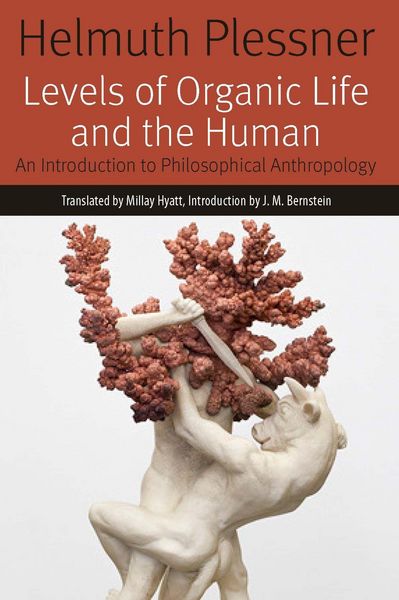
Produktbild: Levels of Organic Life and the Human

Levels of Organic Life and the Human An Introduction to Philosophical Anthropology

148,99 €

inkl. gesetzl. MwSt., Versandkostenfrei


Beschreibung

Produktdetails

Einband

Gebundene Ausgabe

Erscheinungsdatum

02.07.2019

Verlag

Fordham University Press

Seitenzahl

450

Maße (L/B/H)

23,5/15,7/3,1 cm

Gewicht

877 g

Sprache

Englisch

ISBN

978-0-8232-8399-6

Beschreibung

Produktdetails

Einband

Gebundene Ausgabe

Erscheinungsdatum

02.07.2019

Verlag

Fordham University Press

Seitenzahl

450

Maße (L/B/H)

23,5/15,7/3,1 cm

Gewicht

877 g

Sprache

Englisch

ISBN

978-0-8232-8399-6

Herstelleradresse

Libri GmbH
Europaallee 1
36244 Bad Hersfeld
DE

Email: Libri GmbH

Kundinnen und Kunden meinen

0 Bewertungen

Informationen zu Bewertungen

Zur Abgabe einer Bewertung ist eine Anmeldung im Konto notwendig. Die Authentizität der Bewertungen wird von uns nicht überprüft. Wir behalten uns vor, Bewertungstexte, die unseren Richtlinien widersprechen, entsprechend zu kürzen oder zu löschen.

Die Bewertungen sind nach Format, Anzahl Sterne und Datum sortiert.

Verfassen Sie die erste Bewertung zu diesem Artikel

Helfen Sie anderen Kund*innen durch Ihre Meinung

Kundinnen und Kunden meinen

0 Bewertungen filtern

Die Leseprobe wird geladen.
  • Produktbild: Levels of Organic Life and the Human
  • Foreword from the Helmuth Plessner Society | vii
    Translator's Preface and Acknowledgments | ix
    Preface to the First Edition (1928) | xv
    Preface to the Second Edition (1965) | xix
    Introduction | xxxvii
    J. M. Bernstein
    1. Aim and Scope of the Study | 1
    The Development of Intuitionist Lebensphilosophie in Opposition to
    Experience, 3 ¿ Lebensphilosophie and the Theory of the Humanities, 11 ¿
    Working Plan for the Foundation of a Philosophy of the Human, 22
    2. The Cartesian Objection and the Nature of the Problem | 34
    Extension vs. Interiority and the Problem of Appearance, 34 ¿
    Appearance as Originating in Interiority, 38 ¿ The Prior Givenness
    of Interiority and the Forward Displacement of Myself: The Proposition
    of Immanence 41 ¿ Extension as Outer World; Interiority as Inner
    World, 46 ¿ The Proposition of Representation and the Element
    of Sensation, 51 ¿ The Inaccessibility of Other I's according to the
    Principle of Sensualism, 55 ¿ The Need for a Revision of the Cartesian
    Dichotomy in the Interest of a Science of Life, 58 ¿ A Methodological
    Reformulation of the Opening Question, 64
    3. The Thesis | 75
    The Question, 75 ¿ The Dual Aspect in the Appearance of Ordinary
    Perceptual Things, 76 ¿ Against the Misinterpretation of This Analysis:
    A Closer Focus on the Subject Matter, 81 ¿ The Dual Aspect of Living
    Perceptual Things: Köhler contra Driesch, 84 ¿ How Is Dual Aspectivity
    Possible? The Nature of the Boundary, 93 ¿ The Task of a Theory of the
    Essential Characteristics of the Organic, 99 ¿ Definitions of Life, 104 ¿
    Nature and Object of a Theory of the Essential Characteristics of the
    Organic, 110
    4. The Modes of Being of Vitality | 115
    Essential Characteristics Indicating Vitality, 115 ¿ The Positionality of
    Living Being and Its Spacelikeness, 118 ¿ Living Being as Process
    and Type; the Dynamic Character of the Living Form; the Individuality of the
    Living Thing, 123 ¿ Living Process as Development, 129 ¿ The Curve of
    Development: Aging and Death, 137 ¿ The Individual Living Thing as a
    System, 144 ¿ The Self-Regulation of the Individual Living Thing
    and the Harmonious Equipotentiality of Its Parts, 149 ¿ Individual Living Things
    as Organized: The Dual Meaning of Organs, 154 ¿ The Temporality of
    Living Being, 159 ¿ The Positional Union of Space and Time and the
    Natural Place, 168
    5. The Organizational Modes of Living Being: Plants and Animals | 172
    The Circle of Life, 172 ¿ Assimilation-Dissimilation, 182 ¿
    Adaptedness and Adaptation, 186 ¿ Reproduction, Heredity,
    Selection, 196 ¿ The Open Form of Organization of the Plant, 202 ¿
    The Closed Form of Organization of the Animal, 209
    6. The Sphere of the Animal | 219
    The Positionality of the Closed Form: Centrality and Frontality, 219 ¿
    The Coordination of Stimulus and Response in the Case of an Inoperative
    Subject (Decentralized Type of Organization), 227 ¿ The Coordination of
    Stimulus and Response by a Subject (Centralized Type of Organization),
    231 ¿ The Animal's Surrounding Field Organized into Complex Qualities and
    Things, 242 ¿ Intelligence, 252 ¿ Memory, 257 ¿ Memory as the Unity of
    Residue and Anticipation, 262
    7. The Sphere of the Human | 267
    The Positionality of the Excentric Form: "I" and Personhood, 267 ¿
    Outer World, Inner World, Shared World, 272 ¿ The Fundamental Laws
    of Anthropology: The Law of Natural Artificiality, 287 ¿ The Law of
    Mediated Immediacy: Immanence and Expressivity, 298 ¿ The Law of
    the Utopian Standpoint: Nullity and Transcendence, 316
    Appendix | 323
    Glossary | 337
    Notes | 345
    Index | 359