KI-Beratung Beta

  • Produktbild: Experiential Marketing
  • Produktbild: Experiential Marketing

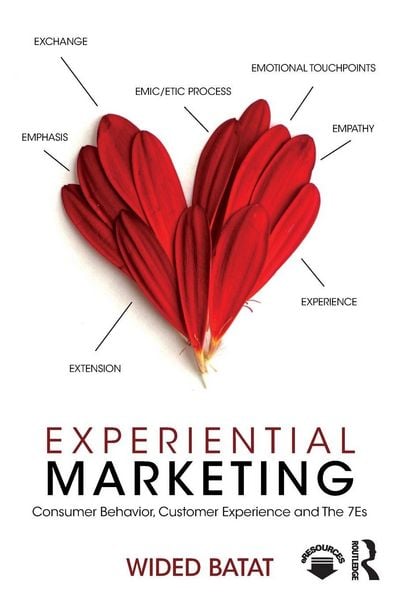
Experiential Marketing Consumer Behavior, Customer Experience and The 7Es

86,99 €

inkl. gesetzl. MwSt., Versandkostenfrei


Beschreibung

Produktdetails

Einband

Taschenbuch

Erscheinungsdatum

18.01.2019

Abbildungen

42 b/w images, 21 tables, 4 halftones and 38 line drawings

Verlag

KNV Besorgung

Seitenzahl

304

Maße (L/B/H)

23,4/15,6/1,6 cm

Gewicht

465 g

Sprache

Englisch

ISBN

978-1-138-29316-8

Beschreibung

Rezension

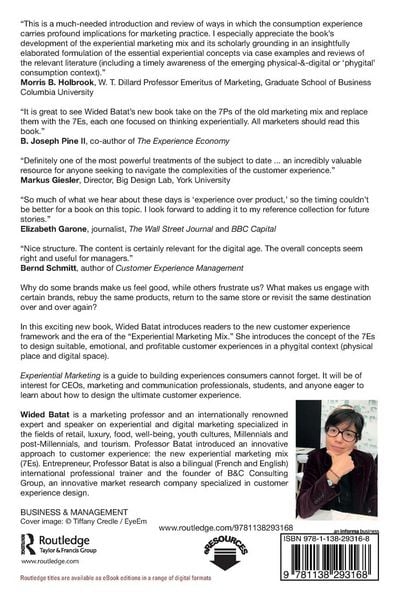
"There is a much-needed introduction and review of ways in which the consumption experience carries profound implications for marketing practice. I especially appreciate the book's development of the experiential marketing mix and its scholarly grounding in an insightfully elaborated formulation of the essential experiential concepts via case examples and reviews of the relevant literature (including a timely awareness of the emerging physical-&-digital or 'phygital' consumption context)." -- Morris B. Holbrook, W. T. Dillard Professor Emeritus of Marketing, Graduate School of Business Columbia University "It's very clear that in today's Experience Economy marketing must change. The old ways of thinking, while good for its time, no longer cut it. It is therefore great to see Wided Batat's new book take on the 7Ps of the old marketing mix and replace them with the 7Es, each one focused on thinking experientially. All marketers should read this book and then change their approach to generating demand that fits in with a time when experiences have become the predominant economic offering." -- B. Joseph Pine II, co-author, The Experience Economy "Definitely one of the most powerful treatments of the subject to date. A book full of wisdom. Anyone who is serious about customer experience will find it indispensable. Wided Batat's book is an incredibly valuable resource for anyone seeking to navigate the complexities of the customer experience." -- Markus Giesler, Director, Big Design Lab, York University "As both a journalist and a consumer, I find it difficult to keep up with the many changes taking place in the business world and specifically in marketing. I appreciate that Wided Batat has decided to explore those changes head on in her new book Experiential Marketing: Consumer Behavior, Customer Experience and The 7Es. So much of what we hear about these days is 'experience over product,' so the timing couldn't be better for a book on this topic. I look forward to adding it to my reference collection for future stories." -- Elizabeth Garone, Journalist, The Wall Street Journal and BBC Capital "Nice structure. The content is certainly relevant for the digital age. The overall concepts seem right and seem to be useful for managers." -- Bernd Schmitt, Author, Customer Experience Management
Produktdetails

Einband

Taschenbuch

Erscheinungsdatum

18.01.2019

Abbildungen

42 b/w images, 21 tables, 4 halftones and 38 line drawings

Verlag

KNV Besorgung

Seitenzahl

304

Maße (L/B/H)

23,4/15,6/1,6 cm

Gewicht

465 g

Sprache

Englisch

ISBN

978-1-138-29316-8

Noch keine Bewertungen vorhanden

Verfassen Sie die erste Bewertung zu diesem Artikel

Helfen Sie anderen Kundinnen und Kunden durch Ihre Meinung.

Kundinnen und Kunden meinen

Bewertungen (0)

Die Leseprobe wird geladen.
  • Produktbild: Experiential Marketing
  • Produktbild: Experiential Marketing
  • List of FiguresList of TablesList of Mini-CasesList of Theory BoxesIntroductionPART I: CUSTOMER EXPERIENCE MARKETING: BACK TO ORIGINSCHAPTER 1: FOUR KEY CHANGES IN CONSUMER BEHAVIOR:DIGITALEMPOWERMENT, EMOTION, AND POSTMODERNISMDigital transformation and its impact on consumptionDrivers of digital transformationDigital transformation challenges and opportunities for brands?The making of the empowered consumer What is consumer empowerment? What are the pillars of consumer empowerment?How is the empowered consumer driving new brand opportunities?The key role of emotion in the consumer brand experience Defining the notion of "consumer emotion" and its typologiesThe role of employees as emotional motivatorsEmotional branding through the Consumer Experience Postmodernism and the transition to experiential consumptionFrom modernism to postmodernismThe rise of the postmodern consumer societyCHAPTER 2: THEORETICAL UNDERPINNINGS FOR CUSTOMER EXPERIENCE MARKETING: ORIGINS, CUSTOMER JOURNEY, AND EXPERIENCE TOUCHPOINTSCustomer experience: from philosophy to marketingThe concept of "experience": what are we talking about?What is customer experience? Theoretical underpinnings for customer experience Experience touchpoints through customer journeyCHAPTER 3: A FRAMEWORK FOR CONCEPTUALIZING CUSTOMER EXPERIENCE MARKETING: DRIVERS, MARKETS, AND OUTCOMESDrivers of customer experience marketingIdiocentric drivers of customer experienceAllocentric drivers of customer experienceMarkers of customer experience marketingCustomer experience is holistic Customer experience is cumulative Customer experience is subjective and personal Customer experience is an assemblageCustomer experience is contrastingOutcomes of customer experience marketingValueTransformationCompetency Memorability PART II: THE NEW EXPERIENTIAL MARKETING MIX (7ES)CHAPTER 4: EXPERIENCE: EXPERIENCE TERRITORY MATRIX (ETM), STAGES, AND EXQUAL TOOLExperience Territory Matrix (ETM)Enchantment territory Re-enchantment territory Enchantment gap territoryDisenchantment territoryStages of customer experienceEXQUAL tool CHAPTER 5: EXCHANGE: CO-CREATION AND COLLABORTATION MARKETINGCo-creation as value-in-exchange in customer experienceCustomers as employeesFrom service-dominant logic to experience-dominant logicCollaborative marketing: the art of putting consumer to work CHAPTER 6: EXTENSION: EXPERIENCE CONTINUUM AND INTRA/EXTRA-DOMESTIC EXPERIENCESExperience continuum Intra- and extra-domestic experiences CHAPTER 7: EMPHASIS: BRAND CULTURE EMPHASIS AND STORYTELLINGBrand culture emphasis From brand content to brand cultureThe theory of brand cultureStorytelling Transforming a brand's positioning into a storytellingThe hero's journeyCHAPTER 8: EMPATHY CAPITAL: EMPATHY CONCEPT, EMPATHY EXPERIENCE, AND EMPATHY CAPITAL FORMATIONThe empathy conceptWhat does empathy mean? Empathy: origins and evolutionEmpathy and areas of confusion The forms of empathy Empathy in customer experienceDefinitionEmpathy experience functioning Components of empathetic customer experienceEmpathy in experience marketing-mixEmpathy capital formation Empathy map McLaren's empathy model CHAPTER 9: EMOTIONAL TOUCHPOINTS: FROM TOUCHPOINTS TO EMOTIONAL TOUCHPOINTS AND EMOTIONAL TOUCHPOINTS TOOLKITFrom touchpoints to emotional touchpoints Emotional touchpoints toolkitCHAPTER 10: EMIC/ETIC PROCESS: EMIC/ETIC PERSPECTIVE AND SOCIOCULTURAL CUSTOMER JOURNEYEmic and etic perspectives in experience marketing-mixEmic and etic perspectives: origins and definitions Emic and etic perspectives in consumer researchEmic and etic perspectives through CCT lenses Cultural mapping of customer journey: emic/etic perspective PART iii: FUTURE CHALLENGES IN CUSTOMER EXPERIENCE DESIGN CHAPTER 11: PHYGITAL CUSTOMER EXPERIENCE: DEFINITION, CHARACTERISTICS, TYPES, AND KEY SUCCESS FACTORSWhat does phygital customer experience mean? Characteristics of phygital experiencesTypologies of phygital experiences Connected experience Web experienceVirtual and augmented reality experienceSocio-digital experienceRe-creative digital experienceCyborg experienceTools to design phygital experiencesWeb 3.0 Interactive and collaborative digital toolsThe flow toolKey success factorsThe use of virtual agents for immersion and interactionThe importance of efficiencyCHAPTER 12: STORYLIVING, THE FUTURE OF CUSTOMER EXPERIENCE DESIGN: FROM STORY TO ACTION AND STORYLIVING STRATEGIESFrom story to actionStoryliving strategies CHAPTER 13: CUSTOMER EXPERIENCE RESEARCH METHODS: EXPERIENTIAL AND E-EXPERIENTIAL RESEARCH METHODSExperiential research methods Projective techniquesQualitative Diary Research (QDR) Ethnography Interactive and subjective personal introspectionE-experiential research methods Netnography Mobile self-ethnography ConclusionReferencesIndex