KI-Beratung Beta

Gutscheinbedingungen

**Gültig am 27.11.2026 auf Spielzeug, Schreibwaren, Filme, Geschenke & Trends, Musik, tolino eReader & Zubehör, Hörbücher und Hörbuch-Downloads, nicht preisgebundene Bücher und Kalender online auf thalia.at und in der Thalia App. Einzelne Artikel können ausgeschlossen sein. Aufgrund der Buchpreisbindung sind deutschsprachige Bücher und eBooks ausgenommen. Zusätzlich ausgenommen sind Abos & Flatrates, Games, Geschenkkarten/-boxen, Shelfies, Software, Zeitschriften sowie einzelne Artikel von tonies®. Pro Einkauf einmal einlösbar. Click & Collect nur bei Onlinevorabzahlung möglich. Keine Barauszahlung. Nicht kombinierbar mit anderen Aktionen und Gutscheinen. Gutschein wird auf max. 500€ Bestellwert angerechnet. Nicht gültig für Versandkosten und Services.

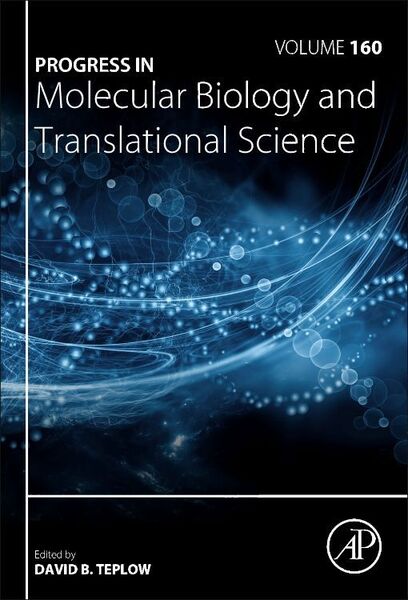
Produktbild: PROGRESS IN MOLECULAR BIOLOGY
Band 160

PROGRESS IN MOLECULAR BIOLOGY

129,99 €

inkl. gesetzl. MwSt., Versandkostenfrei


Beschreibung

Progress in Molecular Biology and Translational Science, Volume 160 provides the most topical, informative and exciting monographs available on a wide variety of research topics related to prions, viruses, bacteria and eukaryotes. The series gives in-depth knowledge on the important molecular biological...

Beschreibung

Progress in Molecular Biology and Translational Science, Volume 160 provides the most topical, informative and exciting monographs available on a wide variety of research topics related to prions, viruses, bacteria and eukaryotes. The series gives in-depth knowledge on the important molecular biological aspects of organismal physiology and function, along with insights on how this knowledge can be applied to understand and ameliorate human disease. This updated release covers Clinical Drugs in the Environment, Group I Intron Trans-Splicing, Adult Stem Cells on Regenerative Therapy, CRISPR in Animals and Animal Models, The Role of 3'-5'Exoribonucleases in RNA Degradation, and more.

Portrait

David B. Teplow, Ph.D., is a Professor of Neurology, Emeritus, at UCLA and an internationally recognized leader in efforts to understand and treat Alzheimer's disease. Dr. Teplow's group has used a multi-disciplinary approach to determine how neurotoxic peptides, such as the amyloid ?-protein (Alzheimer's disease) and ?-synuclein (Parkinson's disease), form neurotoxic structures that kill neurons and to develop the means to block these processes. Dr. Teplow received undergraduate training at UC Berkeley; a Ph.D. from the University of Washington; and was a postdoctoral scholar at Caltech. Before coming to UCLA, Dr. Teplow was a faculty member in the Department of Neurology, Harvard Medical School. Dr. Teplow has published >250 peer-reviewed articles, books and book chapters, and commentaries, in addition to serving on numerous national and international scientific advisory boards. Dr. Teplow was a founding editor of the Journal of Molecular Neuroscience and Current Chemical Biology, He is Editor-in-Chief of the Elsevier serial Progress in Molecular Biology and Translational Science and is Associate Editor-in-Chief of the American Journal of Neurodegenerative Disease.

Produktdetails

Einband

Gebundene Ausgabe

Erscheinungsdatum

26.11.2018

Herausgeber David B. Teplow
Verlag Elsevier Science & Technology

Produktdetails

Einband

Gebundene Ausgabe

Erscheinungsdatum

26.11.2018

Herausgeber David B. Teplow
Verlag Elsevier Science & Technology
Seitenzahl

188

Maße (L/B/H)

22,9/15,2/1,2 cm

Gewicht

430 g

Sprache

Englisch

ISBN

978-0-12-816237-8

EU-Ansprechpartner

Elsevier B.V.
Radarweg 29
1043 NX Amsterdam
NL
productsafety@elsevier.com

Herstelleradresse

Elsevier Science & Technology
London Wall 125
EC2Y 5AS London
GB
tradeorders@elsevier.com

Noch keine Bewertungen vorhanden

Verfassen Sie die erste Bewertung zu diesem Artikel

Helfen Sie anderen Kundinnen und Kunden durch Ihre Meinung.

Kundinnen und Kunden meinen

Bewertungen (0)

Die Leseprobe wird geladen.
  • Produktbild: PROGRESS IN MOLECULAR BIOLOGY
  • Preface
    David B. Teplow
    1. Adult Stem Cells for Regenerative Therapy
    Narasimman Gurusamy, Abdulrhman Alsayari, Sheeja Rajasingh and
    Johnson Rajasingh
    2. Hair Follicle-Associated Pluripotent (HAP) Stem Cells
    Robert M. Hoffman and Yasuyuki Amoh
    3. Fluorescent Proteins as Sensors for Cellular Behavior in Mice
    Robert M. Hoffman
    4. Arrestins: Introducing Signaling Bias Into Multifunctional Proteins
    Vsevolod V. Gurevich, Qiuyan Chen and Eugenia V. Gurevich
    5. Analysis of Biased Agonism
    Frederick J. Ehlert
    6. Effects of Estrogens on Central Nervous System Neurotransmission: Implications for Sex Differences in Mental Disorders
    Kristen N. Krolick, Qi Zhu and Haifei Shi