Gutscheinbedingungen

**Gültig nur für Bestellungen an die Wunsch-Poststation bis 10.06.2026 auf Spielzeug, Schreibwaren, Filme, Geschenke & Trends, Musik, tolino eReader & Zubehör, Hörbücher und Hörbuch-Downloads (außer Abo), nicht preisgebundene Bücher und Kalender online auf thalia.at und in der Thalia App. Einzelne Artikel können ausgeschlossen sein. Aufgrund der Buchpreisbindung sind deutschsprachige Bücher und eBooks ausgenommen. Zusätzlich ausgenommen sind preisgebundene Artikel, Abos & Flatrates, eBooks, Games, Geschenkkarten/-boxen, Shelfies, Software, Zeitschriften sowie einzelne Artikel von tonies®. Pro Einkauf einmal einlösbar. Kein Click & Collect möglich. Keine Barauszahlung. Nicht kombinierbar mit anderen Aktionen und Gutscheinen. Gutschein wird auf max. 500€ Bestellwert angerechnet. Nicht gültig für Versandkosten und Services.

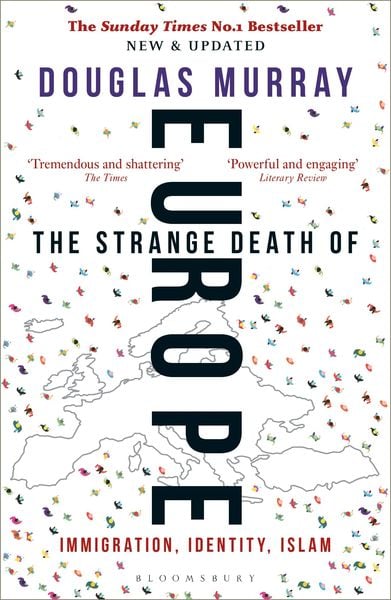
Produktbild: The Strange Death of Europe

The Strange Death of Europe Immigration, Identity, Islam

3

20,99 €

inkl. gesetzl. MwSt., zzgl. Versandkosten


  • Kostenlose Lieferung ab 30 € Einkaufswert
  • Versandkostenfrei für Bonuscard-Kund*innen

Beschreibung

Produktdetails

Verkaufsrang

20128

Einband

Taschenbuch

Erscheinungsdatum

14.06.2018

Abbildungen

No illustrations

Verlag

Bloomsbury Academic

Seitenzahl

384

Maße (L/B/H)

12,9/19,6/2,7 cm

Gewicht

280 g

Sprache

Englisch

ISBN

978-1-4729-5800-6

Beschreibung

Rezension

By far the most compelling political book of the year was Douglas Murray's The Strange Death of Europe . fearless, truth-telling, and masterfully organised . Don't hold an opinion about this book if you have not read it. Evening Standard, Books of the Year 2017

Produktdetails

Verkaufsrang

20128

Einband

Taschenbuch

Erscheinungsdatum

14.06.2018

Abbildungen

No illustrations

Verlag

Bloomsbury Academic

Seitenzahl

384

Maße (L/B/H)

12,9/19,6/2,7 cm

Gewicht

280 g

Sprache

Englisch

ISBN

978-1-4729-5800-6

Herstelleradresse

Libri GmbH
Europaallee 1
36244 Bad Hersfeld
DE

Email: gpsr@libri.de

Kundinnen und Kunden meinen

3 Bewertungen

Informationen zu Bewertungen

Zur Abgabe einer Bewertung ist eine Anmeldung im Konto notwendig. Die Authentizität der Bewertungen wird von uns nicht überprüft. Wir behalten uns vor, Bewertungstexte, die unseren Richtlinien widersprechen, entsprechend zu kürzen oder zu löschen.

Die Bewertungen sind nach Format, Anzahl Sterne und Datum sortiert.

5 Sterne

4 Sterne

(0)

3 Sterne

2 Sterne

(0)

1 Sterne

(0)

Fear Dressed as Fact: Unpacking The Strange Death of Europe

Bewertung am 07.05.2025

Bewertungsnummer: 2484962

Bewertet: Buch (Taschenbuch)

I picked up The Strange Death of Europe expecting a serious, perhaps provocative, but ultimately thoughtful take on immigration, identity, and the future of Europe. What I got instead was a grim, one-sided narrative filled with exaggeration, selective data, and more ideological spin than genuine insight. Murray argues that Europe is in decline—culturally and demographically—due to mass immigration and a loss of confidence in its identity. He paints a dramatic picture of cities overrun by migrants, suggesting that white Europeans are becoming minorities in their own countries. But the numbers don’t support that. In Germany, for example, Black-identifying people make up about 1% of the population; in France, it's around 8%. These figures hardly indicate a demographic crisis. He also attempts to tie declining birth rates among European women to increased immigration, which feels not just misleading but lazy. The truth is, women today have more choices—and many are choosing not to have children for perfectly valid, modern reasons. That’s not cultural decay. It’s personal agency. Interestingly, Murray does raise a point I agree with: why doesn’t Europe look within for labor solutions? He mentions Spain’s high youth unemployment as a potential source of workers for European countries like Germany, for example. And that makes sense—except he never digs into why this internal mobility isn’t happening. The reality is likely less dramatic: maybe young Spaniards don’t want to trade sunshine for grey skies and gruff greetings in Berlin. That’s a lifestyle choice, not a policy failure. Then there’s the bizarre concern about pubs closing in immigrant-heavy areas of England. Murray links this to cultural loss, but come on—pubs are closing due to rising rents, changing social habits, and economic pressures, not because a few more neighbors don’t drink. It’s like blaming the death of bookstores on immigrants instead of Amazon. To his credit, Murray briefly acknowledges legitimate concerns around illegal immigration and the importance of enforcing laws—points worth discussing. But too often, the book slips into alarmism, using cherry-picked sources to prop up an already biased view. The result reads more like a culture war manifesto than a meaningful contribution to public debate. In the end, The Strange Death of Europe offers more heat than light. It asks important questions but answers them with sweeping generalizations and a heavy dose of pessimism. If you’re curious about the anxieties driving parts of the European right, this book may interest you—but don’t mistake it for balanced analysis. So my final verdict - Occasionally insightful, but mostly exaggerated and deeply skewed. Better approached as a political commentary than a serious study of Europe’s future.

Fear Dressed as Fact: Unpacking The Strange Death of Europe

Bewertung am 07.05.2025
Bewertungsnummer: 2484962
Bewertet: Buch (Taschenbuch)

I picked up The Strange Death of Europe expecting a serious, perhaps provocative, but ultimately thoughtful take on immigration, identity, and the future of Europe. What I got instead was a grim, one-sided narrative filled with exaggeration, selective data, and more ideological spin than genuine insight. Murray argues that Europe is in decline—culturally and demographically—due to mass immigration and a loss of confidence in its identity. He paints a dramatic picture of cities overrun by migrants, suggesting that white Europeans are becoming minorities in their own countries. But the numbers don’t support that. In Germany, for example, Black-identifying people make up about 1% of the population; in France, it's around 8%. These figures hardly indicate a demographic crisis. He also attempts to tie declining birth rates among European women to increased immigration, which feels not just misleading but lazy. The truth is, women today have more choices—and many are choosing not to have children for perfectly valid, modern reasons. That’s not cultural decay. It’s personal agency. Interestingly, Murray does raise a point I agree with: why doesn’t Europe look within for labor solutions? He mentions Spain’s high youth unemployment as a potential source of workers for European countries like Germany, for example. And that makes sense—except he never digs into why this internal mobility isn’t happening. The reality is likely less dramatic: maybe young Spaniards don’t want to trade sunshine for grey skies and gruff greetings in Berlin. That’s a lifestyle choice, not a policy failure. Then there’s the bizarre concern about pubs closing in immigrant-heavy areas of England. Murray links this to cultural loss, but come on—pubs are closing due to rising rents, changing social habits, and economic pressures, not because a few more neighbors don’t drink. It’s like blaming the death of bookstores on immigrants instead of Amazon. To his credit, Murray briefly acknowledges legitimate concerns around illegal immigration and the importance of enforcing laws—points worth discussing. But too often, the book slips into alarmism, using cherry-picked sources to prop up an already biased view. The result reads more like a culture war manifesto than a meaningful contribution to public debate. In the end, The Strange Death of Europe offers more heat than light. It asks important questions but answers them with sweeping generalizations and a heavy dose of pessimism. If you’re curious about the anxieties driving parts of the European right, this book may interest you—but don’t mistake it for balanced analysis. So my final verdict - Occasionally insightful, but mostly exaggerated and deeply skewed. Better approached as a political commentary than a serious study of Europe’s future.

Wenn Fakten mehr zaehlen als Gefuehle

Bewertung am 03.02.2021

Bewertungsnummer: 1151774

Bewertet: eBook (ePUB)

Tolles Buch. Faktbasierende Beschreibung der Situation Europas. Murray stellt historische Vergleiche, macht keine ueberspitzten Prognosen sondern stellt auf nuechterne Art und Weise die Auswirkungen der immer mehr in den Hintergrund geratene kulturelle Absonderung der Europaer dar. Wir lesen wie sich die Blase der verlorengegangenen Kultur sich auf natuerliche Art wieder fuellt, nur diesmal mit einer den Europaern fremden Kultur. Das Buch stellt eine sehr interessante Frage. Was bleibt uebrig wenn man Nationen ihrer Identitaet und Kulturen Wurzeln beraubt? Ist die sekulaere, multikulturelle und identiaetslose Zukunft bereits gescheitert? Sehr Empfehlenswert, besonders fuer Befuerwoerter einer Offenen Grenzen Politik.

Wenn Fakten mehr zaehlen als Gefuehle

Bewertung am 03.02.2021
Bewertungsnummer: 1151774
Bewertet: eBook (ePUB)

Tolles Buch. Faktbasierende Beschreibung der Situation Europas. Murray stellt historische Vergleiche, macht keine ueberspitzten Prognosen sondern stellt auf nuechterne Art und Weise die Auswirkungen der immer mehr in den Hintergrund geratene kulturelle Absonderung der Europaer dar. Wir lesen wie sich die Blase der verlorengegangenen Kultur sich auf natuerliche Art wieder fuellt, nur diesmal mit einer den Europaern fremden Kultur. Das Buch stellt eine sehr interessante Frage. Was bleibt uebrig wenn man Nationen ihrer Identitaet und Kulturen Wurzeln beraubt? Ist die sekulaere, multikulturelle und identiaetslose Zukunft bereits gescheitert? Sehr Empfehlenswert, besonders fuer Befuerwoerter einer Offenen Grenzen Politik.

Kundinnen und Kunden meinen

The Strange Death of Europe

von Douglas Murray

0 Bewertungen filtern

Die Leseprobe wird geladen.
  • Produktbild: The Strange Death of Europe
  • Introduction
    The beginning
    How we got hooked on immigration
    The excuses we told ourselves
    'Welcome to Europe'
    'We have seen everything'
    Multiculturalism
    They are here
    Prophets without honour
    Early-warning sirens
    The tyranny of guilt
    The pretence of repatriation
    Learning to live with it
    Tiredness
    We're stuck with this
    Controlling the backlash
    The feeling that the story has run out
    The end
    What might have been
    What will be

    Afterword
    Notes
    Acknowledgements
    Index