KI-Beratung Beta

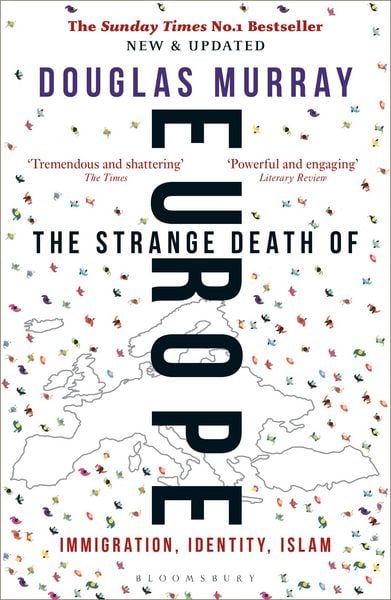
Produktbild: The Strange Death of Europe

The Strange Death of Europe Immigration, Identity, Islam

3

15,50 €

inkl. gesetzl. MwSt.

Beschreibung

THE SUNDAY TIMES NUMBER ONE BESTSELLER 'Tremendous and shattering' - The Times A highly personal account of a continent and culture caught in the act of suicide. Declining birth-rates, mass immigration and cultivated self-distrust and self-hatred have come together to make Europeans unable to argue for...

Beschreibung

THE SUNDAY TIMES NUMBER ONE BESTSELLER

'Tremendous and shattering' - The Times
A highly personal account of a continent and culture caught in the act of suicide.
Declining birth-rates, mass immigration and cultivated self-distrust and self-hatred have come together to make Europeans unable to argue for themselves and incapable of resisting their own comprehensive change as a society.
This book is not only an analysis of demographic and political realities, but also an eyewitness account of a continent in self-destruct mode. It includes reporting from across the entire continent, from the places where migrants land to the places they end up, from the people who appear to welcome them in to the places which cannot accept them.
Told from this first-hand perspective, and backed with impressive research and evidence, the book addresses the disappointing failure of multiculturalism, the lack of repatriation and the Western fixation on guilt. Murray travels to Berlin, Paris, Scandinavia, Lampedusa and Greece to uncover the malaise at the very heart of the European culture, and to hear the stories of those who have arrived in Europe from far away. In each chapter he also takes a step back to look at the bigger issues which lie behind a continent's death-wish, answering the question of why anyone, let alone an entire civilisation, would do this to themselves?
He ends with two visions of Europe - one hopeful, one pessimistic - which paint a picture of Europe in crisis and offer a choice as to what, if anything, we can do next.

Produktdetails

Format

PDF

Kopierschutz

Ja

Family Sharing

Nein

Text-to-Speech

Nein

Produktdetails

Format

PDF

Format

eBooks im PDF-Format haben eine festgelegte Seitengröße und eignen sich daher nur bedingt zum Lesen auf einem tolino eReader oder Smartphone. Für den vollen Lesegenuss empfehlen wir Ihnen bei PDF-eBooks die Verwendung eines Tablets oder Computers.

Kopierschutz

Ja

Kopierschutz

Zum Lesen dieses eBooks auf Geräten der tolino Familie sowie auf sonstigen eReadern und am PC benötigen Sie eine ByteBook-ID. Weitere Hinweise zum Lesen von kopiergeschützten eBooks finden Sie unter Hilfe/Downloads.

Family Sharing

Nein

Family Sharing

Mit Family Sharing können Sie eBooks innerhalb Ihrer Familie (max. sechs Mitglieder im gleichen Haushalt) teilen. Sie entscheiden selbst, welches Buch Sie mit welchem Familienmitglied teilen möchten. Auch das parallele Lesen durch verschiedene Familienmitglieder ist durch Family Sharing möglich. Um eBooks zu teilen oder geteilt zu bekommen, muss jedes Familienmitglied ein Konto bei Thalia oder einem anderen tolino-Buchhändler haben. Weitere Informationen finden Sie unter Hilfe/Family-Sharing.

Text-to-Speech

Nein

Text-to-Speech

Bedeutet Ihnen Stimme mehr als Text? Mit der Funktion Text-to-Speech können Sie sich im tolino webReader und in der aktuellen Thalia – Lesen & Hören App das eBook vorlesen lassen. Weitere Informationen finden Sie unter Hilfe/Text-to-Speech.

Erscheinungsdatum

04.05.2017

Verlag Bloomsbury eBooks UK
Seitenzahl

352 (Printausgabe)

Dateigröße

3533 KB

Auflage

1. Auflage

Sprache

Englisch

EAN

9781472942227

Barrierefreiheit
  • keine Information zur Barrierefreiheit bekannt

Kundinnen und Kunden meinen

Informationen zu Bewertungen

Zur Abgabe einer Bewertung ist eine Anmeldung im Konto notwendig. Die Authentizität der Bewertungen wird von uns nicht überprüft. Wir behalten uns vor, Bewertungstexte, die unseren Richtlinien widersprechen, entsprechend zu kürzen oder zu löschen.

Die Bewertungen sind nach Format, Anzahl Sterne und Datum sortiert.

  • Bewertung

    5/5

    03.02.2021

    eBook (ePUB)

    Wenn Fakten mehr zaehlen als Gefuehle

    Tolles Buch. Faktbasierende Beschreibung der Situation Europas. Murray stellt historische Vergleiche, macht keine ueberspitzten Prognosen sondern stellt auf nuechterne Art und Weise die Auswirkungen der immer mehr in den Hintergrund geratene kulturelle Absonderung der Europaer dar. Wir lesen wie sich die Blase der verlorengegangenen Kultur sich auf natuerliche Art wieder fuellt, nur diesmal mit einer den Europaern fremden Kultur. Das Buch stellt eine sehr interessante Frage. Was bleibt uebrig wenn man Nationen ihrer Identitaet und Kulturen Wurzeln beraubt? Ist die sekulaere, multikulturelle und identiaetslose Zukunft bereits gescheitert? Sehr Empfehlenswert, besonders fuer Befuerwoerter einer Offenen Grenzen Politik.

  • Matthias

    5/5

    19.03.2018

    Buch (Gebundene Ausgabe)

    Sollte jeder Europäer lesen!

    Diese Buch ist ein Muss! Es zeigt sehr deutlich auf, warum Fakten niemals ignoriert werden dürfen. Politische Korrektheit, nahezu fanatischer Selbsthass, Feigheit und pure Ignoranz haben Europa's Identität und Seele in höchste Gefahr gebracht. Man hat seit Dekaden Warnungen ausgesprochen und Fakten aufgezeigt. Doch eine mehrheitlich gleichgültige Bevölkerung und rückgratlose politische Eliten haben nicht angemessen reagiert.

  • Bewertung

    3/5

    07.05.2025

    Buch (Taschenbuch)

    Fear Dressed as Fact: Unpacking The Strange Death of Europe

    I picked up The Strange Death of Europe expecting a serious, perhaps provocative, but ultimately thoughtful take on immigration, identity, and the future of Europe. What I got instead was a grim, one-sided narrative filled with exaggeration, selective data, and more ideological spin than genuine insight. Murray argues that Europe is in decline—culturally and demographically—due to mass immigration and a loss of confidence in its identity. He paints a dramatic picture of cities overrun by migrants, suggesting that white Europeans are becoming minorities in their own countries. But the numbers don’t support that. In Germany, for example, Black-identifying people make up about 1% of the population; in France, it's around 8%. These figures hardly indicate a demographic crisis. He also attempts to tie declining birth rates among European women to increased immigration, which feels not just misleading but lazy. The truth is, women today have more choices—and many are choosing not to have children for perfectly valid, modern reasons. That’s not cultural decay. It’s personal agency. Interestingly, Murray does raise a point I agree with: why doesn’t Europe look within for labor solutions? He mentions Spain’s high youth unemployment as a potential source of workers for European countries like Germany, for example. And that makes sense—except he never digs into why this internal mobility isn’t happening. The reality is likely less dramatic: maybe young Spaniards don’t want to trade sunshine for grey skies and gruff greetings in Berlin. That’s a lifestyle choice, not a policy failure. Then there’s the bizarre concern about pubs closing in immigrant-heavy areas of England. Murray links this to cultural loss, but come on—pubs are closing due to rising rents, changing social habits, and economic pressures, not because a few more neighbors don’t drink. It’s like blaming the death of bookstores on immigrants instead of Amazon. To his credit, Murray briefly acknowledges legitimate concerns around illegal immigration and the importance of enforcing laws—points worth discussing. But too often, the book slips into alarmism, using cherry-picked sources to prop up an already biased view. The result reads more like a culture war manifesto than a meaningful contribution to public debate. In the end, The Strange Death of Europe offers more heat than light. It asks important questions but answers them with sweeping generalizations and a heavy dose of pessimism. If you’re curious about the anxieties driving parts of the European right, this book may interest you—but don’t mistake it for balanced analysis. So my final verdict - Occasionally insightful, but mostly exaggerated and deeply skewed. Better approached as a political commentary than a serious study of Europe’s future.

Kundinnen und Kunden meinen

5

2

4

0

3

1

2

0

1

0

Bewertungen (3)

Weitere Artikel finden Sie in

Die Leseprobe wird geladen.
  • Produktbild: The Strange Death of Europe