• Produktbild: Feeding Japan
  • Produktbild: Feeding Japan
- 10%

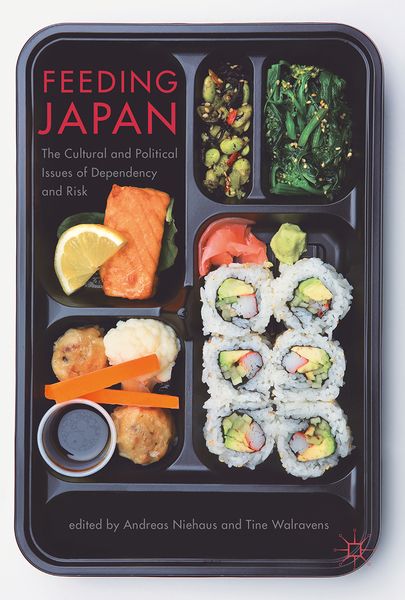
Feeding Japan The Cultural and Political Issues of Dependency and Risk

10% sparen

167,99 € UVP 186,99 €

inkl. gesetzl. MwSt., Versandkostenfrei


Beschreibung

Produktdetails

Einband

Gebundene Ausgabe

Erscheinungsdatum

07.09.2017

Abbildungen

XI, 10 illus., schwarz-weiss Illustrationen

Herausgeber

Andreas Niehaus + weitere

Verlag

Springer

Seitenzahl

540

Maße (L/B/H)

21,6/15,3/3,4 cm

Gewicht

818 g

Auflage

1st ed. 2017

Sprache

Englisch

ISBN

978-3-319-50552-7

Beschreibung

Rezension

“This is the best volume dealing with the production and consumption of food in Japan that has been published to date.” (Katarzyna J. Cwiertka, Global Food History, Vol. 4 (1), 2018)

Portrait

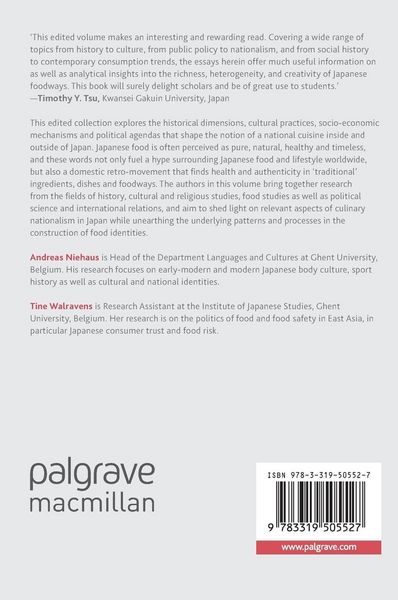
Andreas Niehaus is Head of the Department Languages and Cultures at Ghent University, Belgium. His research focuses on early-modern and modern Japanese body culture, sport history as well as cultural and national identities.

Tine Walravens is a Research Assistant at the Institute of Japanese Studies, Ghent University, Belgium. Her research is on the politics of food and food safety in East Asia, in particular Japanese consumer trust and food risk.

Produktdetails

Einband

Gebundene Ausgabe

Erscheinungsdatum

07.09.2017

Abbildungen

XI, 10 illus., schwarz-weiss Illustrationen

Herausgeber

Verlag

Springer

Seitenzahl

540

Maße (L/B/H)

21,6/15,3/3,4 cm

Gewicht

818 g

Auflage

1st ed. 2017

Sprache

Englisch

ISBN

978-3-319-50552-7

Herstelleradresse

Springer-Verlag GmbH
Tiergartenstr. 17
69121 Heidelberg
DE

Email: ProductSafety@springernature.com

Noch keine Bewertungen vorhanden

Verfassen Sie die erste Bewertung zu diesem Artikel

Helfen Sie anderen Kundinnen und Kunden durch Ihre Meinung.

Kundinnen und Kunden meinen

Bewertungen (0)

  • Produktbild: Feeding Japan
  • Produktbild: Feeding Japan
  • Introduction: Reconsidering Japanese food; Andreas Niehaus and Tine Walravens.- Part I: Inventing Japanese Food Identities.- 2.“They should be called gluttons and be despised”: Food, Body and Ideology in Kaibara Ekiken’s Yōjōkun (1713); Andreas Niehaus.- 3. ‘Sweets Reimagined’: The Construction of Confectionary Identities, 1890-1930; Mitsuda TatsuyaFor Gluttons, Not Housewives: Japan’s First Gourmet Magazine, Kuidōraku ; Eric Rath.- 4. Global Recognition and Domestic Containment: Culinary Soft Power in Japan; Stephanie Assmann.- Part II: Feeding the Nation: Japanese Food Identities in Times of Globalization.- 5. Deconstructing “Kokushu”: The Promotion of Sake as Japan’s National Alcohol Drink in Times of Crisis in the Sake Industry; Dick Stegewerns.- 6. The Drink of the Nation? Coffee in Japan's Culinary Culture; Helena Grinshpun.- 7. Forging Ahead with Bread: Nationalism, Networks and Narratives of Progress and Modernity in Japan Sheng Annie.- 8. Joining the Global Win

    e World: Japan’s Winemaking Industry; Wang Chuanfei.- Part III: Japanese Food Industries Inside-Out.- 9. Chinese Food Threatening the Japanese Table: Changing Perceptions of Imported Chinese Food in Japan; Tine Walravens.- 10. Domesticating the Japanese Culinary Field in Shanghai; James Farrer.- 11. Ḥalāl Foods Discourse and Constructing Muslim Identities in Japan; Ono Junichi.- 12. Eating Japanese – Being Japanese: Ethnic Food in Hawai’I; Jutta Teuwsen.- Part IV: Agricultural Politics of Self-Suffiency and Dependency.- 13. Japan in the International Food Regimes: Understanding Japanese Food Self-sufficiency Decline; Felice Farina.- 14. The Trans-Pacific Partnership, Import-Dependency, and the Future of Food Security in Japan; Paul O’Shea.- 15. Subsidized Tradition, Networks, and Power: Hamlet Farming in Japan’s Changing Agricultural Support and Protection Regime; Hanno Jentzsch.- Part V: Post-Fukushima Food Education and Food Safety.- 16. Eating School Lunches Together after the Fukushima Accident; Kimura Aya H.- 17. National Solidarity of Food Insecurity: Food Practice and Nationalism in Post- 3/11 Japan; Takeda Hiroko.- 18. Discourse on Food Safety and the Trans-Pacific Partnership (TPP): Perspectives from Japan; Cornelia Reiher.