KI-Beratung Beta

Produktbild: Literary Spinoffs
Band 35

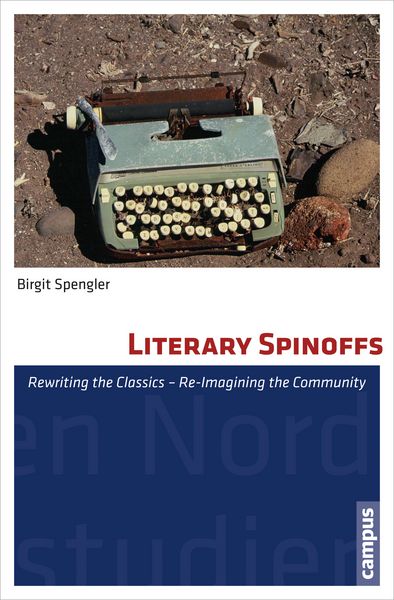
Literary Spinoffs Rewriting the Classics - Re-Imagining the Community

Aus der Reihe Nordamerikastudien

46,30 €

inkl. gesetzl. MwSt., Versandkostenfrei


Beschreibung

Birgit Spengler untersucht in ihrer Arbeit das zeitgenössische Genre der »Spinoffs« – Romane, die klassische kanonische Werke der amerikanischen Literatur kreativ um- und fortschreiben. Am Beispiel der schreibenden Auseinandersetzung mit Klassikern wie »Moby- Dick« oder den »Adventures of Huckleberry...

Beschreibung

Birgit Spengler untersucht in ihrer Arbeit das zeitgenössische Genre der »Spinoffs« – Romane, die klassische kanonische Werke der amerikanischen Literatur kreativ um- und fortschreiben. Am Beispiel der schreibenden Auseinandersetzung mit Klassikern wie »Moby-
Dick« oder den »Adventures of Huckleberry Finn« entschlüsselt sie die literarischen Strategien, die »Spinoffs« nutzen, um auf gesamtkulturelle Sinnstiftungsprozesse Einfluss zu nehmen und sich in die kulturelle Imagination einzuschreiben. Dabei stellen diese Romane auch die Frage nach der Abgeschlossenheit von Kunstwerken, nach kulturellem Kapital und geistigem Eigentum neu.

Produktdetails

Einband

Taschenbuch

Erscheinungsdatum

05.03.2015

Abbildungen

18 Abbildungen

Verlag Campus

Produktdetails

Einband

Taschenbuch

Erscheinungsdatum

05.03.2015

Abbildungen

18 Abbildungen

Verlag Campus
Seitenzahl

500

Maße (L/B/H)

21,3/14,4/3,2 cm

Gewicht

710 g

Auflage

1

Sprache

Englisch

ISBN

978-3-593-50311-0

Herstelleradresse

Beltz Verlagsgruppe GmbH & Co. KG
Werderstr. 10
69469 Weinheim
DE
info@campus.de

Noch keine Bewertungen vorhanden

Verfassen Sie die erste Bewertung zu diesem Artikel

Helfen Sie anderen Kundinnen und Kunden durch Ihre Meinung.

Kundinnen und Kunden meinen

Bewertungen (0)

Die Leseprobe wird geladen.
  • Produktbild: Literary Spinoffs
  • Contents

    Acknowledgements 9

    Introduction 11

    1. Literary Spinoffs: An Intertextual Genre 30

    1.1. Spinoff Aesthetics: Explicitness and Intensity of the Intertextual Relation 32

    1.2 Oscillation and Good Continuation 36

    1.3 0-2: Text and Context/Text and Matrixes 41

    1.4 The "Dialogic" Involvement with the Pre-Text:

    Dark Areas and In-/Compatibility of Fictional Worlds 44

    1.5 Spinoffs as Communicative Genre: Dialogue and Dialogics 48

    1.6 Intertextual Contexts 50

    2. Re-Visioning Intertextuality: Models and Debates 61

    2.1 Predecessors: Poststructuralist vs. Descriptive Intertextuality 62

    2.2 Alternative Positions 73

    2.3 A Working Model of Intertextuality in Cultural and Literary Analysis 78

    3. Cultural Work and the Functions of Genre 97

    3.1 Cultural Work 99

    3.2 Exclusion and Inclusion: Spinoffs and/as Participatory Culture 102

    3.3 The Literary Marketplace and Cultural Capital 107

    3.4 Copyrights and Copywrongs: Who "Owns" Culture? 111

    3.5 Revisiting the Nineteenth Century 116

    4. Ahab's Wife: A Cannibal of a Book? 125

    Ow(n)ing Melville 125

    4.1 Appropriating Melville 131

    Swimming through Libraries, Weaving the Web: Levels and Methods of Intertextual Engagement in Ahab's Wife 134

    Whose Melville? 142

    4.2 The World as Ship: Mad Hunts, Male Myths 150

    Melville's Male Microcosm 150

    Moby-Dick as Quest Narrative: Ahab's Quest 156

    Male Quests Reconsidered 164

    Re-Considering the World of Male Bonding 175

    4.3 Re-Writing the Quest: From Soaring Spirit to Social Vision 180

    Invading the World of the Ship, Questioning Separate Spheres 182

    Diving and Soaring 187

    Una's (In-)Sights: Freedom and Community 196

    Reading Melville through Discourses of Slavery 203

    (Mis-)Guided Missions-Commenting on National Quests 208

    4.4 The Quill and the Quilt: Art as Social Vision 211

    The Quilt and the Quill: Sewing and Writing as Means of Coping 212

    The Life of Art: Creating a Community of Texts 222

    5. From Playing Pilgrim to Waging War: March 229

    The Return of the Father 229

    5.1 Little Women: Alcott's Classic? 233

    "Moral Pap for the Young" vs. Female Myth 233

    Little Women's Intertexts 237

    5.2 Little Women and Colossal Fathers: March's Pre-Texts 245

    Re-Writing Little Women 245

    Literary Intertexts 248

    History and Biography as Intertexts 253

    5.3 March's Civil Wars: Gender, Soul-Wrestling, Slavery, and Innocence 259

    The Missing Father as Husband: Sex Wars 261

    The Father as Pilgrim: A Transcendentalist's Civil "Wars" 270

    Re-Viewing the National Founding Story, Re-Imagining the Civil War 278

    The End of Innocence: March's National Bequests 288

    A Trunk Full of Books 300

    6. American Pastorals? Re-Reading Adventures of Huckleberry Finn 304

    6.1 Twain's Fame: The Hypercanonization of Mark Twain

    and Huckleberry Finn 304

    6.2 Reading Huckleberry Finn: Hermeneutic Agendas 311

    Hannibal Nostalgia: Imagined Childhoods and Pasts 314

    The Mississippi as Alternative Space: Freedom and Civilization 322

    Race in Huckleberry Finn: Voice, Plot, and Characterization 328

    6.3 My Jim: Huckleberry Finn as Neo-Slave Narrative 338

    In the Margins of Twain's World: Turning Huckleberry Finn into a Narrative of Slavery 340

    Re-Dressing Jim: From Minstrel Mask to White Man's Hat 359

    Mississippi Myths 367

    Connections 372

    6.4 The Bequests of the Fathers: Fatherhood, Inheritances, and the Role of the Past in Finn 385

    Rewriting Pap Finn: Intertextual Strategies in Finn 389

    Fatherly Bequests and River Nightmares: Finn and the Nature/Civilization Divide 394

    Huck's Blackness 405

    Whence, America? National Origins and Narrative Voice 410

    The Writings on the Whitewashed Wall 415

    In Search of Narrative Alternatives 421

    Conclusion: Story-Telling, Libraries, Trunks of Books, and the Writing on the Whitewashed Wall 429

    Bibliography 452

    List of Illustrations 492

    Index 494