Gutscheinbedingungen

**Gültig nur für Bestellungen an die Wunsch-Poststation bis 10.06.2026 auf Spielzeug, Schreibwaren, Filme, Geschenke & Trends, Musik, tolino eReader & Zubehör, Hörbücher und Hörbuch-Downloads (außer Abo), nicht preisgebundene Bücher und Kalender online auf thalia.at und in der Thalia App. Einzelne Artikel können ausgeschlossen sein. Aufgrund der Buchpreisbindung sind deutschsprachige Bücher und eBooks ausgenommen. Zusätzlich ausgenommen sind preisgebundene Artikel, Abos & Flatrates, eBooks, Games, Geschenkkarten/-boxen, Shelfies, Software, Zeitschriften sowie einzelne Artikel von tonies®. Pro Einkauf einmal einlösbar. Kein Click & Collect möglich. Keine Barauszahlung. Nicht kombinierbar mit anderen Aktionen und Gutscheinen. Gutschein wird auf max. 500€ Bestellwert angerechnet. Nicht gültig für Versandkosten und Services.

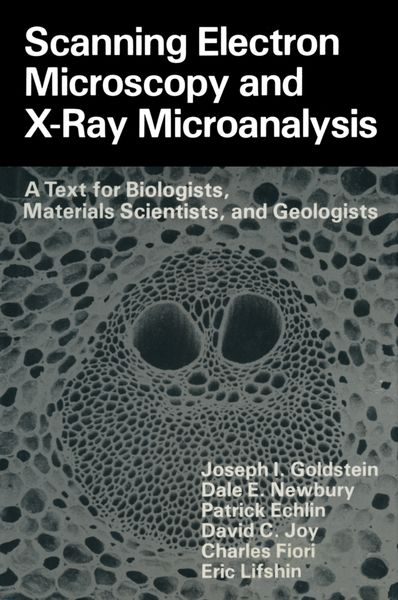
Produktbild: Scanning Electron Microscopy and X-Ray Microanalysis

Scanning Electron Microscopy and X-Ray Microanalysis A Text for Biologists, Materials Scientists, and Geologists

99,99 €

inkl. gesetzl. MwSt., Versandkostenfrei


Beschreibung

Produktdetails

Einband

Taschenbuch

Erscheinungsdatum

20.03.2013

Verlag

Springer Us

Seitenzahl

673

Maße (L/B/H)

23,5/15,5/3,7 cm

Gewicht

1030 g

Auflage

1981

Sprache

Englisch

ISBN

978-1-4613-3275-6

Beschreibung

Produktdetails

Einband

Taschenbuch

Erscheinungsdatum

20.03.2013

Verlag

Springer Us

Seitenzahl

673

Maße (L/B/H)

23,5/15,5/3,7 cm

Gewicht

1030 g

Auflage

1981

Sprache

Englisch

ISBN

978-1-4613-3275-6

Herstelleradresse

Springer-Verlag GmbH
Tiergartenstr. 17
69121 Heidelberg
DE

Email: ProductSafety@springernature.com

Kundinnen und Kunden meinen

0 Bewertungen

Informationen zu Bewertungen

Zur Abgabe einer Bewertung ist eine Anmeldung im Konto notwendig. Die Authentizität der Bewertungen wird von uns nicht überprüft. Wir behalten uns vor, Bewertungstexte, die unseren Richtlinien widersprechen, entsprechend zu kürzen oder zu löschen.

Die Bewertungen sind nach Format, Anzahl Sterne und Datum sortiert.

Verfassen Sie die erste Bewertung zu diesem Artikel

Helfen Sie anderen Kund*innen durch Ihre Meinung

Kundinnen und Kunden meinen

0 Bewertungen filtern

  • Produktbild: Scanning Electron Microscopy and X-Ray Microanalysis
  • 1. Introduction.- 1.1. Evolution of the Scanning Electron Microscope.- 1.2. Evolution of the Electron Probe Microanalyzer.- 1.3. Outline of This Book.- 2. Electron Optics.- 2.1. Electron Guns.- 2.1.1. Thermionic Emission.- 2.1.2. Tungsten Cathode.- 2.1.3. The Lanthanum Hexaboride (LaB6) Cathode.- 2.1.4. Field Emission Gun.- 2.2. Electron Lenses.- 2.2.1. General Properties of Magnetic Lenses.- 2.2.2. Production of Minimum Spot Size.- 2.2.3. Aberrations in the Electron Optical Column.- 2.3. Electron Probe Diameter, dp, vs. Electron Probe Current i.- 2.3.1. Calculation of dmin and imax.- 2.3.2. Measurement of Microscope Parameters (dp, i, ?).- 2.3.3. High-Resolution Scanning Electron Microscopy.- 3. Electron-Beam-Specimen Interactions.- 3.1. Introduction.- 3.2. Scattering.- 3.2.1. Elastic Scattering.- 3.2.2. Inelastic Scattering.- 3.3. Interaction Volume.- 3.3.1. Experimental Evidence.- 3.3.2. Monte Carlo Calculations.- 3.4. Backscattered Electrons.- 3.4.1. Atomic Number Dependence.- 3.4.2. Energy Dependence.- 3.4.3. Tilt Dependence.- 3.4.4. Angular Distribution.- 3.4.5. Energy Distribution.- 3.4.6. Spatial Distribution.- 3.4.7. Sampling Depth.- 3.5. Signals from Inelastic Scattering.- 3.5.1. Secondary Electrons.- 3.5.2. X-Rays.- 3.5.3. Auger Electrons.- 3.5.4. Cathodoluminescence.- 3.6. Summary.- 4. Image Formation in the Scanning Electron Microscope.- 4.1. Introduction.- 4.2. The Basic SEM Imaging Process.- 4.2.1. Scanning Action.- 4.2.2. Image Construction (Mapping).- 4.2.3. Magnification.- 4.2.4. Picture Element (Picture Point).- 4.2.5. Depth of Field.- 4.2.6. Image Distortions.- 4.3. Stereomicroscopy.- 4.4. Detectors.- 4.4.1. Electron Detectors.- 4.4.2. Cathodoluminescence Detectors.- 4.5. The Roles of Specimen and Detector in Contrast Formation.- 4.5.1. Contrast.- 4.5.2. Atomic Number (Compositional) Contrast (Backscattered Electron Signal).- 4.5.3. Compositional Contrast (Secondary-Electron Signal).- 4.5.4. Contrast Components.- 4.5.5. Topographic Contrast.- 4.6. Image Quality.- 4.6.1. Signal Quality and Contrast Information.- 4.6.2. Strategy in SEM Imaging.- 4.6.3. Resolution Limitations.- 4.7. Signal Processing for the Display of Contrast Information.- 4.7.1. The Visibility Problem.- 4.7.2. Signal Processing Techniques.- 4.7.3. Combinations of Detectors.- 4.7.4. Beam Energy Effects.- 4.7.5. Summary.- 5. X-Ray Spectral Measurement: WDS and EDS.- 5.1. Introduction.- 5.2. Wavelength-Dispersive Spectrometer.- 5.2.1. Basic Design.- 5.2.2. The X-Ray Detector.- 5.2.3. Detector Electronics.- 5.3. Energy-Dispersive X-Ray Spectrometer.- 5.3.1. Operating Principles.- 5.3.2. The Detection Process.- 5.3.3. Artifacts of the Detection Process.- 5.3.4. The Main Amplifier and Pulse Pileup Rejection.- 5.3.5. Artifacts from the Detector Environment.- 5.3.6. The Multichannel Analyzer.- 5.3.7. Summary of EDS Operation and Artifacts.- 5.4. Comparison of Wavelength-Dispersive Spectrometers with Energy-Dispersive Spectrometers.- 5.4.1. Geometrical Collection Efficiency.- 5.4.2. Quantum Efficiency.- 5.4.3. Resolution.- 5.4.4. Spectral Acceptance Range.- 5.4.5. Maximum Count Rate.- 5.4.6. Minimum Probe Size.- 5.4.7. Speed of Analysis.- 5.4.8. Spectral Artifacts.- Appendix: Initial Detector Setup and Testing.- 6. Qualitative X-Ray Analysis.- 6.1. Introduction.- 6.2. EDS Qualitative Analysis.- 6.2.1. X-Ray Lines.- 6.2.2. Guidelines for EDS Qualitative Analysis.- 6.2.3. Pathological Overlaps in EDS Qualitative Analysis.- 6.2.4. Examples of EDS Qualitative Analysis.- 6.3. WDS Qualitative Analysis.- 6.3.1. Measurement of X-Ray Lines.- 6.3.2. Guidelines for WDS Qualitative Analysis.- 6.4. X-Ray Scanning.- 7. Quantitative X-Ray Microanalysis.- 7.1. Introduction.- 7.2. ZAF Technique.- 7.2.1. Introduction.- 7.2.2. The Absorption Factor, A.- 7.2.3. The Atomic Number Factor, Z.- 7.2.4. The Characteristic Fluorescence Correction, F.- 7.2.5. The Continuum Fluorescence Correction.- 7.2.6. Summary Discussion of the ZAF Method.- 7.3. The Empirical Method.- 7.4. Quantitative Analysis with Nonnormal Electron Beam Incidence.- 7.5. Analysis of Particles and Rough Surfaces.- 7.5.1. Geometric Effects.- 7.5.2. Compensating for Geometric Effects.- 7.5.3. Summary.- 7.6. Analysis of Thin Films and Foils.- 7.6.1. Thin Foils.- 7.6.2. Thin Films on Substrates.- 7.7. Quantitative Analysis of Biological Material.- 7.7.1. Introduction.- 7.7.2. Mass Loss and Artifacts during Analysis.- 7.7.3. Bulk Samples.- 7.7.4. Thick Sections on Bulk Substrates.- 7.7.5. Thin Samples.- 7.7.6. The Continuum Method.- 7.7.7. Thick Specimens on Very Thin Supports.- 7.7.8. Microdroplets.- 7.7.9. Standards.- 7.7.10. Conclusion.- Appendix A: Continuum Method.- Appendix B: Worked Examples of Quantitative Analysis of Biological Material.- Notation.- 8. Practical Techniques of X-Ray Analysis.- 8.1. General Considerations of Data Handling.- 8.2. Background Shape.- 8.2.1. Background Modeling.- 8.2.2. Background Filtering.- 8.3. Peak Overlap.- 8.3.1. Linearity.- 8.3.2. Goodness of Fit.- 8.3.3. The Linear Methods.- 8.3.4. The Nonlinear Methods.- 8.3.5. Error Estimation.- 8.4. Dead-Time Correction.- 8.5. Example of Quantitative Analysis.- 8.6. Precision and Sensitivity in X-Ray Analysis.- 8.6.1. Statistical Basis for Calculating Precision and Sensitivity.- 8.6.2. Sample Homogeneity.- 8.6.3. Analytical Sensitivity.- 8.6.4. Trace Element Analysis.- 8.7. Light Element Analysis.- 9. Materials Specimen Preparation for SEM and X-Ray Microanalysis.- 9.1. Metals and Ceramics.- 9.1.1. Scanning Electron Microscopy.- 9.1.2. X-Ray Microanalysis.- 9.2. Particles and Fibers.- 9.3. Hydrous Materials.- 9.3.1. Soils and Clays.- 9.3.2. Polymers.- 10. Coating Techniques for SEM and Microanalysis.- 10.1. Introduction.- 10.1.1. Specimen Characteristics.- 10.1.2. Alternatives to Coating.- 10.1.3. Thin-Film Technology.- 10.2. Thermal Evaporation.- 10.2.1. High-Vacuum Evaporation.- 10.2.2. Low-Vacuum Evaporation.- 10.3. Sputter Coating.- 10.3.1. Ion Beam Sputtering.- 10.3.2. Diode or Direct Current Sputtering.- 10.3.3. Cool Diode Sputtering.- 10.3.4. Sputtering Techniques.- 10.3.5. Choice of Target.- 10.3.6. Coating Thickness.- 10.3.7. Advantages of Sputter Coating.- 10.3.8. Artifacts Associated with Sputter Coating.- 10.4. Specialized Coating Methods.- 10.4.1. High-Resolution Coating.- 10.4.2. Low-Temperature Coating.- 10.5. Determination of Coating Thickness.- 10.5.1. Estimation of Coating Thickness.- 10.5.2. Measurement during Coating.- 10.5.3. Measurement after Coating.- 10.5.4. Removing Coating Layers.- 11. Preparation of Biological Samples for Scanning Electron Microscopy.- 11.1. Introduction.- 11.2. Compromising the Microscope.- 11.2.1. Environmental Stages.- 11.2.2. Nonoptimal Microscope Performance.- 11.3. Compromising the Specimen.- 11.3.1. Correlative Microscopy.- 11.3.2. Specimen Selection.- 11.3.3. Specimen Cleaning.- 11.3.4. Specimen Stabilization.- 11.3.5. Exposure of Internal Surfaces.- 11.3.6. Localizing Areas of Known Physiological Activity.- 11.3.7. Specimen Dehydration.- 11.3.8. Specimen Supports.- 11.3.9. Specimen Conductivity.- 11.3.10. Heavy Metal Impregnation.- 11.3.11. Interpretation and Artifacts.- 12. Preparation of Biological Samples for X-Ray Microanalysis.- 12.1. Introduction.- 12.1.1. The Nature and Enormity of the Problem.- 12.1.2. Applications of X-Ray Microanalysis.- 12.1.3. Types of X-Ray Analytical Investigations.- 12.1.4. Types of Biological Specimens.- 12.1.5. Strategy.- 12.1.6. Criteria for Satisfactory Specimen Preparation.- 12.2. Ambient Temperature Preparative Procedures.- 12.2.1. Before Fixation.- 12.2.2. Fixation.- 12.2.3. Histochemical Techniques.- 12.2.4. Precipitation Techniques.- 12.2.5. Dehydration.- 12.2.6. Embedding.- 12.2.7. Sectioning and Fracturing.- 12.2.8. Specimen Supports.- 12.2.9. Specimen Staining.- 12.2.10. Specimen Coating.- 12.3. Low-Temperature Preparative Procedures.- 12.3.1. Specimen Pretreatment.- 12.3.2. Freezing Procedures.- 12.3.3. Movement of Elements within a Given Cellular Compartment.- 12.3.4. Postfreezing Procedures.- 12.3.5. Frozen-Hydrated and Partially Frozen-Hydrated Material.- 12.3.6. Freeze Drying.- 12.3.7. Freeze Substitution.- 12.3.8. Sectioning.- 12.3.9. Fracturing.- 12.3.10. Specimen Handling.- 12.4. Microincineration.- 13. Applications of the SEM and EPMA to Solid Samples and Biological Materials.- 13.1. Study of Aluminum-Iron Electrical Junctions.- 13.2. Study of Deformation in Situ in the Scanning Electron Microscope.- 13.3. Analysis of Phases in Raney Nickel Alloy.- 13.4. Quantitative Analysis of a New Mineral, Sinoite.- 13.5. Determination of the Equilibrium Phase Diagram for the Fe-Ni-C System.- 13.6. Study of Lunar Metal Particle 63344,1.- 13.7. Observation of Soft Plant Tissue with a High Water Content.- 13.8. Study of Multicellular Soft Plant Tissue with High Water Content.- 13.9. Examination of Single-Celled, Soft Animal Tissue with High Water Content.- 13.10. Observation of Hard Plant Tissue with a Low Water Content.- 13.11. Study of Single-Celled Plant Tissue with a Hard Outer Covering and Relatively Low Internal Water Content.- 13.12. Examination of Medium Soft Animal Tissue with a High Water Content.- 13.13. Study of Single-Celled Animal Tissue of High Water Content.- 14. Data Base.- Table 14.1. Atomic Number, Atomic Weight, and Density of Metals.- Table 14.2. Common Oxides of the Elements.- Table 14.3. Mass Absorption Coefficients for K? Lines.- Table 14.4. Mass Absorption Coefficients for L? Lines.- Table 14.5. Selected Mass Absorption Coefficients.- Table 14.6. K Series X-Ray Wavelengths and Energies.- Table 14.7. L Series X-Ray Wavelengths and Energies.- Table 14.8. M Series X-Ray Wavelengths and Energies.- Table 14.9. Fitting Parameters for Duncumb-Reed Backscattering Correction Factor R.- Table 14.10. J Values and Fluorescent Yield, ?, Values.- Table 14.11. Important Properties of Selected Coating Elements.- References.