
Gutscheinbedingungen

**Gültig am 28.06.2026 auf Spielzeug, Schreibwaren, Filme, Geschenke & Trends, Musik, tolino eReader & Zubehör, Hörbücher und Hörbuch-Downloads (außer Abo), nicht preisgebundene Bücher und Kalender online auf thalia.at und in der Thalia App. Einzelne Artikel können ausgeschlossen sein. Aufgrund der Buchpreisbindung sind deutschsprachige Bücher und eBooks ausgenommen. Zusätzlich ausgenommen sind preisgebundene Artikel, Abos & Flatrates, eBooks, Games, Geschenkkarten/-boxen, Shelfies, Software, Zeitschriften sowie einzelne Artikel von tonies®. Pro Einkauf einmal einlösbar. Click & Collect nur bei Onlinevorabzahlung möglich. Keine Barauszahlung. Nicht kombinierbar mit anderen Aktionen und Gutscheinen. Gutschein wird auf max. 500€ Bestellwert angerechnet. Nicht gültig für Versandkosten und Services.

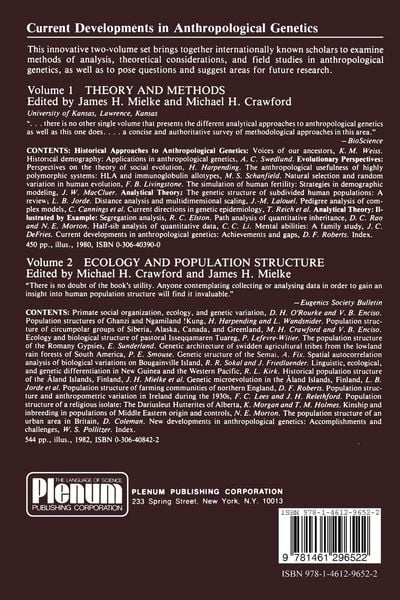
  • Produktbild: Current Developments in Anthropological Genetics
  • Produktbild: Current Developments in Anthropological Genetics
Band 2

Current Developments in Anthropological Genetics Volume 3 Black Caribs A Case Study in Biocultural Adaptation

51,99 €

inkl. gesetzl. MwSt., Versandkostenfrei


Beschreibung

Produktdetails

Einband

Taschenbuch

Erscheinungsdatum

01.11.2011

Herausgeber

Michael H. Crawford

Verlag

Springer Us

Seitenzahl

396

Maße (L/B/H)

22,9/15,2/2,3 cm

Gewicht

600 g

Auflage

Softcover reprint of the original 1st ed. 1984

Sprache

Englisch

ISBN

978-1-4612-9652-2

Beschreibung

Produktdetails

Einband

Taschenbuch

Erscheinungsdatum

01.11.2011

Herausgeber

Michael H. Crawford

Verlag

Springer Us

Seitenzahl

396

Maße (L/B/H)

22,9/15,2/2,3 cm

Gewicht

600 g

Auflage

Softcover reprint of the original 1st ed. 1984

Sprache

Englisch

ISBN

978-1-4612-9652-2

Herstelleradresse

Springer-Verlag KG
Sachsenplatz 4-6
1201 Wien
AT

Email: ProductSafety@springernature.com

Kundinnen und Kunden meinen

0 Bewertungen

Informationen zu Bewertungen

Zur Abgabe einer Bewertung ist eine Anmeldung im Konto notwendig. Die Authentizität der Bewertungen wird von uns nicht überprüft. Wir behalten uns vor, Bewertungstexte, die unseren Richtlinien widersprechen, entsprechend zu kürzen oder zu löschen.

Die Bewertungen sind nach Format, Anzahl Sterne und Datum sortiert.

Verfassen Sie die erste Bewertung zu diesem Artikel

Helfen Sie anderen Kund*innen durch Ihre Meinung

Kundinnen und Kunden meinen

0 Bewertungen filtern

  • Produktbild: Current Developments in Anthropological Genetics
  • Produktbild: Current Developments in Anthropological Genetics
  • 1. Problems and Hypotheses: An Introduction.- 1. Introduction.- 2. Ethnohistory.- 3. Unique Characteristics of the Black Caribs.- 4. Central Research Problems.- 5. Contents of This Volume.- References.- I: Sociocultural and Demographic Sections.- 2. The Garifuna in Central America: Ethnohistorical and Geographical Foundations.- 1. Introduction.- 2. St. Vincent Origins.- 3. Dispersal in Central America.- 3.1. St. Vincent to Roatan Island, Honduras, 1797.- 3.2. The Trujillo Core, 1797–1810.- 3.3. Honduran Mosquitia, 1803–1814.- 3.4. Belize, 1802–1832.- 3.5. Western Honduras and Guatemala, 1821–1836.- 4. Patterns of Settlement.- 4.1. Garifuna Culture Realm.- 4.2. Trade Areas.- 4.3. Village Subsistence Region.- 4.4. Settlement Proper.- 4.5. Family Compound.- 5. Summary.- References.- 3. The Changing Vincentian Carib Population.- 1. Introduction.- 2. Prior to 1797.- 2.1. Population Estimates.- 3. Post-1797.- 3.1. 1844 Census.- 3.2. Carib-Creole Contact.- 3.3 Population Effects of Cataclysms.- 3.4. Population Movements.- 3.5. Census of 1931.- 4. Current Population Estimates.- 5. Conclusion.- References.- 4. Garifuna (Black Carib) Social Organization.- 1. Introduction.- 2. St. Vincent Background.- 3. Garifuna Social Organization, Central America.- 3.1. Households in Livingston, 1956.- 3.2. Consanguineal Households.- 3.3. Household Changes in 1975.- 3.4. The Neighborhood.- 4. Discussion.- 4.1. The Future.- References.- 5. Demographic Patterns of the Garifuna (Black Caribs) of Belize.- 1. Introduction.- 2. Methods.- 3. Results.- 3.1. Population Size.- 3.2. Family Size.- 3.3. Sex Ratio.- 4. Discussion.- References.- 6. Past and Present Evidence of Interethnic Mating.- 1. Introduction.- 2. Twentieth-Century Accounts.- 3. Nineteenth-Century Accounts.- 3.1. Nineteenth-Century Population Statistics.- 4. The Problem of Genetic Isolation.- 5. Conclusions.- References.- 7. Ethnicity and Mating Patterns in Punta Gorda, Belize.- 1. Introduction.- 2. Setting and Background.- 3. Cultural and Social Differentiation.- 3.1. Language.- 3.2. Occupation.- 3.3. Religion.- 3.4. Physical.- 3.5. Surnames.- 4. Ethnic Relations.- 5. Summary and Conclusions.- References.- II: Morphological Section.- 8. Nutrition and Growth in Early Childhood among the Garifuna and Creole of Belize.- 1. Introduction.- 2. Methods.- 2.1. Research Design.- 2.2. Research Techniques.- 2.3. Sample Size and Location.- 2.4. Methods of Analysis.- 3. Results.- 3.1. Comparative Growth of Creole and Garifuna Children.- 3.2. Nutritional Status.- 3.3. Biocultural Factors.- 4. Discussion.- References.- 9. Skin Color of the Garifuna of Belize.- 1. Introduction.- 2. Materials and Methods.- 3. Results.- 4. Discussion.- References.- 10. Dental Variation in Black Carib Populations.- 1. Introduction.- 2. Materials.- 3. Results.- 3.1. Discontinuous Traits.- 3.2. Odontometrics.- 3.3. Two-Dimensional Representations of Discrete Traits.- 4. Discussion and Conclusion.- References.- 11. Anthropometry of Black Caribs.- 1. Introduction.- 2. Methods.- 3. Results.- 3.1. Sexual Dimorphism.- 3.2. Factor Analysis.- 3.3. Discriminant Analysis.- 3.4. Analysis of Variance.- 4. Discussion.- 5. Conclusion.- References.- 12. Factors Influencing Blood Pressure Level among the Black Caribs of St. Vincent Island.- 1. Introduction.- 2. Methods.- 2.1. Populations Studied.- 2.2. Familial Analysis.- 2.3. Hybrid Analysis.- 2.4. Anthropometric Analysis.- 3. Results.- 3.1. Familial Correlations.- 3.2. Hybridization.- 3.3. Anthropometric Relationship to Hypertension.- 4. Discussion.- 4.1. Familial Correlations.- 4.2. Hybridization and Blood Pressure.- 4.3. Body Build and Blood Pressure.- 5. Conclusion.- References.- 13. Quantitative Analyses of the Dermatoglyphic Patterns of the Black Carib Populations of Central America.- 1. Introduction.- 2. Populations Sampled.- 3. Methods of Dermatoglyphic Analysis.- 3.1. Analytic Methods.- 4. Results.- 4.1. Descriptive Statistics.- 4.2. Intrapopulation Analysis.- 4.3. Interpopulation Comparison.- 5. Discussion.- 6. Conclusions.- References.- III: Genetic Section.- 14. Genetic Structure of the Garifuna Population in Belize.- 1. Introduction.- 2. Material and Methods.- 2.1. Hemoglobins.- 2.2. Phosphoglucomutase (PGM).- 2.3. Glucose-6-phosphate Dehydrogenase (G6PD) and 6-Phosphogluconate Dehydrogenase (6PGD).- 2.4. Adenosine Deaminase (ADA).- 2.5. Serum Proteins.- 3. Results and Discussion.- 3.1. The Hemoglobins.- 3.2. The Haptoglobins.- 3.3. Immunoglobulins.- 4. Conclusion.- References.- 15. Blood Group, Hemoglobin, and Plasma Protein Polymorphisms in Black Carib Populations.- 1. Introduction.- 2. Methods.- 3. Results.- 3.1. ABO.- 3.2. Rhesus.- 3.3. MNSs.- 3.4. Lutheran.- 1.1. KeH.- 1.2. Kidd.- 1.3. P.- 1.4. Diego.- 1.5. Duffy.- 1.6. Hemoglobin, Haptoglobin, Transferrin.- 1.7. Other Genes.- 4. Discussion.- References.- 16. Blood Group, Serum Protein, and Red Cell Enzyme Polymorphisms, and Admixture among the Black Caribs and Creoles of Central America and the Caribbean.- 1. Introduction.- 2. Methods and Material.- 2.1. Admixture Estimates.- 2.2. Genetic Heterozygosity.- 3. Results and Discussion.- 3.1. Blood Group Systems.- 3.2. Serum Proteins.- 3.3. Erythrocytic Protein Variation.- 3.4. Genetic Heterozygosity.- 3.5. Admixture Estimates.- 4. Conclusions.- References.- 17. Abnormal Hemoglobins among the Black Caribs.- 1. Introduction.- 2. Methods.- 3. Results and Discussion.- 3.1. The Sickle Cell Carrier Rate in Black Carib Communities.- 3.2. Correlation of Sickle Cell Carrier Rate in Communities with Malarial Infestation.- 3.3. Sex Distribution of the Sickle Cell Trait.- 3.4. Fertility of Women with the Sickle Cell Trait Compared with Normal Women.- 3.5. The History of Abortions and Stillbirths.- 4. Conclusion.- References.- 18. Immunoglobulin Allotypes in the Black Caribs and Creoles of Belize and St. Vincent.- 1. Introduction.- 2. Methods and Materials.- 2.1. Analytic Methods.- 3. Results and Discussion.- 3.1. Gene Frequency Data.- 3.2. Admixture Estimates of Ethnic Composition.- 3.3. Population Structure.- 4. Conclusions.- References.- 19. Genetic Population Structure of the Black Caribs and Creoles.- 1. Introduction.- 2. Biosocial History of the Black Caribs.- 3. Materials.- 4. Analytical Methods.- 4.1. Relationship Matrices.- 4.2. Genetic Maps.- 4.3. Mean Per-Locus Heterozygosity.- 5. Black Carib Population Structure.- 6. Discussion.- References.- 20. Anthropogenetics in a Hybrid Population: The Black Carib Studies.- 1. Introduction.- 2. Sociocultural Background.- 3. Quantitative Biological Variables.- 4. Genetic Variation.- 5. Conclusion.