Gutscheinbedingungen

**Gültig am 28.06.2026 auf Spielzeug, Schreibwaren, Filme, Geschenke & Trends, Musik, tolino eReader & Zubehör, Hörbücher und Hörbuch-Downloads (außer Abo), nicht preisgebundene Bücher und Kalender online auf thalia.at und in der Thalia App. Einzelne Artikel können ausgeschlossen sein. Aufgrund der Buchpreisbindung sind deutschsprachige Bücher und eBooks ausgenommen. Zusätzlich ausgenommen sind preisgebundene Artikel, Abos & Flatrates, eBooks, Games, Geschenkkarten/-boxen, Shelfies, Software, Zeitschriften sowie einzelne Artikel von tonies®. Pro Einkauf einmal einlösbar. Click & Collect nur bei Onlinevorabzahlung möglich. Keine Barauszahlung. Nicht kombinierbar mit anderen Aktionen und Gutscheinen. Gutschein wird auf max. 500€ Bestellwert angerechnet. Nicht gültig für Versandkosten und Services.

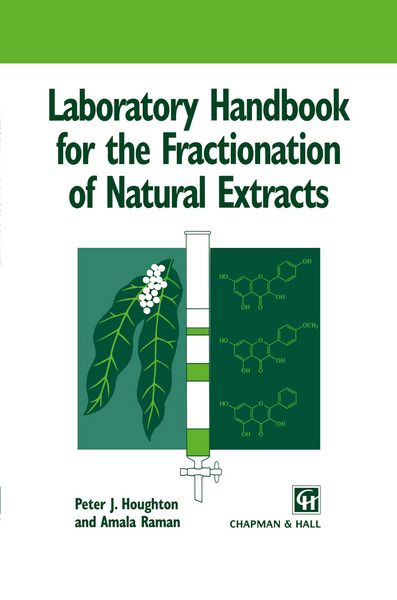
  • Produktbild: Laboratory Handbook for the Fractionation of Natural Extracts
  • Produktbild: Laboratory Handbook for the Fractionation of Natural Extracts
- 12%

Laboratory Handbook for the Fractionation of Natural Extracts

12% sparen

144,99 € UVP 164,99 €

inkl. gesetzl. MwSt., Versandkostenfrei


Beschreibung

Produktdetails

Einband

Taschenbuch

Erscheinungsdatum

02.11.2012

Verlag

Springer Us

Seitenzahl

199

Maße (L/B/H)

23,5/15,5/1,2 cm

Gewicht

333 g

Auflage

Softcover reprint of the original 1st ed. 1998

Sprache

Englisch

ISBN

978-1-4613-7662-0

Beschreibung

Produktdetails

Einband

Taschenbuch

Erscheinungsdatum

02.11.2012

Verlag

Springer Us

Seitenzahl

199

Maße (L/B/H)

23,5/15,5/1,2 cm

Gewicht

333 g

Auflage

Softcover reprint of the original 1st ed. 1998

Sprache

Englisch

ISBN

978-1-4613-7662-0

Herstelleradresse

Springer-Verlag KG
Sachsenplatz 4-6
1201 Wien
AT

Email: GPSR Kontakt

Kundinnen und Kunden meinen

0 Bewertungen

Informationen zu Bewertungen

Zur Abgabe einer Bewertung ist eine Anmeldung im Konto notwendig. Die Authentizität der Bewertungen wird von uns nicht überprüft. Wir behalten uns vor, Bewertungstexte, die unseren Richtlinien widersprechen, entsprechend zu kürzen oder zu löschen.

Die Bewertungen sind nach Format, Anzahl Sterne und Datum sortiert.

Verfassen Sie die erste Bewertung zu diesem Artikel

Helfen Sie anderen Kund*innen durch Ihre Meinung

Kundinnen und Kunden meinen

0 Bewertungen filtern

  • Produktbild: Laboratory Handbook for the Fractionation of Natural Extracts
  • Produktbild: Laboratory Handbook for the Fractionation of Natural Extracts
  • 1 Introduction.- 1.1 The need for this book — an active extract, what happens next?.- 1.2 Why is it important to find out the nature of the active components?.- 1.3 Green chemicals — the renewed interest in natural products as sources of bioactive compounds.- 1.4 What are we doing?.- 1.5 Bibliography.- 2 Important concepts.- 2.1 Introduction.- Polarity.- 2.3 Dilution and concentration factors.- 2.4 Synergy.- 2.5 Deterioration, decomposition and storage.- 2.6 Biological variation.- 2.7 Authentication of material.- 2.8 Dereplication.- 3 Methods for extraction and sample clean-up.- 3.1 Introduction.- 3.2 Factors to be considered in selecting an extraction method.- 3.3 General extraction methods.- 3.4 Extraction methods for specific phytochemical groups.- 3.5 Clean-up techniques to remove unwanted substances.- 3.6 Bibliography.- 4 Crude fractionation procedures.- 4.1 Introduction.- 4.2 Choice of fractionation method.- 4.3 Common fractionation methods.- 4.4 Bibliography.- 5 Chromatographic fractionation procedures.- 5.1 Introduction.- 5.2 The principles of chromatography.- 5.3 Physico-chemical processes taking place in chromatography.- 5.4 Bibliography.- 6 Chromatographic procedures using columns and liquid-liquid systems.- 6.1 Column chromatography.- 6.2 Liquid-liquid partition schemes.- 6.3 Bibliography.- 7 Layer chromatography.- 7.1 Layer chromatography.- 7.2 Preparative thin-layer chromatography and paper chromatography.- 7.3 Bibliography.- 8 Analysis of crude extracts, fractions and isolated compounds.- 8.1 Introduction.- 8.2 Qualitative analysis of mixtures and isolates.- 8.3 Quantitative analytical methods.- 8.4 Biological assays.- 8.5 Bibliography.- 9 General methods.- 9.1 Basic techniques in handling extracts.- 9.2 Isolation of active compounds.- 9.3Chromatographic procedures.- 9.4 Basic techniques in thin-layer chromatography.- 9.5 Bibliography.- 10 Practical exercises in chemical screening and fractionation of crude extracts from plant materials.- 10.1 Chemical screening.- 10.2 Exercises in extraction, clean-up, fractionation and Chromatographicmethods.- Appendix A Recipes for chemical test reagents.