Gutscheinbedingungen

**Gültig bis 06.07.2026 auf fremdsprachige Bücher online auf thalia.at, in der Thalia App ab einem Mindestbestellwert von 30€ und in allen Thalia Buchhandlungen in Österreich. In den Buchhandlungen nur gültig auf lagernde Ware. Einzelne Artikel können ausgeschlossen sein. Ausgenommen sind preisgebundene Artikel & eBooks. Pro Einkauf einmal einlösbar. Nur gültig gegen Vorlage oder im Onlineshop hinterlegter Bonuscard. Infos zur Einlösung in der Buchhandlung sind auf der Bonuscard-Vorteilspreisseite zu finden. Click & Collect nur bei Onlinevorabzahlung möglich. Keine Einlösung bei Scan & Go-Bezahlung. Keine Barauszahlung. Nicht kombinierbar mit anderen Aktionen und Gutscheinen. Gutschein wird auf max. 500€ Bestellwert angerechnet. Nicht gültig für Versandkosten und Services.

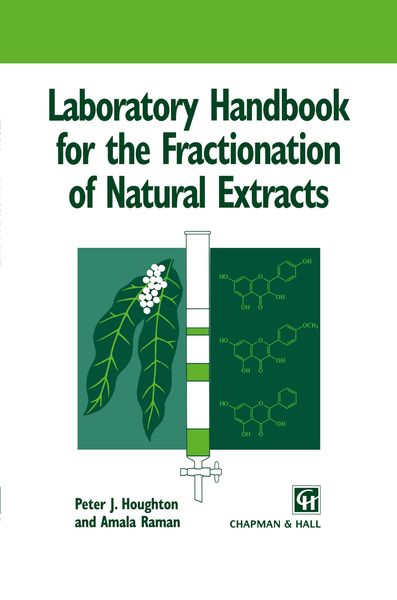
  • Produktbild: Laboratory Handbook for the Fractionation of Natural Extracts
  • Produktbild: Laboratory Handbook for the Fractionation of Natural Extracts
- 12%

Laboratory Handbook for the Fractionation of Natural Extracts

12% sparen

144,99 € UVP 164,99 €

inkl. gesetzl. MwSt., Versandkostenfrei


Beschreibung

Produktdetails

Einband

Gebundene Ausgabe

Erscheinungsdatum

31.03.1998

Verlag

Springer Us

Seitenzahl

199

Maße (L/B/H)

23,6/16,3/1,4 cm

Gewicht

381 g

Auflage

1998

Sprache

Englisch

ISBN

978-0-412-74910-0

Beschreibung

Produktdetails

Einband

Gebundene Ausgabe

Erscheinungsdatum

31.03.1998

Verlag

Springer Us

Seitenzahl

199

Maße (L/B/H)

23,6/16,3/1,4 cm

Gewicht

381 g

Auflage

1998

Sprache

Englisch

ISBN

978-0-412-74910-0

Herstelleradresse

Libri GmbH
Europaallee 1
36244 Bad Hersfeld
DE

Email: gpsr@libri.de

Noch keine Bewertungen vorhanden

Verfassen Sie die erste Bewertung zu diesem Artikel

Helfen Sie anderen Kundinnen und Kunden durch Ihre Meinung.

Kundinnen und Kunden meinen

Bewertungen (0)

  • Produktbild: Laboratory Handbook for the Fractionation of Natural Extracts
  • Produktbild: Laboratory Handbook for the Fractionation of Natural Extracts
  • 1 Introduction.- 1.1 The need for this book — an active extract, what happens next?.- 1.2 Why is it important to find out the nature of the active components?.- 1.3 Green chemicals — the renewed interest in natural products as sources of bioactive compounds.- 1.4 What are we doing?.- 1.5 Bibliography.- 2 Important concepts.- 2.1 Introduction.- Polarity.- 2.3 Dilution and concentration factors.- 2.4 Synergy.- 2.5 Deterioration, decomposition and storage.- 2.6 Biological variation.- 2.7 Authentication of material.- 2.8 Dereplication.- 3 Methods for extraction and sample clean-up.- 3.1 Introduction.- 3.2 Factors to be considered in selecting an extraction method.- 3.3 General extraction methods.- 3.4 Extraction methods for specific phytochemical groups.- 3.5 Clean-up techniques to remove unwanted substances.- 3.6 Bibliography.- 4 Crude fractionation procedures.- 4.1 Introduction.- 4.2 Choice of fractionation method.- 4.3 Common fractionation methods.- 4.4 Bibliography.- 5 Chromatographic fractionation procedures.- 5.1 Introduction.- 5.2 The principles of chromatography.- 5.3 Physico-chemical processes taking place in chromatography.- 5.4 Bibliography.- 6 Chromatographic procedures using columns and liquid-liquid systems.- 6.1 Column chromatography.- 6.2 Liquid-liquid partition schemes.- 6.3 Bibliography.- 7 Layer chromatography.- 7.1 Layer chromatography.- 7.2 Preparative thin-layer chromatography and paper chromatography.- 7.3 Bibliography.- 8 Analysis of crude extracts, fractions and isolated compounds.- 8.1 Introduction.- 8.2 Qualitative analysis of mixtures and isolates.- 8.3 Quantitative analytical methods.- 8.4 Biological assays.- 8.5 Bibliography.- 9 General methods.- 9.1 Basic techniques in handling extracts.- 9.2 Isolation of active compounds.- 9.3Chromatographic procedures.- 9.4 Basic techniques in thin-layer chromatography.- 9.5 Bibliography.- 10 Practical exercises in chemical screening and fractionation of crude extracts from plant materials.- 10.1 Chemical screening.- 10.2 Exercises in extraction, clean-up, fractionation and Chromatographicmethods.- Appendix A Recipes for chemical test reagents.