Gutscheinbedingungen

**Gültig bis 25.06.2026 auf fremdsprachige Bücher online auf thalia.at und in der Thalia App. Einzelne Artikel können ausgeschlossen sein. Ausgenommen sind preisgebundene Artikel & eBooks. Pro Einkauf einmal einlösbar. Click & Collect nur bei Onlinevorabzahlung möglich. Keine Barauszahlung. Nicht kombinierbar mit anderen Aktionen und Gutscheinen. Gutschein wird auf max. 500€ Bestellwert angerechnet. Nicht gültig für Geschenkkarten, Versandkosten und Services.

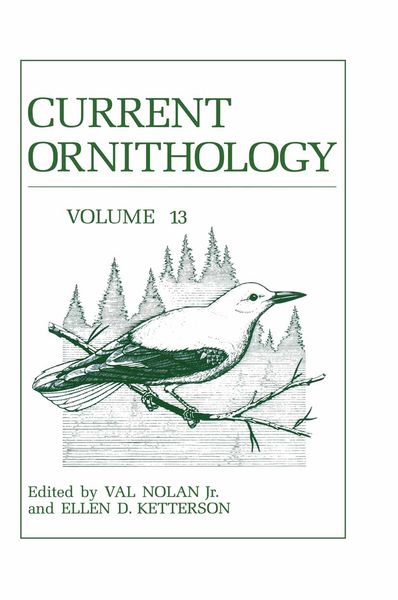
Produktbild: Current Ornithology
Band 13

Current Ornithology

Aus der Reihe Current Ornithology

51,99 €

inkl. gesetzl. MwSt., Versandkostenfrei


Beschreibung

Produktdetails

Einband

Taschenbuch

Erscheinungsdatum

21.10.2012

Herausgeber

Val Nolan Jr. + weitere

Verlag

Springer Us

Seitenzahl

359

Maße (L/B/H)

22,9/15,2/2,1 cm

Gewicht

544 g

Auflage

1996

Sprache

Englisch

ISBN

978-1-4613-7697-2

Beschreibung

Rezension

`
The Quality of the individual papers...[is] decidedly above average....I do suggest that university libraries buy this useful series.
`

Animal Behavior, 12.

`
The discussions provided allow the beginner to quickly come up to speed in specific areas....For more experienced readers they provide new viewpoints, corrections of misconceptions, and a means of checking what we think we already know.
`

The Wilson Bulletin, 11.

Produktdetails

Einband

Taschenbuch

Erscheinungsdatum

21.10.2012

Herausgeber

Verlag

Springer Us

Seitenzahl

359

Maße (L/B/H)

22,9/15,2/2,1 cm

Gewicht

544 g

Auflage

1996

Sprache

Englisch

ISBN

978-1-4613-7697-2

Herstelleradresse

Springer-Verlag KG
Sachsenplatz 4-6
1201 Wien
AT

Email: ProductSafety@springernature.com

Kundinnen und Kunden meinen

0 Bewertungen

Informationen zu Bewertungen

Zur Abgabe einer Bewertung ist eine Anmeldung im Konto notwendig. Die Authentizität der Bewertungen wird von uns nicht überprüft. Wir behalten uns vor, Bewertungstexte, die unseren Richtlinien widersprechen, entsprechend zu kürzen oder zu löschen.

Die Bewertungen sind nach Format, Anzahl Sterne und Datum sortiert.

Verfassen Sie die erste Bewertung zu diesem Artikel

Helfen Sie anderen Kund*innen durch Ihre Meinung

Kundinnen und Kunden meinen

0 Bewertungen filtern

  • Produktbild: Current Ornithology
  • 1 Social Cognition: Are Primates Smarter Than Birds?.- 1. Preamble.- 2. Introduction.- 3. Social Learning: The Acquisition of New Stimulus Controls for Behavior.- 4. Social Learning. The Acquisition of New Motor Patterns.- 5. Tool Use and Its Acquisition.- 6. Cooperative Hunting.- 7. Complex Social Cognition.- 8. Communicative Behavior.- 9. Conclusions.- References.- 2 Predicting Cognitive Capacity from Natural History: Examples from four Species of Corvids.- 1. Introduction.- 2. General Problems and Approach.- 3. The Study of Cognitive Adaptations.- 4. The Comparative Study of Cognition.- 5. General Issues.- 6. Phylogenetic Considerations.- 7. Ontogenetic Considerations.- 8. Summary.- References.- 3 Assessing Body Condition in Birds.- 1. Introduction.- 2. Literature Survey of Body Condition Research.- 3. Methods of Assessing Condition.- 4. Conclusions.- Appendix: Literature Survey Summary.- References.- 4 Avian Chemical Defense.- 1. Introduction.- 2. Definitions and Overview.- 3. Chemical Defenses in Birds.- 4. Sources of Defensive Chemicals.- 5. Ecology of Chemical Defense.- 6. Evolution of Chemical Defense.- 7. Phenomena Related to Chemical Defense.- 8. Summary.- References.- 5 Past and Current Attempts to Evaluate the Role of Birds as Predators of Insect Pests in Temperate Agriculture.- 1. Introduction.- 2. Setting the Stage—A Brief History of the Rise and Decline of “Economic Ornithology”.- 3. Birds as Predators of Pests.- 4. Factors Determining the Impact of Predation on Invertebrates by Birds.- 5. Encouraging Avian Predators in Agroecosystems.- 6. Summary and Conclusions.- References.- 6 An Evolutionary Approach to Offspring Desertion in Birds.- 1. Introduction.- 2. Distribution of Offspring Desertion.- 3. Models of Desertion.- 4. Desertion and ParentalCare.- 5. Timing of Desertion.- 6. Sex of Deserter.- 7. The Process of Desertion.- 8. Hormonal Mechanisms.- 9. Recommendations for Future Research.- 10. Summary.- References.