Gutscheinbedingungen

**Gültig bis 14.09.2026 auf Spielzeug, Schreibwaren, Filme, Geschenke & Trends, Musik, tolino eReader & Zubehör, Hörbücher, nicht preisgebundene Bücher und Kalender in der Thalia App. Einzelne Artikel können ausgeschlossen sein. Aufgrund der Buchpreisbindung sind deutschsprachige Bücher und eBooks ausgenommen. Zusätzlich ausgenommen sind Abos & Flatrates, Games, Geschenkkarten/-boxen, Shelfies, Software, Zeitschriften sowie einzelne Artikel von tonies®. Pro Einkauf einmal einlösbar. Nur gültig mit im Onlineshop hinterlegter Bonuscard. Click & Collect nur bei Onlinevorabzahlung möglich. Keine Barauszahlung. Nicht kombinierbar mit anderen Aktionen und Gutscheinen. Gutschein wird auf max. 500€ Bestellwert angerechnet. Nicht gültig für Versandkosten und Services.

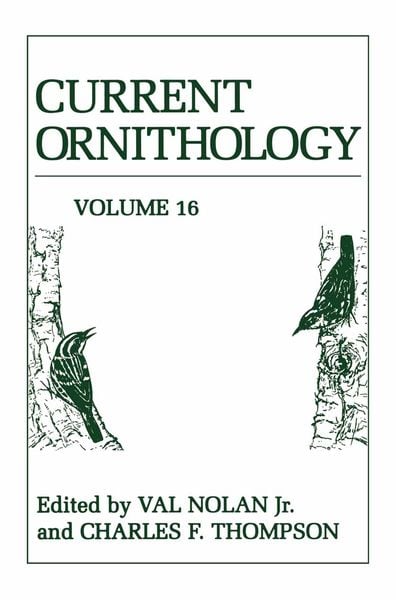
Produktbild: Current Ornithology
Band 16

Current Ornithology

Aus der Reihe Current Ornithology

148,99 €

inkl. gesetzl. MwSt., Versandkostenfrei


Beschreibung

Produktdetails

Einband

Taschenbuch

Erscheinungsdatum

20.09.2012

Abbildungen

XX, 424 p.

Herausgeber

Val Nolan Jr. + weitere

Verlag

Springer Us

Seitenzahl

424

Maße (L/B/H)

23,5/15,5/2,5 cm

Gewicht

674 g

Auflage

Softcover reprint of the original 1st edition 2001

Sprache

Englisch

ISBN

978-1-4613-5443-7

Beschreibung

Produktdetails

Einband

Taschenbuch

Erscheinungsdatum

20.09.2012

Abbildungen

XX, 424 p.

Herausgeber

Verlag

Springer Us

Seitenzahl

424

Maße (L/B/H)

23,5/15,5/2,5 cm

Gewicht

674 g

Auflage

Softcover reprint of the original 1st edition 2001

Sprache

Englisch

ISBN

978-1-4613-5443-7

Herstelleradresse

Springer-Verlag GmbH
Tiergartenstr. 17
69121 Heidelberg
DE

Email: ProductSafety@springernature.com

Noch keine Bewertungen vorhanden

Verfassen Sie die erste Bewertung zu diesem Artikel

Helfen Sie anderen Kundinnen und Kunden durch Ihre Meinung.

Kundinnen und Kunden meinen

Bewertungen (0)

  • Produktbild: Current Ornithology
  • 1 Avian Coloniality: Progress and Problems.- 1. Introduction.- 2. Historical Background.- 3. Phylogenetic Analyses.- 4. Limitation of Breeding Sites.- 5. The Costs and Benefits of Coloniality.- 6. Social Foraging and Coloniality.- 7. Reproductive Success and Habitat Selection.- 8. Sexual Selection and Coloniality.- 9. Variation in Colony Size.- 10. Prospectus.- References.- 2 Begging in Nestling Birds.- 1. Parent–Offspring Conflict.- 2. The Importance of Signaling.- 3. Begging Signals.- 4. Begging as Competition among Nestmates.- 5. The Importance of Offspring Sex.- 6. The Role of Biparental Care.- 7. An Alternative Perspective.- 8. Conclusions.- References.- 3 Ecological Aspects of Neophobia and Neophilia in Birds.- 1. Introduction.- 2. How Neophobia and Neophilia Are Studied.- 3. What Determines the Intensity of Neophobia and Neophilia in Adult Birds.- 4. Exploration in Juvenile Birds.- 5. Comparative Studies of Neophobia and Exploration.- 6. Conclusions and Future Directions.- References.- 4 Avian Quantitative Genetics.- 1. Introduction.- 2. Components of Phenotypic Variation.- 3. Tools of the Trade.- 4. Empirical Data.- 5. Maternal Effects.- 6. Extra-Pair Paternity.- 7. Quantitative Genetics of Fitness.- 8. Genotype-Environment Interactions.- 9. Genetic Basis of Population Differentiation.- 10. Applications of Quantitative Genetics to Avian Evolution.- 11. Further Prospects.- 12. Conclusions.- References.- 5 Male Parental Care and Paternity.- 1. Introduction.- 2. Theoretical Models.- 3. Field Studies: Testing Predictions and Assumptions.- 4. Interspecific Analyses.- 5. Conclusions and Future Directions.- References.- 6 Physiological Ecology and Behavior of Desert Birds.- 1. Introduction.- 2. Energy.- 3. Water.- 4. Thermoregulation.- 5. Optimization Processes.- 6.Summary.- References.- 7 Reproductive Energy Expenditure, Intraspecific Variation and Fitness in Birds.- 1. Introduction.- 2. Is Reproduction Energetically Costly, and at What Stage Is It Most Costly?.- 3. Intraspecific Variation in Daily Energy Expenditure: Biological Variation or Measurement Error?.- 4. Repeatability of Daily Energy Expenditure Measurements.- 5. Individual, Environmental, and Activity-Related Correlates of DEE.- 6. Metabolic Rate and Body Mass: Intraspecific versus Interspecific Scaling.- 7. Relationships between DEE and Measures of Reproductive Effort or Fitness.- 8. Conclusions and Recommendations for Future Research.- References.