Gutscheinbedingungen

**Gültig bis 21.08.2026 auf tolino eReader online auf thalia.at, in der Thalia App und in allen Thalia Buchhandlungen in Österreich. In den Buchhandlungen nur gültig auf lagernde Ware. Pro Einkauf einmal einlösbar. Nur gültig gegen Vorlage oder im Onlineshop hinterlegter Bonuscard. Infos zur Einlösung in der Buchhandlung sind auf der Bonuscard-Vorteilspreisseite zu finden. Click & Collect nur bei Onlinevorabzahlung möglich. Keine Einlösung bei Scan & Go-Bezahlung. Keine Barauszahlung. Nicht kombinierbar mit anderen Aktionen und Gutscheinen. Nicht gültig für Geschenkkarten, Versandkosten und Services. Nur solange der Vorrat reicht.

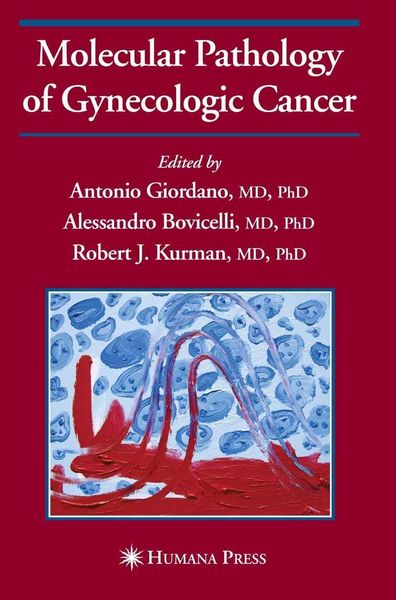
Produktbild: Molecular Pathology of Gynecologic Cancer

Molecular Pathology of Gynecologic Cancer

109,99 €

inkl. gesetzl. MwSt.

Beschreibung

Produktdetails

Format

PDF

Kopierschutz

Nein

Family Sharing

Nein

Text-to-Speech

Nein

Erscheinungsdatum

05.10.2007

Herausgeber

Antonio Giordano + weitere

Verlag

Humana Press

Seitenzahl

226 (Printausgabe)

Dateigröße

11146 KB

Sprache

Englisch

EAN

9781597453462

Beschreibung

Rezension

"...a complete compilation of the molecular events leading to gynecologic cancers.  There are no other books that compete with it or address the issues it does." -Doody's Book Review, Weighted Numerical Score:90 - 4 Stars

Produktdetails

Format

PDF

eBooks im PDF-Format haben eine festgelegte Seitengröße und eignen sich daher nur bedingt zum Lesen auf einem tolino eReader oder Smartphone. Für den vollen Lesegenuss empfehlen wir Ihnen bei PDF-eBooks die Verwendung eines Tablets oder Computers.

Kopierschutz

Nein

Dieses eBook können Sie uneingeschränkt auf allen Geräten der tolino Familie, allen sonstigen eReadern und am PC lesen. Das eBook ist nicht kopiergeschützt und kann ein personalisiertes Wasserzeichen enthalten. Weitere Hinweise zum Lesen von eBooks mit einem personalisierten Wasserzeichen finden Sie unter Hilfe/Downloads.

Family Sharing

Nein

Mit Family Sharing können Sie eBooks innerhalb Ihrer Familie (max. sechs Mitglieder im gleichen Haushalt) teilen. Sie entscheiden selbst, welches Buch Sie mit welchem Familienmitglied teilen möchten. Auch das parallele Lesen durch verschiedene Familienmitglieder ist durch Family Sharing möglich. Um eBooks zu teilen oder geteilt zu bekommen, muss jedes Familienmitglied ein Konto bei Thalia oder einem anderen tolino-Buchhändler haben. Weitere Informationen finden Sie unter Hilfe/Family-Sharing.

Text-to-Speech

Nein

Bedeutet Ihnen Stimme mehr als Text? Mit der Funktion Text-to-Speech können Sie sich im tolino webReader und in der aktuellen Thalia – Lesen & Hören App das eBook vorlesen lassen. Weitere Informationen finden Sie unter Hilfe/Text-to-Speech.

Barrierefreiheit

  • keine Information zur Barrierefreiheit bekannt

Erscheinungsdatum

05.10.2007

Herausgeber

Verlag

Humana Press

Seitenzahl

226 (Printausgabe)

Dateigröße

11146 KB

Sprache

Englisch

EAN

9781597453462

Noch keine Bewertungen vorhanden

Verfassen Sie die erste Bewertung zu diesem Artikel

Helfen Sie anderen Kundinnen und Kunden durch Ihre Meinung.

Kundinnen und Kunden meinen

Bewertungen (0)

Weitere Artikel finden Sie in

  • Produktbild: Molecular Pathology of Gynecologic Cancer
  • ***completed ________________________________________________________________________________ MOLECULAR PATHOLOGY OF GYNECOLOGIC CANCER EDITORS : ANTONIO GIORDANO , M.D., Ph.D. ALESSANDRO BOVICELLI , M.D., Ph.D. ROBERT J. KURMAN, M.D., Ph.D. ***PREFACE Alessandro Bovicelli and Giovan Giacomo Giordano, Honorary President of the Italian Tumor Society (SIT) PART I : INTRODUCTION ***Chapter 1 : The Cell Cycle and the Molecular Biology of Cancer Giuseppina D'Andrilli, Alessandro Bovicelli and Antonio Giordano Sbarro Institute for Cancer Research and Molecular Medicine, Temple University, BioLife Science Building, Suite 333, 1900 N 12th Street. Philadelphia, PA, 19122. This chapter evaluates the molecules that conduct progression through the cell cycle and describes their activities that are linked together to control the process of cell reproduction. In light of these concepts, we believe that cancer is mainly a disease of the cell cycle based on the deregulation of this physiological process. This hypothesis is further elaborated upon and illustrated in the subsequent chapters . PART II : OVARIAN CANCER : ***Chapter 2 : Ovarian Serous Carcinogenesis-A Proposed Model Ie-Ming Shih and Robert. J Kurman Department of Pathology, The Johns Hopkins University School of Medicine, 401 North Broadway, Baltimore, Maryland, 21231-2410, USA. This chapter discusses the most innovative pathological issues that define ovarian neoplasia. The emphasis is placed on different ovarian pathways of carcinogenesis and progression to advanced disease. Particular focus is directed to borderline disease and its classification. ***Chapter 3 : Molecular Markers in Epithelial Ovarian Cancer. Pat Morin Laboratory of Cellular and Molecular Biology, Gerontology Research Center, NationalInstitute on Aging, Building 31, Room 5C27, 31 Center Drive, MSC 2292, Bethesda, MD 20892, morinp@grc.nia.nih.gov This chapter summarizes the studies which have correlated cancer screening, diagnosis and prognosis with structure and expression profiles of molecular markers. New insights made possible by the utilization of new technologies are discussed. The emphasis is placed on cell cycle regulatory genes . The diversity of cancer types and the value of examining multi-gene profiles is discussed in this chapter. PART III : ENDOMETRIAL CANCER : ***Chapter 4 : Introduction to Endometrial Cancer. Richard Zaino Department of Pathology, Milton S. Hershey Medical Center of Pennsylvania State University, Hershey, Pennsylvania 17033, USA This chapter discusses the most innovative pathological issues that define endometrial neoplasia . Special focus is placed on pre-neoplastic lesions. The criteria established for distinguishing lesions on the basis of architectural and cytological abnormalities are examined. Differences between simple or complex hyperplasia with or without atypia are also stressed. Histological types of advanced disease and implications for a different course of the disease are examined. ***Chapter 5 : Endometrial Carcinogenesis : An Integrated, Molecular, Histologic and Functional Model of a Dualistic Disease. Mutter G Pathology Institute, Brigham and Women's Hospital, 02115 Boston, Massachusetts. gmutter@rics.bwh.harvard.edu Among the hormone-related carcinomas, the best understood etiologically is endometrial cancer. The demographic characteristics of the disease as well as the non-demographic risk factors are mainly due to a cumulative exposure of the endometrium to that fraction of estrogen that is unopposed by the influence of progesterone. On the other hand, recent data in the literature defined two distinct pathways of endometrial carcinogenesis an