KI-Beratung Beta

Gutscheinbedingungen

**Gültig bis 11.11.2026 auf Spielzeug, Schreibwaren, Filme, Geschenke & Trends, Musik, tolino eReader & Zubehör, Hörbücher und Hörbuch-Downloads, nicht preisgebundene Bücher und Kalender online auf thalia.at und in der Thalia App. Einzelne Artikel können ausgeschlossen sein. Aufgrund der Buchpreisbindung sind deutschsprachige Bücher und eBooks ausgenommen. Zusätzlich ausgenommen sind Abos & Flatrates, Games, Geschenkkarten/-boxen, Shelfies, Software, Zeitschriften sowie einzelne Artikel von tonies®. Pro Einkauf einmal einlösbar. Click & Collect nur bei Onlinevorabzahlung möglich. Keine Barauszahlung. Nicht kombinierbar mit anderen Aktionen und Gutscheinen. Gutschein wird auf max. 500€ Bestellwert angerechnet. Nicht gültig für Versandkosten und Services.

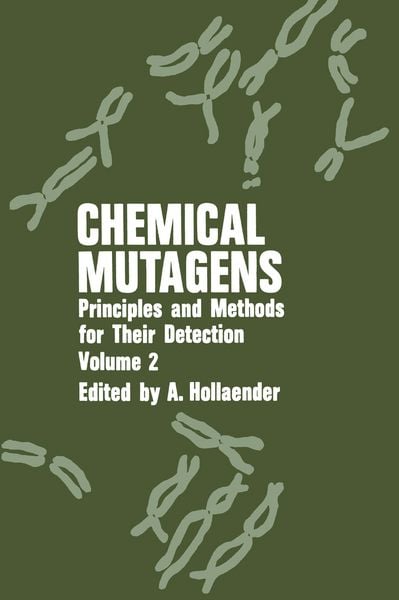
  • Produktbild: Chemical Mutagens
  • Produktbild: Chemical Mutagens

Chemical Mutagens Principles and Methods for Their Detection: Volume 2

99,99 €

inkl. gesetzl. MwSt., Versandkostenfrei


Beschreibung

Produktdetails

Einband

Taschenbuch

Erscheinungsdatum

10.09.2012

Abbildungen

XXII, 342 p.

Herausgeber

Alexander Hollaender

Verlag

Springer Us

Seitenzahl

342

Maße (L/B/H)

22,9/15,2/2 cm

Gewicht

533 g

Sprache

Englisch

ISBN

978-1-4615-8971-6

Beschreibung

Produktdetails

Einband

Taschenbuch

Erscheinungsdatum

10.09.2012

Abbildungen

XXII, 342 p.

Herausgeber

Alexander Hollaender

Verlag

Springer Us

Seitenzahl

342

Maße (L/B/H)

22,9/15,2/2 cm

Gewicht

533 g

Sprache

Englisch

ISBN

978-1-4615-8971-6

Herstelleradresse

Springer-Verlag KG
Sachsenplatz 4-6
1201 Wien
AT

Email: ProductSafety@springernature.com

Noch keine Bewertungen vorhanden

Verfassen Sie die erste Bewertung zu diesem Artikel

Helfen Sie anderen Kundinnen und Kunden durch Ihre Meinung.

Kundinnen und Kunden meinen

Bewertungen (0)

  • Produktbild: Chemical Mutagens
  • Produktbild: Chemical Mutagens
  • of Volume 2.- 11 Measurement of Recessive Lethal Damage Over the Entire Genome and at Two Specific Loci in the ad-3 Region of a Two-Component Heterokaryon of Neurospora Crassa.- I. Introduction.- II. Measurement of the Genetic Effects of Mutagenic Treatment.- III. Characterization of Presumptive ad-3 Mutants.- IV. Media and Chemical Solutions.- V. References.- 12 Aspergillus.- I. Introduction.- II. Life Cycle and Genetic Analysis.- III. Mutation.- IV. Conclusions.- V. References.- 13 Higher Plants.- I. Introduction.- II. Test Systems.- III. Compounds Tested for Mutagenic Activity by Treatment of Seeds.- IV. Special Techniques That Have a Higher Resolving Power.- V. General Evaluation.- VI. Acknowledgments.- VII. References.- 14 Procedures for Culturing Diploid Cells and Preparation of Meiotic Chromosomes from Dwarf Species of Hamsters.- I. Introduction.- II. Background Information.- III. Handling the Diploid Cell.- IV. Spermatogonial and Meiotic Chromosome Preparations.- V. Bone Marrow Biopsy Procedure.- VI. Discussion.- VII. Acknowledgments.- VIII. References.- 15 Induction and Analysis of Gene Mutations in Mammalian Cells in Culture.- I. Introduction.- II. The Cell Material.- III. Utilization of In Vivo Markers.- IV. Detection of Recessive Mutations in Cell Cultures.- VI. Characterization of Newly Isolated Variants.- VII. Procedure for Mutation Induction.- VIII. Concluding Remarks.- IX. Acknowledgments.- X. References.- 16 Inducing Mutations with Chemicals in Habrobracon.- I. Introduction.- II. Maintenance of Habrobracon and Ephestia.- III. Scheme for Mutational Analysis.- IV. Application of Mutagens.- V. Conclusions.- VI. References.- 17 The Detection of Mutations in Drosophila melanogaster.- I. Introduction.- II. Advantages of Drosophila as a Test Organism.- III. Limitations of Drosophila as a Test Organism.- IV. Lethal Tests.- V. Tests for Recessive Visible Mutants.- VI. Tests for Chromosomal Rearrangements.- VII. Tests for Loss of X or Y Chromosomes.- VIII. Tests for Dominant Lethals.- IX. Tests for Half-Translocations.- X. Staging of Germ Cells.- XI. Techniques for Collecting Flies of a Desired Sex.- XII. Review of Literature.- XIII. Summary.- XIV. References.- 18 Root Tips for Studying the Effects of Chemicals on Chromosomes.- I. The Material.- II. Treatment of Root Tips with Chemicals.- III. Fixation and Staining of Root Tips.- IV. Scoring of Slides and Types of Aberration.- V. Comparison Between the Effects of Chemicals on Chromosomes in Root-Tip Cells and in Cultured Animal Cells.- VI. Acknowledgments.- VII. References.- VIII. Suggested Reading.- 19 Cytogenetic Studies in Animals.- I. Introduction.- II. Experimental Design.- III. Classification of Chromosomal Aberrations.- IV. Localization of Chromosomal Aberrations.- V. Timing of Chromosomal Damage.- VI. Meiotic Studies.- VII. In Vivo and in Vitro Studies.- VIII. Specific Techniques.- IX. Summary.- X. References.- 20 Specific Locus Mutation in Mice.- I. Introduction.- II. The Method, Its Advantages and Disadvantages.- III. Results Obtained.- IV. Conclusions.- V. References.- 21 Dominant Lethal Mutations in Mammals.- I. Introduction.- II. The Dominant Lethal Syndrome.- III. The Estimation of Dominant Lethals.- IV. The Genotypes of Dominant Lethals.- VI. Dominant Lethals in Female Germ Cells.- VII. General Validity of the Dominant Lethal Test.- VIII. Synergistic Effects.- IX. Review of Chemicals Tested as Dominant Lethal Mutagens in Mammals.- X. Integration of the Dominant Lethal Assay and Other Mutagenicity Tests into General Toxicological Practice.- XI. References.- 22 TheHost-Mediated Assay, a Practical Procedure for Evaluating Potential Mutagenic Agents in Mammals.- I. Introduction.- II. Materials and Methods.- III. Results.- IV. Conclusion.- V. References.- 23 Human Population Monitoring.- I. Introduction.- II. A Classification of Mutational Effects.- III. Criteria for a Mutation-Monitoring System.- IV. Some Ways of Amplifying the Mutation-Detecting Power of Monitoring Systems.- V. Monitoring for Germinal Mutations.- A. Monitoring for Dominant Mutant Phenotypes.- B. Biochemical Monitoring.- VI. Summary.- VII. References.- Conclusion.- Author Index.