KI-Beratung Beta

Gutscheinbedingungen

**Gültig bis 11.11.2026 auf Spielzeug, Schreibwaren, Filme, Geschenke & Trends, Musik, tolino eReader & Zubehör, Hörbücher und Hörbuch-Downloads, nicht preisgebundene Bücher und Kalender online auf thalia.at und in der Thalia App. Einzelne Artikel können ausgeschlossen sein. Aufgrund der Buchpreisbindung sind deutschsprachige Bücher und eBooks ausgenommen. Zusätzlich ausgenommen sind Abos & Flatrates, Games, Geschenkkarten/-boxen, Shelfies, Software, Zeitschriften sowie einzelne Artikel von tonies®. Pro Einkauf einmal einlösbar. Click & Collect nur bei Onlinevorabzahlung möglich. Keine Barauszahlung. Nicht kombinierbar mit anderen Aktionen und Gutscheinen. Gutschein wird auf max. 500€ Bestellwert angerechnet. Nicht gültig für Versandkosten und Services.

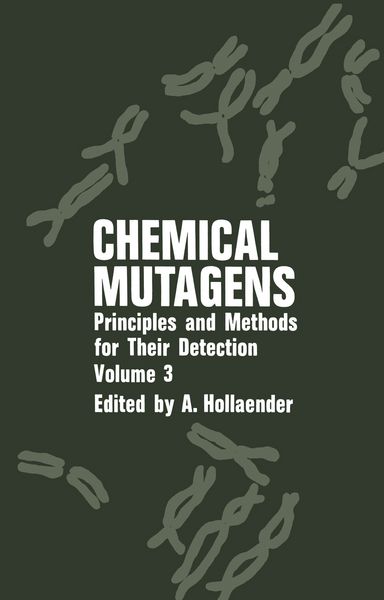
Produktbild: Chemical Mutagens

Chemical Mutagens Principles and Methods for Their Detection Volume 3

54,99 €

inkl. gesetzl. MwSt., Versandkostenfrei


Beschreibung

Produktdetails

Einband

Taschenbuch

Erscheinungsdatum

05.02.2012

Abbildungen

XXII, 304 p. 17 illus.

Verlag

Springer Us

Seitenzahl

304

Maße (L/B/H)

22,9/15,2/1,9 cm

Gewicht

482 g

Auflage

1973

Sprache

Englisch

ISBN

978-1-4615-8974-7

Beschreibung

Produktdetails

Einband

Taschenbuch

Erscheinungsdatum

05.02.2012

Abbildungen

XXII, 304 p. 17 illus.

Verlag

Springer Us

Seitenzahl

304

Maße (L/B/H)

22,9/15,2/1,9 cm

Gewicht

482 g

Auflage

1973

Sprache

Englisch

ISBN

978-1-4615-8974-7

Herstelleradresse

Springer-Verlag GmbH
Tiergartenstr. 17
69121 Heidelberg
DE

Email: ProductSafety@springernature.com

Noch keine Bewertungen vorhanden

Verfassen Sie die erste Bewertung zu diesem Artikel

Helfen Sie anderen Kundinnen und Kunden durch Ihre Meinung.

Kundinnen und Kunden meinen

Bewertungen (0)

  • Produktbild: Chemical Mutagens
  • of Volume 3.- 24 History of Research on Chemical Mutagenesis.- I. Introduction.- II. War Gases.- III. Other Alkylating Agents.- IV. Nitroso Compounds.- V. Urethane.- VI. Alkaloids.- VII. Inorganic Salts.- VIII. Formaldehyde, Organic Peroxides.- IX. Nitrous Acid.- X. Calf Thymus DNA and Other Macromolecules, Carcinogens.- XI Phenols.- XII. Basic Dyes.- XIII. Purines.- XIV. Base Analogues.- XV. Epilogue.- XVI. References.- 25 Observations on Meiotic Chromosomes of the Male Mouse as a Test of the Potential Mutagenicity of Chemicals in Mammals.- I. Introduction.- II. Methods for Detecting Chromosome Aberrations.- III. Experimental Results with Ionizing Radiation.- IV. Experimental Results with Chemical Mutagens.- V. Acknowledgments.- VI. References.- 26 Techniques for Monitoring and Assessing the Significance of Mutagenesis in Human Populations.- I. Introduction.- II. Kinds of Information about Human Populations Needed for Monitoring.- III. Limitations and Advantages of Using Existing Population Records.- IV. Information Content of the Available Records.- V. Methods of Record Linkage.- VI. Relevant Data Obtained by Record Linkage.- VII. Future Accessibility of Diagnostic Data.- VIII. Mutagenesis and the Search for an Optimum Environment for Man.- IX. Conclusions for Geneticists.- X. References.- 27 Specific-Locus Mutational Assay Systems for Mouse Lymphoma Cells.- I. Introduction.- II. HGPRT Locus.- III. TK Locus: General Principles.- IV. TK Locus in a Mutational Assay System.- V. Concluding Remarks.- VI. Acknowledgments.- VII. References.- 28 Approaches to Monitoring Human Populations for Mutation Rates and Genetic Disease.- I. Introduction.- II. Theoretical Importance of Measurements in Man.- III. Practical Importance of Human Genetic Monitoring.- IV. Study of Mutation atthe Molecular Level.- V. Critique of Genetic Monitoring Based on Electrophoresis.- VI. Does the Initial Approach Meet the Criteria for a Satisfactory Monitoring System?.- VII. Estimates of the Magnitude of Effort Required.- VIII. Importance of Accurate Information.- IX. Some Technological Requirements.- X. Assessment of Technological Possibilities (Using Electrophoresis).- XI. Methods Based on Activity Measurements.- XII. Low Molecular Weight Substances.- XIII. Confirmatory Analyses, Genetic Follow-up, and Data Reduction.- XIV. Genetic Monitoring as a National Problem.- XV. Conclusions.- XVI. References.- 29 Repair of Chemical Damage to Human DNA.- I. Introduction.- II. Sequence of Molecular Events in Experiments with Mutagenic and Carcinogenic Agents.- III. What Can DNA Repair Studies Tell Us?.- IV. Methods of Studying Repair.- V. The Two Forms of Repair as Measured by BrUra Photolysis.- VI. Classification of DNA-Damaging Chemical Agents According to the Repair Sequence Induced.- VII. Xeroderma Pigmentosum and UV-Type Repair after Chemical Damage to DNA.- VIII. Summary of Present Interpretations.- IX. Acknowledgments.- X. References.- 30 Tradescantia Stamen Hairs: A Radiobiological Test System Applicable to Chemical Mutagenesis.- I. Introduction.- II. Techniques and Procedures.- III. Characteristic Data Obtained from the Stamen-Hair System.- IV. Summary.- V. Acknowledgments.- VI. References.- 31 Detection of Genetically Active Chemicals Using Various Yeast Systems.- I. Brief Description of the Yeasts Used in Genetic Research.- II. Techniques.- III. Treatment Conditions.- IV. Systems Used to Detect Mutagenicity of Chemicals.- V. Evaluation of Mutagenesis Experiments and Complications.- VI. The Problem of Metabolic Activation.- VII. Mitotic Recombination.- VIII. MethodsUsed to Increase Sensitivity to Genetically Active Agents.- IX. General Evaluation.- X. Acknowledgments.- XI. References.- 32 Total Reproductive Capacity in Female Mice: Chemical Effects and Their Analysis.- I. Introduction.- II. Oocyte Development and Responses to Radiation Effects.- III. General Procedure.- IV. Fertility Effects of Alkylating Chemicals on Female Mice.- V. Delayed Pathological and Survival Effects in Chemically Treated Female Mice in the Total Reproductive Capacity Experiment.- VI. Importance of Using Females in Fertility Studies.- VII. Need for Assay Systems in Female Mice to Measure Induced Heritable Genetic Damage.- VIII. References.- 33 Insect Chemosterilants as Mutagens.- I. Introduction.- II. Screening of Chemosterilants.- III. Classification of Chemosterilants.- IV. Conclusion.- V. References.- 34 The Literature of Chemical Mutagenesis.- I. Introduction.- II. The State of Chemical Mutagenesis Literature.- III. Sources and Types of Chemical Mutagenesis Literature.- IV. Organization of Chemical Mutagenesis Information.- V. Some Suggestions for Improving Literature Control.- VI. Conclusion.- VII: Acknowledgments.- Author Index.