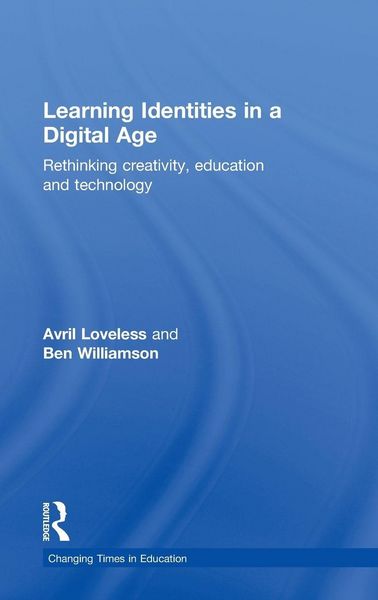
Learning Identities in a Digital Age Rethinking creativity, education and technology
-
- Hardcover ausgewählt
- Taschenbuch
- eBook
-
Sprache:Englisch
289,99 €
inkl. gesetzl. MwSt.,
Beschreibung
Produktdetails
Einband
Gebundene Ausgabe
Erscheinungsdatum
28.02.2013
Verlag
Taylor & FrancisSeitenzahl
208
Maße (L/B/H)
24/16,1/1,6 cm
Gewicht
620 g
Sprache
Englisch
ISBN
978-0-415-67571-0
Digital media are increasingly interwoven into how we understand society and ourselves today. From lines of code to evolving forms of online conduct, they have become an ever-present layer of our age. The rethinking of education has now become the subject of intense global policy debates and academic research, paralleled by the invention and promotion of new learning identities, which are intended to incite teachers and students to think, feel, and act as social operators in schools and beyond. Learning Identities in a Digital Age provides a critical exploration of how education has been reimagined for the digital future. It argues that education is now the subject of a "cybernetic" mode of thought: a contemporary style of thinking about society and identity that is saturated with metaphors of networks, flexibility, interactivity, and connectedness. This book examines how shifts in thought have translated into fresh ideas about creative learning, interactive tools, curriculum reform, and teacher identity. The text identifies how learning identities have been promoted, and position young people as networked learners, equipped for political, economic and cultural participation in the digital age. Included in the text: - mapping the digital age - reconstructing the future of education -making up digital learning identities -assembling creative learning -thinking with digital tools - protoyping the curriculum of the future -being a teacher in a digital age. This book situates education and technology in an intergenerational and interdisciplinary conversation. It will be of interest to students, researchers and practising education professionals who want to understand the wider sociological and psychological significance of new technologies on education and learner identity.
Noch keine Bewertungen vorhanden
Verfassen Sie die erste Bewertung zu diesem Artikel
Helfen Sie anderen Kundinnen und Kunden durch Ihre Meinung.
Kurze Frage zu unserer Seite
Vielen Dank für Ihr Feedback
Wir nutzen Ihr Feedback, um unsere Produktseiten zu verbessern. Bitte haben Sie Verständnis, dass wir Ihnen keine Rückmeldung geben können. Falls Sie Kontakt mit uns aufnehmen möchten, können Sie sich aber gerne an unseren Kund*innenservice wenden.
zum Kundenservice