
KI-Beratung Beta

Gutscheinbedingungen

**Gültig am 20.11.2026 ab einem Mindestbestellwert von 30€ auf Spielzeug, Schreibwaren, Filme, Geschenke & Trends, Musik, tolino eReader & Zubehör, Hörbücher und Hörbuch-Downloads, nicht preisgebundene Bücher und Kalender online auf thalia.at und in der Thalia App. Einzelne Artikel können ausgeschlossen sein. Aufgrund der Buchpreisbindung sind deutschsprachige Bücher und eBooks ausgenommen. Zusätzlich ausgenommen sind Abos & Flatrates, Games, Geschenkkarten/-boxen, Shelfies, Software, Zeitschriften sowie einzelne Artikel von tonies®. Pro Einkauf einmal einlösbar. Click & Collect nur bei Onlinevorabzahlung möglich. Keine Barauszahlung. Nicht kombinierbar mit anderen Aktionen und Gutscheinen. Gutschein wird auf max. 500€ Bestellwert angerechnet. Nicht gültig für Versandkosten und Services. Preisgebundene Artikel sind vom Mindestbestellwert ausgeschlossen.

  • Produktbild: Democracy's Ancient Ancestors
  • Produktbild: Democracy's Ancient Ancestors

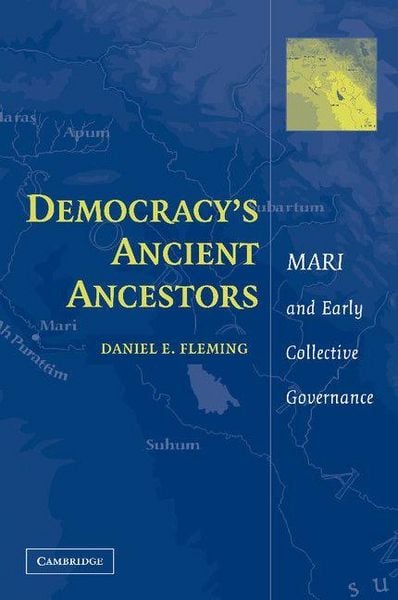
Democracy's Ancient Ancestors Mari and Early Collective Governance

75,99 €

inkl. gesetzl. MwSt., Versandkostenfrei


Beschreibung

Democracy's Ancient Ancestors examines the political landscape of the ancient Near East through the archive of over 3000 letters found in the royal palace of Mari. These letters display a rich diversity of political actors, encompassing major kingdoms, smaller states and various tribal towns. Mari's...

Beschreibung

Democracy's Ancient Ancestors examines the political landscape of the ancient Near East through the archive of over 3000 letters found in the royal palace of Mari. These letters display a rich diversity of political actors, encompassing major kingdoms, smaller states and various tribal towns. Mari's unique contribution to the ancient evidence is its view of tribal organization, made possible especially by the fact that its king Zimri-Lim was first of all a tribal ruler, who claimed Mari as an administrative base and source of prestige. These archaic political traditions are not essentially unlike the forms of pre-democratic Greece, and they offer fresh reason to recognize a cultural continuity between the classical world of the Aegean and the older Near East. This book bridges several areas of interest, including archaeology, ancient and classical history, early Middle and Near East, and political and social history.

Produktdetails

Einband

Taschenbuch

Erscheinungsdatum

15.03.2012

Verlag Cambridge Academic
Seitenzahl

390

Produktdetails

Einband

Taschenbuch

Erscheinungsdatum

15.03.2012

Verlag Cambridge Academic
Seitenzahl

390

Maße (L/B/H)

22,9/15,2/2,3 cm

Gewicht

570 g

Sprache

Englisch

ISBN

978-1-107-40493-9

Herstelleradresse

Libri GmbH
Europaallee 1
36244 Bad Hersfeld
DE

Email: gpsr@libri.de

Noch keine Bewertungen vorhanden

Verfassen Sie die erste Bewertung zu diesem Artikel

Helfen Sie anderen Kundinnen und Kunden durch Ihre Meinung.

Kundinnen und Kunden meinen

Bewertungen (0)

  • Produktbild: Democracy's Ancient Ancestors
  • Produktbild: Democracy's Ancient Ancestors
  • Preface; Part I. Introduction: 1. The Mari texts; 2. A survey of Mari history; 3. The Mari archives and political history; 4. A text-based study: comments on methodology; Part II. The Tribal World of Zimri-Lim: 5. Tribally organized pastoralists and the Amorrites; 6. The primary constituents of the confederacies: Sim'alite gayum and Yaminite li'mum; 7. The local leader of tribe and town: the Sugagum in service to the Mari kingdom; 8. The chief of pasture: the Merhum; 9. The 'Hana' tent-dwellers; 10. The other confederacy: the Yaminites; Part III. The Archaic State and the Matum 'Land': 11. Urbanism and archaic states; 12. The matum: the basic unit of regional politics in the early second millennium; 13. Subdividing the major matums: the halsum district; 14. Population terminology not tied to political entity; 15. Zimri-Lim and the land of the tent-dwellers (mat Hana); Part IV. The Collective and the Town: 16. The towns of the Mari archives; 17. The collective face of town or land; 18. Elders; 19. Heads; 20. Words for assembly; 21. Imar, Tuttul, and Urgis: old towns with strong collective traditions; 22. Mari in third-millenium towns; 23. On explaining corporate power; Part V. Conclusions: 24. The political world of the Mari archives; 25. Before democracy; Bibliography; Glossaries; Indices.