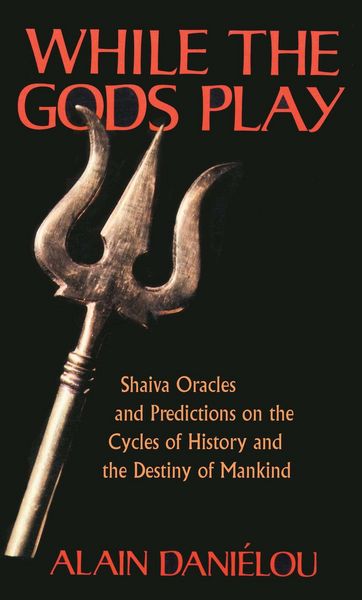
Produktbild: While the Gods Play

While the Gods Play Shaiva Oracles and Predictions on the Cycles of History and the Destiny of Mankind

21,99 €

inkl. gesetzl. MwSt., zzgl. Versandkosten


  • Kostenlose Lieferung ab 30 € Einkaufswert
  • Versandkostenfrei für Bonuscard-Kund*innen

Beschreibung

Produktdetails

Einband

Taschenbuch

Erscheinungsdatum

01.08.1987

Verlag

Inner Traditions/Bear & Company

Seitenzahl

304

Maße (L/B/H)

21,7/13,6/2,5 cm

Gewicht

345 g

Sprache

Englisch

ISBN

978-0-89281-115-1

Beschreibung

Produktdetails

Einband

Taschenbuch

Erscheinungsdatum

01.08.1987

Verlag

Inner Traditions/Bear & Company

Seitenzahl

304

Maße (L/B/H)

21,7/13,6/2,5 cm

Gewicht

345 g

Sprache

Englisch

ISBN

978-0-89281-115-1

Herstelleradresse

Libri GmbH
Europaallee 1
36244 Bad Hersfeld
DE

Email: gpsr@libri.de

Kundinnen und Kunden meinen

0 Bewertungen

Informationen zu Bewertungen

Zur Abgabe einer Bewertung ist eine Anmeldung im Konto notwendig. Die Authentizität der Bewertungen wird von uns nicht überprüft. Wir behalten uns vor, Bewertungstexte, die unseren Richtlinien widersprechen, entsprechend zu kürzen oder zu löschen.

Die Bewertungen sind nach Format, Anzahl Sterne und Datum sortiert.

Verfassen Sie die erste Bewertung zu diesem Artikel

Helfen Sie anderen Kund*innen durch Ihre Meinung

Kundinnen und Kunden meinen

0 Bewertungen filtern

  • Produktbild: While the Gods Play

  • Note on the Transliteration of Sanskrit Terms

    Introduction to the American Edition

    PART ONE: THE HUMAN ADVENTURE


    1. Origins
    The Dravidians, 6 / The Aryans, 9

    2. The Religions of the Kali Yuga
    Shaivism, 15 / The Return of Arihat, 16 / Gosalii, 17 / Mahavfra, 22 / Gautama Buddha, 23 / The Religion of Nature and the Religion of the City, 24 / The Kali Yuga in the World, 25 / The Shaiva Revival, 27 / Lakulisha, 27 / Mahayana, 29

    3. Rediscovered Tradition

    The Texts, 31 / Hindu Decadence, 35 / The West, 38 / India Today, 39

    PART TWO: SHAIVA PHILOSOPHY
    1. The Ways of Knowledge 43
    Approaches (Darshana), 43

    2. Valsheshika and Nyaya 46
    Science and Logic, 46 / The Experimental Method (Vaisheshika), 47 / Logic (Nyaya), 50 / Aphorisms of the Nyaya, 53

    3. The Samkhya: The Study of the Macrocosm
    The Quest for Constants (Akshara), 57 / The Texts of the Samkhya, 58 / Concepts of the Samkhya, 59 / Nature and Perception, 63 / The Three Tendencies of Prakriti, the Nature of Nature, 65 / The Definables (Tattva): The Twenty-five Constituents of the World, 67 / The Plan (Purusha), 67 / The World-Substance (Prakriti), 68 / Cosmic Intelligence (Mahat), 69 / The Principle of Individuality (Ahamkara), 69 / The Modes of Interaction of Matter (Tanmatra), 71 / The Principles of the Senses (Mahabhuta), 71 / The Powers of Perception and Action (Indriya), 73 / The Living Being, 75

    4. The Exploration of Man's Inner Universe
    The Being of Flesh and the Being of Knowledge, 78 / The Sexual Body (Linga-Sharira) or Transmittable Body, 79 / The Nature of the Transmigrant Body, 81

    5. The Being of Knowledge
    Universal Law (Sanatana Dharma) and the Heritage of Knowledge, 84 / The Seers (Rishi), 86 / The Sacred Books, 87

    6. Yoga
    Yoga: Study of the Microcosm, 89 / Method, 90 / The Structure of Living Beings, 92 / The Five Vital Energies (Prana), 92 / Magic Powers (Siddhi), 94 / Reincarnation, 97 / Transubstantiation, 98 / Liberation (Moksha), 99 / Immortality, 100 / Yoga and Tantrism, 100 / Aryanized Yoga, 101

    PART THREE: THE MIMANSA: THE RELIGIOUS, RITUALISTIC, AND MYSTICAL APPROACH

    1. The Two Mimansa
    The Gods, 109 / Aspects of Maheshvara, 111 / Shiva, Tamas, 112 / Sattva, the Goddess, and Vishnu, 112 / Rajas, Prajapati-Brahma, 114 / Symbols of the Gods, 114 / The Cult of the Linga, 115 / The Assimilated Gods, 116 / Monotheism, 117

    2. The Doctrine of the Pashupata
    The Teaching of Lakulisha, 120 / Texts, 121 / Pashupati: Lord of the Animals, 122 / Pati: The Herder, 122 / Pashu: The Animal, 123 / Pasha: The Snare, 123 / The Creative Power of the Sovereign Being (Ishvara-Kartri-Vada), 124 / The Cause (Karana), 124 / The Work (Karya), 125 / Divisibility (Kala), 125 / Method (Vidhi), 126 / Meritorious Deeds (Kriya), 126 / The Temple, 126 / Union (Yoga), 128 / The End of Suffering (Dukhanta), 129

    3. Communities and Monastic Orders
    Monastic Orders, 130 / The Black Faces (Kalamukha), 132 / The Skull-Bearers (Kapalika), 133 / Practices (Charya), 135 / The Five M's, 136 / Mala and Mutra, 137 / Meat (Mansa) and Sacrifice (Medha), 137 / Human Sacrifice, 138 / Intoxicating Liquors (Madhya), 139 / Drugs, 140 / Sexual Rites (Maithuna), 141 / Love and Death, 142 / The Great Vow (Mahavrata), 144 / Initiation of the Pashupata, 145

    4. Preliminary Practices
    Advice to a Mleccha, 149

    PART FOUR: SOCIAL MAN

    1. The Individual and the Species
    The Clan (Jati), 158 / Procreation, 161 / The Castes (Varna), 162 / The Lineage (Gotra), 165 / The Popular Framework, 166 / Coexistence, 167 / Woman, 170 / The Family (Kula), 171 / The Servants of the Gods, 172 / The Third Nature (Tritiya Prakriti), 173

    2. The Transmission of Knowledge
    The Master (Guru), 179 / The Guru's Responsibilities, 180 / The Limits of Knowledge, 181 / The Choice of a Disciple, 182 / The Wanderers of the Path of Knowledge (Brahmachari), 184

    PART FIVE: THE THEORY OF CYCLES

    1. The Duration of the Universe
    The Cycles of the Yuga, 194 / The Flood, 198

    2. The Three Cities
    The Ages (Yuga), 200 / The Destruction of the Assurs, 201

    PART SIX: FORESTALLING THE END

    1. Predictions
    Precursory Signs, 211 / The End of the World, 216 / Accidental or Induced Destruction (Naimitta Pralaya), 217 / The Disappearance or Natural Death (Prakrita Pralaya) of the World, 219

    2. Forestalling the Final Day
    The Return to Shaivism, 222

    3. Conclusions

    APPENDIX I. LANGUAGE: INSTRUMENT FOR THE TRANSMISSION OF KNOWLEDGE
    The Nature of Language, 227 / The Manifestation of Thought, 228 / Texts, 232 / The Maheshvara Sutra, 235 / The Nine Vowels, 238 / The Consonants, 243 / The Five Groups (Varga), 243 / The Tattva, 245 / Creation by the Word, 251 / Monosyllabic Dictionaries, 252 / Magic Formulae (Mantra), 253 / Elements of the Musical Vocabulary, 254 / The Various Forms of Language, 255 / Visual Languages, 256 / A Geometric Language (Yantra), 256 / The Swastika, 260

    APPENDIX II. CHRONOLOGY OF THE KALI YUGA

    Bibliography

    Index