Gutscheinbedingungen

**Gültig bis 25.06.2026 auf fremdsprachige Bücher online auf thalia.at und in der Thalia App. Einzelne Artikel können ausgeschlossen sein. Ausgenommen sind preisgebundene Artikel & eBooks. Pro Einkauf einmal einlösbar. Click & Collect nur bei Onlinevorabzahlung möglich. Keine Barauszahlung. Nicht kombinierbar mit anderen Aktionen und Gutscheinen. Gutschein wird auf max. 500€ Bestellwert angerechnet. Nicht gültig für Geschenkkarten, Versandkosten und Services.

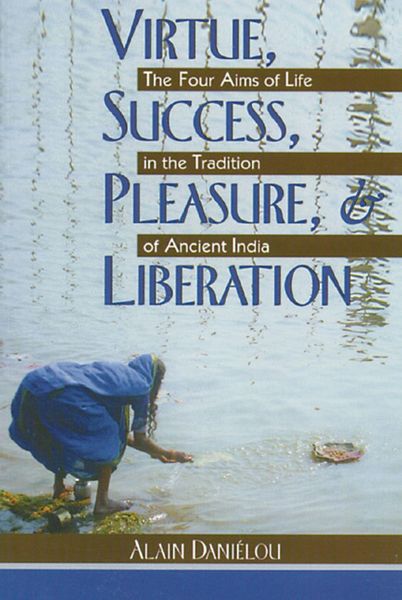
Produktbild: Virtue, Success, Pleasure and Liberation

Virtue, Success, Pleasure and Liberation Four Aims of Life in the Tradition of Ancient India

18,99 €

inkl. gesetzl. MwSt., zzgl. Versandkosten


  • Kostenlose Lieferung ab 30 € Einkaufswert
  • Versandkostenfrei für Bonuscard-Kund*innen

Beschreibung

Produktdetails

Einband

Taschenbuch

Erscheinungsdatum

17.01.2000

Verlag

Inner Traditions Bear and Company

Seitenzahl

192

Maße (L/B/H)

22,7/15,2/1,3 cm

Gewicht

308 g

Sprache

Englisch

ISBN

978-0-89281-218-9

Beschreibung

Zitat

"Offer[s] us an abundance of excellent advice about how to understand life and to live well."--Collin Cleary, Tyr, August 2002

Produktdetails

Einband

Taschenbuch

Erscheinungsdatum

17.01.2000

Verlag

Inner Traditions Bear and Company

Seitenzahl

192

Maße (L/B/H)

22,7/15,2/1,3 cm

Gewicht

308 g

Sprache

Englisch

ISBN

978-0-89281-218-9

Herstelleradresse

Libri GmbH
Europaallee 1
36244 Bad Hersfeld
DE

Email: gpsr@libri.de

Kundinnen und Kunden meinen

0 Bewertungen

Informationen zu Bewertungen

Zur Abgabe einer Bewertung ist eine Anmeldung im Konto notwendig. Die Authentizität der Bewertungen wird von uns nicht überprüft. Wir behalten uns vor, Bewertungstexte, die unseren Richtlinien widersprechen, entsprechend zu kürzen oder zu löschen.

Die Bewertungen sind nach Format, Anzahl Sterne und Datum sortiert.

Verfassen Sie die erste Bewertung zu diesem Artikel

Helfen Sie anderen Kund*innen durch Ihre Meinung

Kundinnen und Kunden meinen

0 Bewertungen filtern

Die Leseprobe wird geladen.
  • Produktbild: Virtue, Success, Pleasure and Liberation

  • Note from the Publisher

    Introduction by Robert Lawlor


    Part One


    1. The Historical Background
    History and Legend
    The Birth of a Civilization
    Sanskrit

    2. The Bases of Social Order
    The Cycles
    The Origin of the Ages, the Races, and the Castes
    Elements of Social Order
    The Castes
    Occupation, Heredity, Environment
    The Four Tyrannies
    Race and Racism
    Duties and Privileges
    Caste and Marriage
    Caste and Diet
    Caste and Conquest
    The Outcastes
    Protection of Less Advanced Races

    Part Two

    3. The Nature of the World
    The Nature of the World
    Creation and Perception
    Matter, the Stars, and Life

    4. The Four Aims of Life
    The Four "Aims of Life" (Purusharthas)
    Action (Karma)

    5. The First Aim of Life
    Dharma: Duty, Virtue - Self-realization on the Moral Plane
    Ethics
    Moral Purity, Ritual Purity, and Untouchability
    The Three Debts of Man
    The Role of Women
    Population Control

    6. The Second Aim of Life
    Artha: Material Goods, Wealth, Success, Power - Self-realization on the Social Level
    Material Goods
    The Acquisition and Use of Wealth

    7. The Third Aim of Life
    Kama: Pleasure, Sexuality, Enjoyment - Self-realization on the Sensual Level
    Pleasure
    Pleasure and the Other Aims of Life
    Pleasure and Liberation
    Pleasure, the Individual, and Society
    The Forms of Erotic Realization
    Erotic Arts and Techniques

    8. The Fourth Aim of Life
    Moksha: Liberation - Self-realization on the Spiritual Plane
    Liberation
    Degrees of Divine Union
    Transcendent Reality
    Qualifications
    The Paths of Liberation
    Samadhi

    9. The Four Stages of Life
    The First Stage of Life: The Quest for Knowledge (Brahmacharya)
    The Second Stage of Life: Family Life (Grihastha)
    The Third Stage of Life: Retreat into the Forest (Vana Prastha)
    The Fourth Stage of Life: Renunciation (Sannyasa)

    10. Conclusions
    Hindu Society in the Modern World

    Appendix 1 - The Thirty-Two Sciences

    Appendix 2 - The Sixty-Four Arts


    Sources

    Index