Gutscheinbedingungen

**Gültig bis 14.09.2026 auf Spielzeug, Schreibwaren, Filme, Geschenke & Trends, Musik, tolino eReader & Zubehör, Hörbücher, nicht preisgebundene Bücher und Kalender in der Thalia App. Einzelne Artikel können ausgeschlossen sein. Aufgrund der Buchpreisbindung sind deutschsprachige Bücher und eBooks ausgenommen. Zusätzlich ausgenommen sind Abos & Flatrates, Games, Geschenkkarten/-boxen, Shelfies, Software, Zeitschriften sowie einzelne Artikel von tonies®. Pro Einkauf einmal einlösbar. Nur gültig mit im Onlineshop hinterlegter Bonuscard. Click & Collect nur bei Onlinevorabzahlung möglich. Keine Barauszahlung. Nicht kombinierbar mit anderen Aktionen und Gutscheinen. Gutschein wird auf max. 500€ Bestellwert angerechnet. Nicht gültig für Versandkosten und Services.

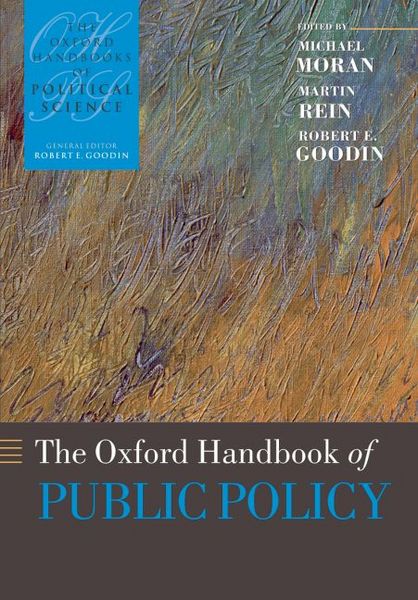
Produktbild: The Oxford Handbook of Public Policy

The Oxford Handbook of Public Policy

Aus der Reihe Oxford Handbooks

65,99 €

inkl. gesetzl. MwSt., Versandkostenfrei


Beschreibung

Produktdetails

Einband

Taschenbuch

Erscheinungsdatum

12.06.2008

Herausgeber

Martin Rein + weitere

Verlag

Oxford University Press

Seitenzahl

996

Maße (L/B/H)

24,6/17,1/5,8 cm

Gewicht

1718 g

Sprache

Englisch

ISBN

978-0-19-954845-3

Beschreibung

Produktdetails

Einband

Taschenbuch

Erscheinungsdatum

12.06.2008

Herausgeber

Verlag

Oxford University Press

Seitenzahl

996

Maße (L/B/H)

24,6/17,1/5,8 cm

Gewicht

1718 g

Sprache

Englisch

ISBN

978-0-19-954845-3

Herstelleradresse

Libri GmbH
Europaallee 1
36244 Bad Hersfeld
DE

Email: gpsr@libri.de

Noch keine Bewertungen vorhanden

Verfassen Sie die erste Bewertung zu diesem Artikel

Helfen Sie anderen Kundinnen und Kunden durch Ihre Meinung.

Kundinnen und Kunden meinen

Bewertungen (0)

  • Produktbild: The Oxford Handbook of Public Policy
    • Part 1. Introduction
    • 1: Robert E. Goodin, Michael Moran, and Martin Rein: The Public and its Policies
    • Part II. Institutional and Historical Background
    • 2: Peter deLeon: The Historical Roots of the Field
    • 3: Graham Allison: Emergence of Schools of Public Policy
    • 4: Yehezkel Dror: Training for Policy-Makers
    • Part III. Modes of Policy Analysis
    • 5: Christopher Winship: Policy Analysis as Puzzle-solving
    • 6: John Forestor: Policy Analysis as Critical Listening
    • 7: Richard Wilson: Policy Analysis as Policy Advice
    • 8: Helen Ingram and Anne L. Schneider: Policy Analysis for Democracy
    • 9: John Dryzek: Policy Analysis as Social Critique
    • Part IV. Producing Public Policy
    • 10: Edward C. Page: The Origins of Policy
    • 11: Giandomenico Majone: Agenda Setting
    • 12: Maarten Hajer and David Laws: Policy Frame and Discourse
    • 13: Lawrence Susskind: Arguing, Bargaining, and Getting Agreement
    • 14: Bea Cantillon and Karel van den Bosch: Policy Impact
    • 15: Mark Bovens, Paul 'tHart and Sanneke Kuipers: The Politics of Policy Evaluation
    • 16: Eugene Bardach: Policy Dynamics
    • 17: Richard Freeman: Learning in Public Policy
    • 18: Martin Rein: Reframing Problematic Policies
    • Part V. Instruments of Policy
    • 19: David Laws and Maarten Hajer: Policy in Practice
    • 20: R.A.W. Rhodes: Policy Networks
    • 21: Tom Christiansen: Smart Policy?
    • 22: Christopher Hood: The Tools of Government in the Information Age
    • 23: Barry L. Friedman: Policy Analysis as Organizational Analysis
    • 24: John D. Donahue and Richard J. Zeckhauser: Public-Private Collaboration
    • Part VI. Constraints on Public Policy
    • 25: John Quiggin: Economic Constraints on Public Policy
    • 26: William A. Galston: Political Feasibility: Interests and Power
    • 27: Ellen M. Immergut: Institutional Constraints on Policy
    • 28: Davis B. Bobrow: Social and Cultural Factors
    • 29: Colin Hay: Globalization and Public Policy
    • Part VII. Policy Intervention: Styles and Rationales
    • 30: Tom Sefton: Distributive and Redistributive Policy
    • 31: Mark Kleiman and Steven N. Teles: Market and Non-Market Failures
    • 32: Colin Scott: Privatization and Regulatory Regimes
    • 33: Archon Fung: Democratizing the Policy Process
    • Part VIII. Commending and Evaluating Public Policies
    • 34: James G. March and Johan P. Olsen: The Logic of Appropriateness
    • 35: Henry Shue: Ethical Dimensions of Public Policy
    • 36: Kevin B. Smith: Economic Techniques
    • 37: Jonathan Wolff and Dirk Haubrich: Economism and its Limits
    • 38: Neta C. Crawford: Policy Modeling
    • 39: Carol Hirschon Weiss and Johanna Birckmayer: Social Experimentation for Public Policy
    • IX. Public Policy, Old and New
    • 40: Amitai Etzioni: The Unique Methodology of Policy Research
    • 41: Oran R. Young: Choosing Governance Systems: A Plea for Comparative Research
    • 42: Frances Fox Piven: The Politics of Retrenchment: the U.S. Case
    • 43: Matthew Holden, Jr.: Reflections on how political scientists (and others) might think about energy and policy
    • 44: Rudolf Klein and Theodore R. Marmor: Reflections on Policy Analysis: Putting it Together Again