
Gutscheinbedingungen

**Gültig bis 06.07.2026 auf fremdsprachige Bücher online auf thalia.at, in der Thalia App ab einem Mindestbestellwert von 30€ und in allen Thalia Buchhandlungen in Österreich. In den Buchhandlungen nur gültig auf lagernde Ware. Einzelne Artikel können ausgeschlossen sein. Ausgenommen sind preisgebundene Artikel & eBooks. Pro Einkauf einmal einlösbar. Nur gültig gegen Vorlage oder im Onlineshop hinterlegter Bonuscard. Infos zur Einlösung in der Buchhandlung sind auf der Bonuscard-Vorteilspreisseite zu finden. Click & Collect nur bei Onlinevorabzahlung möglich. Keine Einlösung bei Scan & Go-Bezahlung. Keine Barauszahlung. Nicht kombinierbar mit anderen Aktionen und Gutscheinen. Gutschein wird auf max. 500€ Bestellwert angerechnet. Nicht gültig für Versandkosten und Services.

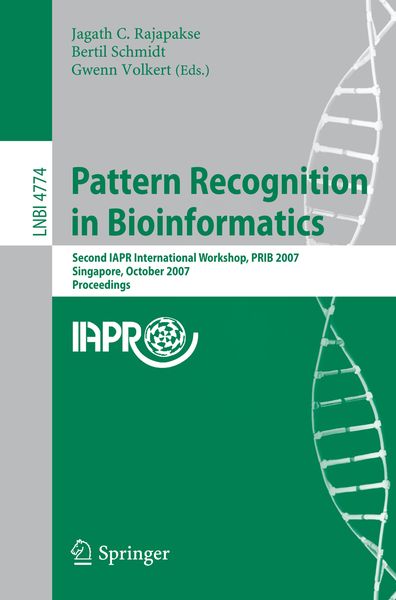
  • Produktbild: Pattern Recognition in Bioinformatics
  • Produktbild: Pattern Recognition in Bioinformatics

Pattern Recognition in Bioinformatics Second IAPR International Workshop, PRIB 2007, Singapore, October 1-2, 2007, Proceedings

51,99 €

inkl. gesetzl. MwSt., Versandkostenfrei


Beschreibung

Produktdetails

Einband

Taschenbuch

Erscheinungsdatum

17.09.2007

Herausgeber

Jagath C.-Rajapakse + weitere

Verlag

Springer Berlin

Seitenzahl

410

Maße (L/B/H)

23,5/15,5/2,4 cm

Gewicht

657 g

Auflage

2007

Sprache

Englisch

ISBN

978-3-540-75285-1

Beschreibung

Produktdetails

Einband

Taschenbuch

Erscheinungsdatum

17.09.2007

Herausgeber

Verlag

Springer Berlin

Seitenzahl

410

Maße (L/B/H)

23,5/15,5/2,4 cm

Gewicht

657 g

Auflage

2007

Sprache

Englisch

ISBN

978-3-540-75285-1

Herstelleradresse

Springer-Verlag KG
Sachsenplatz 4-6
1201 Wien
AT

Email: GPSR Kontakt

Noch keine Bewertungen vorhanden

Verfassen Sie die erste Bewertung zu diesem Artikel

Helfen Sie anderen Kundinnen und Kunden durch Ihre Meinung.

Kundinnen und Kunden meinen

Bewertungen (0)

  • Produktbild: Pattern Recognition in Bioinformatics
  • Produktbild: Pattern Recognition in Bioinformatics
  • Sequence Analysis.- Automated Methods of Predicting the Function of Biological Sequences Using GO and Rough Set.- C-Based Design Methodology for FPGA Implementation of ClustalW MSA.- A Two-Phase ANN Method for Genome-Wide Detection of Hormone Response Elements.- An Expert Knowledge-Guided Mutation Operator for Genome-Wide Genetic Analysis Using Genetic Programming.- cDNA-Derived Amino Acid Sequence from Rat Brain A2aR Possesses Conserved Motifs PMNYM of  TM 5 Domain, Which May Be Involved in Dimerization of A2aR.- Strong GC and AT Skew Correlation in Chicken Genome.- Comparative Analysis of a Hierarchical Bayesian Method for Quantitative Trait Loci Analysis for the Arabidopsis Thaliana.- Prediction of Protein Structure, Interaction and Localization.- Using Decision Templates to Predict Subcellular Localization of Protein.- Generalized Schemata Theorem Incorporating Twin Removal for Protein Structure Prediction.- Using Fuzzy Support Vector Machine Network to Predict Low Homology Protein Structural Classes.- SVM-BetaPred: Prediction of Right-Handed ß-Helix Fold from Protein Sequence Using SVM.- Protein Fold Recognition Based Upon the Amino Acid Occurrence.- Using Efficient RBF Network to Identify Interface Residues Based on PSSM Profiles and Biochemical Properties.- Dynamic Outlier Exclusion Training Algorithm for Sequence Based Predictions in Proteins Using Neural Network.- Bioinformatics on ?-Barrel Membrane Proteins: Sequence and Structural Analysis, Discrimination and Prediction.- Estimation of Evolutionary Average Hydrophobicity Profile from a Family of Protein Sequences.- Gene Expression Analysis.- APMA Database for Affymetrix Target Sequences Mapping, Quality Assessment and Expression Data Mining.- Ensemble of Dissimilarity Based Classifiers for Cancerous Samples Classification.- Gene Expression Analysis of Leukemia Samples Using Visual Interpretation of Small Ensembles: A Case Study.- Ant-MST: An Ant-Based Minimum Spanning Tree for Gene Expression Data Clustering.- Integrating Gene Expression Data from Microarrays Using the Self-Organising Map and the Gene Ontology.- Order Preserving Clustering by Finding Frequent Orders in Gene Expression Data.- Correlation-Based Relevancy and Redundancy Measures for Efficient Gene Selection.- SVM-RFE with Relevancy and Redundancy Criteria for Gene Selection.- In Silico Expression Profiles of Human Endogenous Retroviruses.- Pathway Analysis.- A Framework for Path Analysis in Gene Regulatory Networks.- Transcriptional Gene Regulatory Network Reconstruction Through Cross Platform Gene Network Fusion.- Reconstruction of Protein-Protein Interaction Pathways by Mining Subject-Verb-Objects Intermediates.- Validation of Gene Regulatory Networks from Protein-Protein Interaction Data: Application to Cell-Cycle Regulation.- Medical Informatics.- Rough Sets and Fuzzy Sets Theory Applied to the Sequential Medical Diagnosis.- In silico Identification of Putative Drug Targets in Pseudomonas aeruginosa Through Metabolic Pathway Analysis.- Understanding Prediction Systems for HLA-Binding Peptides and T-Cell Epitope Identification.- Predicting Binding Peptides with Simultaneous Optimization of Entropy and Evolutionary Distance.- Bioimaging.- 3D Automated Nuclear Morphometric Analysis Using Active Meshes.- Time-Frequency Method Based Activation Detection in Functional MRI Time-Series.- High Performance Classification of Two Imagery Tasks in the Cue-Based Brain Computer Interface.- Human Brain Anatomical Connectivity Analysis Using Sequential Sampling and Resampling.- Classification of CT Brain Images of Head Trauma.