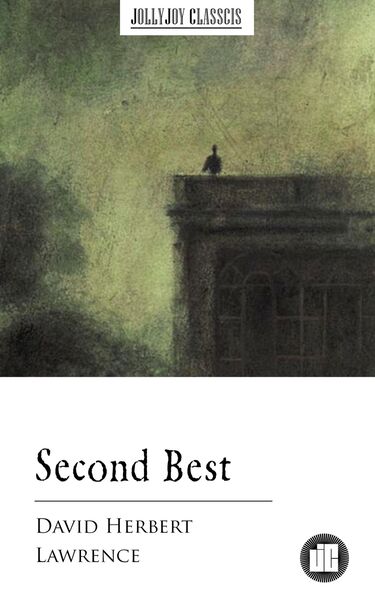
Beschreibung
David Herbert Lawrence (11 September 1885 - 2 March 1930) was an important and controversial English writer of the 20th century, whose prolific and diverse output included novels, short stories, poems, plays, essays, travel books, paintings, translations, literary criticism and personal letters. His collected works represent an extended reflection upon the dehumanizing effects of modernity and industrialisation. In them, Lawrence confronts issues relating to emotional health and vitality, spontaneity, sexuality, and instinctive behaviour. Lawrence's unsettling opinions earned him many enemies and he endured hardships, official persecution, censorship and misrepresentation of his creative work throughout the second half of his life, much of which he spent in a voluntary exile he called his "savage pilgrimage." At the time of his death, his public reputation was that of a pornographer who had wasted his considerable talents. E. M. Forster, in an obituary notice, challenged this widely held view, describing him as "the greatest imaginative novelist of our generation." Later, the influential Cambridge critic F. R. Leavis championed both his artistic integrity and his moral seriousness, placing much of Lawrence's fiction within the canonical "great tradition" of the English novel. He is now generally valued as a visionary thinker and a significant representative of modernism in English literature, although some feminists object to the attitudes toward women and sexuality found in his works. Lawrence only became really famous after his death. His reputation lapsed in the 1930s: he had written too unconventionally and made too many enemies. By the 1960s he was widely seen as one of the great novelists of the twentieth century. By the 1990s his reputation was again in decline; neither a modernist revolutionary like Joyce, nor - like Virginia Woolf - reacting as a woman against the social and literary world which confined her, Lawrence occupied a problematic position in the writing history of the century: and he was unthinkingly branded both fascist and sexist. The republication of his work in a scholarly edition - and in particular the publication in full of the letters which are one of his greatest achievements - ensures that he will be seen differently in future. He was a writer far more concerned with the careful revision and linguistic precision of his work than his early reputation as an uneducated and unthinking genius suggested; he was ahead of his time in many of his attitudes to the individual and society; and he was a writer who explored an extraordinary range of subjects, in particular the need for a language of relationship which does not depend upon love. He was also precise about what he saw as the malign influence of Freud, and strikingly modern in his expression of man's need to be ecologically aware. He never believed in right-wing governments and hated the fascism he saw in Italy and Germany, though he always believed in human beings' need for authority; his writing certainly concentrated on female sexuality, but that was his particular (and in his period a strikingly original) focus. He was a writer who constantly struggled to find and to articulate the experience, not of a body or mind or spirit, but of the whole person. This was what he wrote about most tellingly, and what he himself insisted on remaining, to the end of his life. And other work o Lady Chatterley's Lover (1928), Sons and Lovers (1913), Fantasia of the Unconscious (1922), The Rainbow (1915),The Prussian Officer (1914), Twilight in Italy (1916),The Horse-Dealer's Daughter (1922), The Virgin and the Gipsy (1930), Love Among the Haystacks (1930), Tickets, Please!(1919)