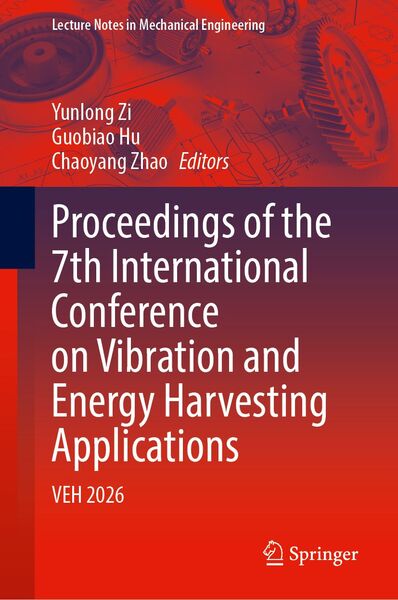
Prof. Yunlong Zi, PhD, FInstP, SMIEEE, is an Associate Professor in the Thrust of Sustainable Energy and Environment at the Hong Kong University of Science and Technology (Guangzhou). He received his Ph.D. in Physics from Purdue University in 2014 and his B.Eng. in Materials Science and Engineering from Tsinghua University in 2009. Prior to joining HKUST-GZ in 2022, he served as an Assistant Professor in the Department of Mechanical and Automation Engineering at the Chinese University of Hong Kong and conducted postdoctoral research at the Georgia Institute of Technology with Prof. Zhong Lin Wang. Prof. Zi’s research focuses on triboelectric nanogenerators, mechanical energy harvesting, and self-powered sensing systems. He has pioneered several key advances in triboelectric energy conversion and wireless self-powered sensing technologies, and introduced the concept of tribo-photonics for self-powered optical sensing and communication. His work aims to enable high-performance nanogenerators and self-powered systems for applications in smart sensing, human–machine interaction, and the emerging passive Internet of Things. He has published over 160 journal papers with more than 20,000 citations and an h-index exceeding 70, and has secured over HKD 15 million in competitive research funding in recent years. His research contributions have been widely recognized, including being named a Clarivate Highly Cited Researcher (2025), MIT Technology Review TR35 Asia-Pacific (2022), Nano Energy Award winner (2021), Fellow of the Institute of Physics (2023), and recipient of the NSFC Excellent Young Scientists Fund (Overseas) (2023).
Dr. Guobiao Hu is a tenure-track Assistant Professor in the Internet of Things (IoT) Thrust at the Hong Kong University of Science and Technology (Guangzhou). He received his Ph.D. degree from the University of Auckland, New Zealand, and previously worked as a Research Fellow in the School of Civil and Environmental Engineering at Nanyang Technological University, Singapore. Dr. Hu’s research focuses on vibration energy harvesting, battery-free Internet of Things, acoustic and elastic metamaterials, and intelligent material structures. His work aims to develop high-efficiency energy harvesting technologies and self-powered sensing systems for next-generation smart infrastructure and autonomous sensing applications. He has published over 150 peer-reviewed papers in leading journals and international conferences and has been recognized among the Stanford University Top 2% Scientists worldwide (2022–2024). His research has received several international recognitions, including the 2024 Ephrahim Garcia Best Paper Award and the 2023 Best Paper Award in Energy Harvesting, both from the SMASIS Division of ASME, as well as the Best Paper Finalist Award at the SPIE Smart Structures/NDE Conference (2018).
Dr. Zhao Chaoyang received his B.E. and M.E. degrees in Mechanical Engineering from Southwest University of Science and Technology, Sichuan, China, in 2015 and 2018, respectively, and his Ph.D. degree in Structural Engineering from Nanyang Technological University (NTU), Singapore, in 2023. He is currently a Research Fellow in the School of Civil and Environmental Engineering at NTU, Singapore. Dr. Zhao’s research interests focus on energy harvesting, nonlinear dynamics, structural health monitoring, and composite sensors. His work is highly multidisciplinary, integrating mechanics, electromechanical systems, optics, and civil engineering. To date, Dr. Zhao has published over 40 papers in leading journals, including Applied Energy, Energy, Mechanical Systems and Signal Processing, International Journal of Mechanical Sciences, and Carbon. His research has received strong recognition from peers worldwide and has been featured in several international media outlets, such as The Straits Times, CNA, and The Independent.