KI-Beratung Beta

Gutscheinbedingungen

**Gültig am 20.11.2026 ab einem Mindestbestellwert von 30€ auf Spielzeug, Schreibwaren, Filme, Geschenke & Trends, Musik, tolino eReader & Zubehör, Hörbücher und Hörbuch-Downloads, nicht preisgebundene Bücher und Kalender online auf thalia.at und in der Thalia App. Einzelne Artikel können ausgeschlossen sein. Aufgrund der Buchpreisbindung sind deutschsprachige Bücher und eBooks ausgenommen. Zusätzlich ausgenommen sind Abos & Flatrates, Games, Geschenkkarten/-boxen, Shelfies, Software, Zeitschriften sowie einzelne Artikel von tonies®. Pro Einkauf einmal einlösbar. Click & Collect nur bei Onlinevorabzahlung möglich. Keine Barauszahlung. Nicht kombinierbar mit anderen Aktionen und Gutscheinen. Gutschein wird auf max. 500€ Bestellwert angerechnet. Nicht gültig für Versandkosten und Services. Preisgebundene Artikel sind vom Mindestbestellwert ausgeschlossen.

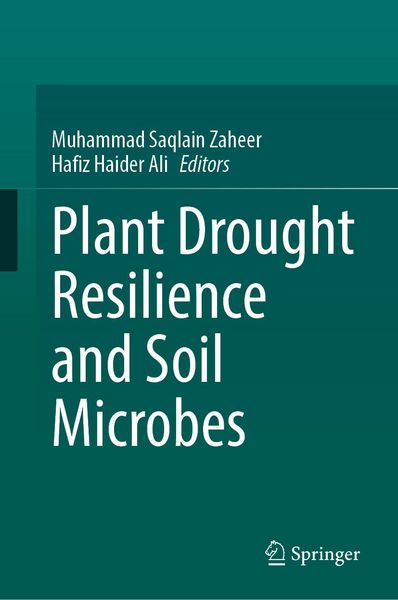
Produktbild: Plant Drought Resilience and Soil Microbes
Vorbesteller Neu

Plant Drought Resilience and Soil Microbes

219,99 €

inkl. gesetzl. MwSt., Versandkostenfrei


Beschreibung

This book provides a clear and organized overview of the role of soil microbes in supporting crops under drought conditions. It brings together research and applied knowledge to present soil microbes as an important part of drought-resilient agriculture.

The chapters open with core concepts on drought...

Beschreibung

This book provides a clear and organized overview of the role of soil microbes in supporting crops under drought conditions. It brings together research and applied knowledge to present soil microbes as an important part of drought-resilient agriculture.

The chapters open with core concepts on drought stress and the soil–root environment, then move on to microbial adaptation in dry soils. The book next introduces plant growth–promoting rhizobacteria, mycorrhizal fungi, and microbial biofilms, followed by a brief coverage of soil structure and water retention. Later chapters outline omics-based research approaches, engineered microbial communities, and the role of soil amendments. The final sections present field applications, regional examples, and considerations related to wider use and policy.

This book serves as a useful reading resource for graduate students, researchers, and professionals in plant sciences, soil microbiology, agronomy, and environmental biotechnology. It is also relevant for agricultural extension personnel and policy professionals interested in biologically supported approaches to drought-resilient crop production.

Portrait

Dr Muhammad Saqlain Zaheer is currently affiliated with Khwaja Fareed University of Engineering and Information Technology, Rahim Yar Khan, Punjab, Pakistan, where he serves in teaching and research in agronomy and agricultural engineering. His previous experience includes research and development roles in the agri-input sector, research fellowships, and visiting research assignments at international institutions. His academic training includes doctoral, master’s, and undergraduate degrees in agronomy, along with formal qualifications in education. His research interests center on plant–microbe interactions, drought and abiotic stress management, soil health, and sustainable crop production. He has received national and international recognition for his research contributions and academic excellence and maintains an extensive publication record spanning research articles, reviews, and book chapters.


Dr Hafiz Haider Ali holds a research association with the University of Idaho, Idaho, United States and is also affiliated with Government College University, Lahore, Punjab, Pakistan. He has held senior academic and administrative positions across higher education institutions and research organizations in Pakistan and abroad, including postdoctoral research assignments in Australia and Europe. His academic background includes doctoral and postgraduate training in agronomy from institutions in Pakistan and the United Kingdom. His areas of interest include crop stress physiology, soil biochemistry, weed ecology, and sustainable agricultural systems. He has received multiple academic awards and research incentives and has authored a substantial body of scholarly work across agronomic and plant science themes.

Produktdetails

Einband

Gebundene Ausgabe

Erscheinungsdatum

24.02.2027

Abbildungen

XIV, 363 p. 40 illus.

Herausgeber Muhammad Saqlain Zaheer + weitere

Produktdetails

Einband

Gebundene Ausgabe

Erscheinungsdatum

24.02.2027

Abbildungen

XIV, 363 p. 40 illus.

Herausgeber
Verlag Springer Singapore
Seitenzahl

363

Maße (B/H)

15,5/23,5 cm

Sprache

Englisch

ISBN

978-981-9281-92-3

Herstelleradresse

Springer Nature Customer Service Center GmbH
Europaplatz 3
69115 Heidelberg
DE
ProductSafety@springernature.com

Noch keine Bewertungen vorhanden

Verfassen Sie die erste Bewertung zu diesem Artikel

Helfen Sie anderen Kundinnen und Kunden durch Ihre Meinung.

Kundinnen und Kunden meinen

Bewertungen (0)

  • Produktbild: Plant Drought Resilience and Soil Microbes
  • Chapter 1: Drought Resilience in the Era of Climate Extremes.- Chapter 2: Soil Physical Properties, Water Retention and Microbial Interactions under Drought.- Chapter 3: Rhizosphere Microbiome Engineering for Water-Limited Agriculture.- Chapter 4: Plant Root System Architecture and Root Hydraulic Traits in Drought Adaptation.- Chapter 5: Root Exudates and Microbial Signalling Under Drought Stress.- Chapter 6: Microbial Regulation of Plant Hormones under Drought Stress.- Chapter 7: Microbial Regulation of Plant Antioxidant Defense and Osmotic Adjustment under Drought.- Chapter 8: Weed-Suppressive Microbiomes for Sustainable Crop Management.- Chapter 9: Plant–Microbe–Pathogen Interactions under Drought Stress and Disease Suppression.- Chapter 10: AI-Driven Microbiome Engineering for Predictive Drought Management.- Chapter 11: Bioinoculants, Nanobiotechnology, and Precision Delivery of the Plant Microbiome in Agriculture.- Chapter 12: Breeding Climate-Resilient Crops through Integration of Microbial Traits and Genomic Approaches.- Chapter 13: Soil Carbon Dynamics, Microbial Carbon Use Efficiency, and Drought Resilience in Agro-ecosystems.- Chapter 14: Policy Frameworks and Regulatory Challenges in Microbial Product Deployment.- Chapter 15: Socio-Economic Impact Assessment and Scaling Strategies for Microbial Drought Solutions.