KI-Beratung Beta

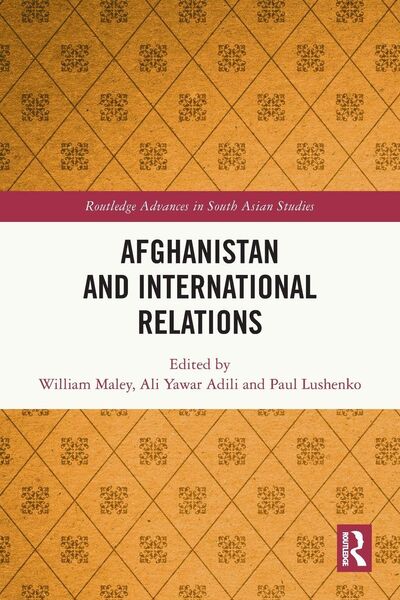
Produktbild: Afghanistan and International Relations
Vorbesteller Neu

Afghanistan and International Relations

74,99 €

inkl. gesetzl. MwSt., Versandkostenfrei


Beschreibung

This book explores various dimensions of recent international relations scholarship, taking the case of Afghanistan as a point of departure for discussion of these different themes.

Contributors investigate a broad range of topics, including international relations theory, the nature of global order,...

Beschreibung

This book explores various dimensions of recent international relations scholarship, taking the case of Afghanistan as a point of departure for discussion of these different themes.

Contributors investigate a broad range of topics, including international relations theory, the nature of global order, 'othering' discourses, diplomacy, international law, the transformation of war, terrorism, gender politics, social media, state building, democratisation, refugee movements, globalisation, and historical lessons. The Afghanistan case helps illuminate the complexities of all these areas of analysis, and the book takes the analysis of Afghanistan in new directions. Theoretically, the authors interrogate the Afghanistan case's implications for international relations, and vice-versa, by integrating multiple and complementary global or structural, state or institutional, and behaviouralist or leader-centric lenses. Conceptually, the chapters bridge the gap between theory and practice, thus reflecting the emergence of a problem-oriented approach to international relations scholarship. Methodologically, the research design employed by the authors is best characterised as 'analytical eclecticism'. The majority of contributors originate from Afghanistan, something which again makes this book notable, and all three editors have extensive experience from time spent in Afghanistan.

Using the Afghan case to explicate the importance of the relevance of theory and its related concepts to international relations studies, this book will be of interest to researchers in the field of international relations, Asian and Middle East Studies.

Portrait

William Maley is Emeritus Professor of Diplomacy at The Australian National University and author of Transition in Afghanistan: Hope, Despair and the Limits of Statebuilding (2018).

Ali Yawar Adili is a non-resident Fellow at New York University's Centre on International Cooperation. He holds a master's degree in International Affairs from Columbia University in New York.

Paul Lushenko is a Professorial Lecturer at the George Washington University and Assistant Professor at the U.S. Army War College.

Produktdetails

Einband

Taschenbuch

Erscheinungsdatum

24.11.2026

Abbildungen

schwarz-weiss Illustrationen, Raster,schwarz-weiss, Tabellen, schwarz-weiss

Herausgeber William Maley + weitere

Produktdetails

Einband

Taschenbuch

Erscheinungsdatum

24.11.2026

Abbildungen

schwarz-weiss Illustrationen, Raster,schwarz-weiss, Tabellen, schwarz-weiss

Herausgeber
Verlag Taylor and Francis
Seitenzahl

298

Maße (L/B/H)

23,4/15,6/1,7 cm

Gewicht

443 g

Sprache

Englisch

ISBN

978-1-03-296402-7

Herstelleradresse

Libri GmbH
Europaallee 1
36244 Bad Hersfeld
DE

Email: gpsr@libri.de

Noch keine Bewertungen vorhanden

Verfassen Sie die erste Bewertung zu diesem Artikel

Helfen Sie anderen Kundinnen und Kunden durch Ihre Meinung.

Kundinnen und Kunden meinen

Bewertungen (0)

  • Produktbild: Afghanistan and International Relations
  • Foreword

    1. Afghanistan and International Relations: An Introduction

    Part I: Foundations

    2. Afghanistan and the Legitimacy of Global Order

    3. Exiting Afghanistan: Presidential Narratives, US Exceptionalism, and 'Othering' Afghans

    Part II: Frameworks

    4. Afghanistan and Diplomacy with the Taliban: From Engagement to Recognition

    5. Afghanistan and International Law

    Part III: Conflict

    6. Afghanistan and the Transformation of War

    7. The US and Afghanistan's Warlords: A Fraught Partnership with Lasting Consequences

    Part IV: Transnational linkages

    8. Afghanistan and Global Gender Politics

    9. Afghanistan: How the Virtual Bazaar Undermined the Democratisation Process

    Part V: Statebuilding

    10. Statebuilding in Afghanistan: A State-Society Relational Approach

    11. Afghanistan and Democratisation

    Part VI: Past and future

    12. Afghanistan, Refugees and Forced Migration

    13. Afghanistan, Social Imaginaries, and Globalisation

    14. Afghanistan and the Lessons of History