KI-Beratung Beta

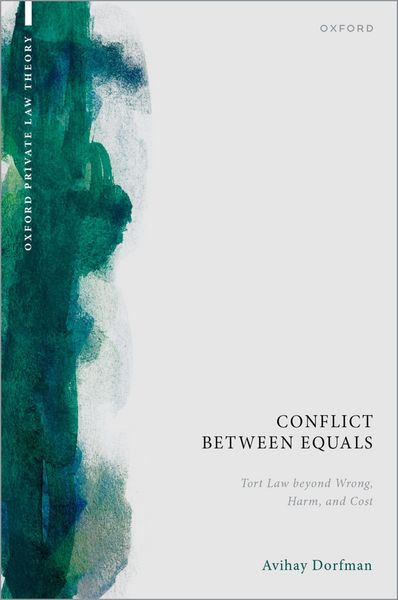
Produktbild: Conflict between Equals

Conflict between Equals Tort Law beyond Wrong, Harm, and Cost

91,50 €

inkl. gesetzl. MwSt.

Beschreibung

Conflict between Equals argues that tort law has to be understood and ultimately vindicated as the actualization of two theories: the conflict and the equality theory of tort law. It is not harm, wrongdoing, or social cost that gives us reason to have tort law in the first place. Instead, it is human...

Beschreibung

Conflict between Equals argues that tort law has to be understood and ultimately vindicated as the actualization of two theories: the conflict and the equality theory of tort law. It is not harm, wrongdoing, or social cost that gives us reason to have tort law in the first place. Instead, it is human conflict-specifically, conflict between our fundamental interests-that serves as the moral function of tort law. How we respond to such conflicts determines which harms, wrongs, or costs should, if at all, be addressed by tort law. The conflict theory elaborates on the nature and normative significance of three types of conflict: inherently valuable, tolerably valuable, and valueless. The theory emphasizes the importance of preventing valueless conflict, containing tolerably valuable conflict, and constructing the conditions necessary for inherently valuable conflict to arise. Moreover, the human conflict to which tort law responds reflects a commitment to treating the parties to a conflict as equals. The equality theory is grounded in the egalitarian ideal of relating as equals, thus tort law must determine terms of interaction that take seriously differences in the interests and conditions of the interacting parties. By doing so, tort law secures the ability of the parties in a conflict to relate as substantive, rather than merely formal, equals.

Produktdetails

Format

ePUB

Kopierschutz

Ja

Family Sharing

Nein

Text-to-Speech

Ja

Produktdetails

Format

ePUB

Format

eBooks im ePUB-Format erlauben eine dynamische Anpassung des Inhalts an die jeweilige Display-Größe des Lesegeräts. Das Format eignet sich daher besonders für das Lesen auf mobilen Geräten, wie z.B. Ihrem tolino, Tablets oder Smartphones.

Kopierschutz

Ja

Kopierschutz

Zum Lesen dieses eBooks auf Geräten der tolino Familie sowie auf sonstigen eReadern und am PC benötigen Sie eine ByteBook-ID. Weitere Hinweise zum Lesen von kopiergeschützten eBooks finden Sie unter Hilfe/Downloads.

Family Sharing

Nein

Family Sharing

Mit Family Sharing können Sie eBooks innerhalb Ihrer Familie (max. sechs Mitglieder im gleichen Haushalt) teilen. Sie entscheiden selbst, welches Buch Sie mit welchem Familienmitglied teilen möchten. Auch das parallele Lesen durch verschiedene Familienmitglieder ist durch Family Sharing möglich. Um eBooks zu teilen oder geteilt zu bekommen, muss jedes Familienmitglied ein Konto bei Thalia oder einem anderen tolino-Buchhändler haben. Weitere Informationen finden Sie unter Hilfe/Family-Sharing.

Text-to-Speech

Ja

Text-to-Speech

Bedeutet Ihnen Stimme mehr als Text? Mit der Funktion Text-to-Speech können Sie sich im tolino webReader und in der aktuellen Thalia – Lesen & Hören App das eBook vorlesen lassen. Weitere Informationen finden Sie unter Hilfe/Text-to-Speech.

Erscheinungsdatum

02.04.2026

Verlag Oxford University Press
Seitenzahl

416 (Printausgabe)

Dateigröße

945 KB

Sprache

Englisch

EAN

9780198979852

Barrierefreiheit
  • keine Information zur Barrierefreiheit bekannt

Noch keine Bewertungen vorhanden

Verfassen Sie die erste Bewertung zu diesem Artikel

Helfen Sie anderen Kundinnen und Kunden durch Ihre Meinung.

Kundinnen und Kunden meinen

Bewertungen (0)

Weitere Artikel finden Sie in

  • Produktbild: Conflict between Equals