KI-Beratung Beta

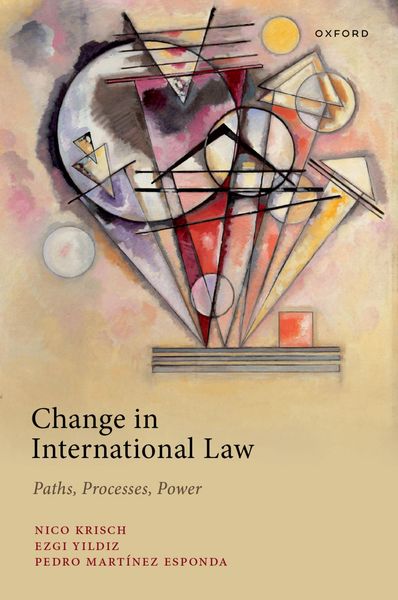
Produktbild: Change in International Law

Change in International Law Paths, Processes, Power

74,60 €

inkl. gesetzl. MwSt.

Beschreibung

How does international law change? How does it adapt to new contexts and meet new challenges? The typical answer to these questions makes international law appear rather static, due to high hurdles for change and formal rules that require widespread agreement among states. In reality, however, change...

Beschreibung

How does international law change? How does it adapt to new contexts and meet new challenges? The typical answer to these questions makes international law appear rather static, due to high hurdles for change and formal rules that require widespread agreement among states. In reality, however, change is far more common: new legal norms and understandings are generated constantly through the practices of legal actors.
This book explores these actual, often gradual processes of international legal change. Combining qualitative analysis and statistical examination of data derived from twenty-five cases across eight subfields, the book offers the most systematic study to date of international legal change in practice beyond treaty-making. It approaches international law as a discursive process characterized by distinctive, socially constructed communities and authorities, and identifies five distinct paths through which legal change occurs.
These paths shape who can act, how change is framed, and whether and under what conditions it gains traction, and they - and their relative weight - vary heavily across the different areas of international law. On these paths, change comes about in ways which defy common expectations of a state-centric international law: the analysis presented in the book shows that the success of change attempts depends less on broad state support or even the support of major powers, but to a greater extent on support from authorities and institutions in the respective fields. The result is an international law that may not be dynamic enough to cope with the speed of change in today's accelerated world, but one that is significantly more dynamic than is usually assumed.

Produktdetails

Format

ePUB

Kopierschutz

Ja

Family Sharing

Nein

Text-to-Speech

Ja

Produktdetails

Format

ePUB

Format

eBooks im ePUB-Format erlauben eine dynamische Anpassung des Inhalts an die jeweilige Display-Größe des Lesegeräts. Das Format eignet sich daher besonders für das Lesen auf mobilen Geräten, wie z.B. Ihrem tolino, Tablets oder Smartphones.

Kopierschutz

Ja

Kopierschutz

Zum Lesen dieses eBooks auf Geräten der tolino Familie sowie auf sonstigen eReadern und am PC benötigen Sie eine ByteBook-ID. Weitere Hinweise zum Lesen von kopiergeschützten eBooks finden Sie unter Hilfe/Downloads.

Family Sharing

Nein

Family Sharing

Mit Family Sharing können Sie eBooks innerhalb Ihrer Familie (max. sechs Mitglieder im gleichen Haushalt) teilen. Sie entscheiden selbst, welches Buch Sie mit welchem Familienmitglied teilen möchten. Auch das parallele Lesen durch verschiedene Familienmitglieder ist durch Family Sharing möglich. Um eBooks zu teilen oder geteilt zu bekommen, muss jedes Familienmitglied ein Konto bei Thalia oder einem anderen tolino-Buchhändler haben. Weitere Informationen finden Sie unter Hilfe/Family-Sharing.

Text-to-Speech

Ja

Text-to-Speech

Bedeutet Ihnen Stimme mehr als Text? Mit der Funktion Text-to-Speech können Sie sich im tolino webReader und in der aktuellen Thalia – Lesen & Hören App das eBook vorlesen lassen. Weitere Informationen finden Sie unter Hilfe/Text-to-Speech.

Erscheinungsdatum

12.05.2026

Verlag Oxford University Press
Seitenzahl

272 (Printausgabe)

Dateigröße

2306 KB

Sprache

Englisch

EAN

9780198918318

Barrierefreiheit
  • keine Information zur Barrierefreiheit bekannt

Noch keine Bewertungen vorhanden

Verfassen Sie die erste Bewertung zu diesem Artikel

Helfen Sie anderen Kundinnen und Kunden durch Ihre Meinung.

Kundinnen und Kunden meinen

Bewertungen (0)

Weitere Artikel finden Sie in

  • Produktbild: Change in International Law