KI-Beratung Beta

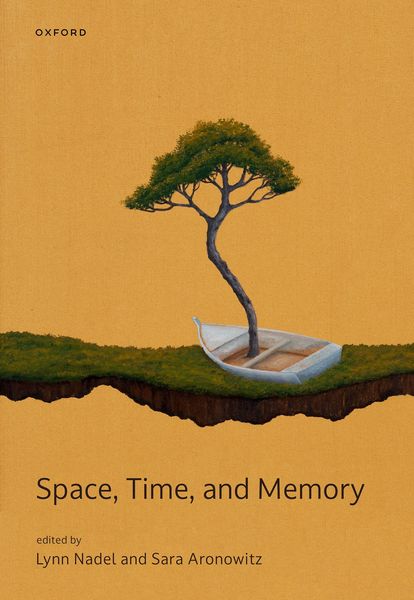
Produktbild: Space, Time, and Memory

Space, Time, and Memory

97,20 €

inkl. gesetzl. MwSt.

Beschreibung

This is an open access title available under the terms of a CC BY-NC-ND 4.0 licence. It is free to read at Oxford Scholarship Online and offered as a free PDF download from OUP and selected open access locations Memories are not organized by a single arbitrary dimension, such as mere association. Instead,...

Beschreibung

This is an open access title available under the terms of a CC BY-NC-ND 4.0 licence. It is free to read at Oxford Scholarship Online and offered as a free PDF download from OUP and selected open access locations Memories are not organized by a single arbitrary dimension, such as mere association. Instead, many dimensions have been taken to be part of the structure of memory. Of these, space and time stand out: all personal experience can in principle be indexed by where and when specific events occurred, and both scientific evidence and common sense suggest that the way we relate different events together in memory draws on these dimensions. For instance, to remember what one ate for lunch last Thursday, one might call up a memory of where one was, or retrace the events of the day leading up to lunch. Some nuts-and-bolts questions arise immediately, starting with whether the spatial or the temporal dimension is primary. Or rather, do we rely on both equally? Do we represent them separately or jointly? But there are bigger questions with broad implications: What makes space and time such central structures in our cognitive world, and what is the conceptual nature of these structures? These questions are deeply related to one another, though they span multiple fields and methodologies, touching on philosophy, psychology and neuroscience. Space, Time, and Memory explores three key questions: first, the role of space and time as structures that organize memory, second, theories of the nature of memory itself that draw on space and time, and finally applications of questions about the structure of memory to debates about perception, decision-making, and artifical intelligence.

Produktdetails

Format

ePUB

Kopierschutz

Ja

Family Sharing

Nein

Text-to-Speech

Ja

Produktdetails

Format

ePUB

Format

eBooks im ePUB-Format erlauben eine dynamische Anpassung des Inhalts an die jeweilige Display-Größe des Lesegeräts. Das Format eignet sich daher besonders für das Lesen auf mobilen Geräten, wie z.B. Ihrem tolino, Tablets oder Smartphones.

Kopierschutz

Ja

Kopierschutz

Zum Lesen dieses eBooks auf Geräten der tolino Familie sowie auf sonstigen eReadern und am PC benötigen Sie eine ByteBook-ID. Weitere Hinweise zum Lesen von kopiergeschützten eBooks finden Sie unter Hilfe/Downloads.

Family Sharing

Nein

Family Sharing

Mit Family Sharing können Sie eBooks innerhalb Ihrer Familie (max. sechs Mitglieder im gleichen Haushalt) teilen. Sie entscheiden selbst, welches Buch Sie mit welchem Familienmitglied teilen möchten. Auch das parallele Lesen durch verschiedene Familienmitglieder ist durch Family Sharing möglich. Um eBooks zu teilen oder geteilt zu bekommen, muss jedes Familienmitglied ein Konto bei Thalia oder einem anderen tolino-Buchhändler haben. Weitere Informationen finden Sie unter Hilfe/Family-Sharing.

Text-to-Speech

Ja

Text-to-Speech

Bedeutet Ihnen Stimme mehr als Text? Mit der Funktion Text-to-Speech können Sie sich im tolino webReader und in der aktuellen Thalia – Lesen & Hören App das eBook vorlesen lassen. Weitere Informationen finden Sie unter Hilfe/Text-to-Speech.

Erscheinungsdatum

07.05.2025

Herausgeber
Verlag Oxford University Press
Seitenzahl

320 (Printausgabe)

Dateigröße

9735 KB

Sprache

Englisch

EAN

9780192882561

Barrierefreiheit
  • keine Information zur Barrierefreiheit bekannt

Noch keine Bewertungen vorhanden

Verfassen Sie die erste Bewertung zu diesem Artikel

Helfen Sie anderen Kundinnen und Kunden durch Ihre Meinung.

Kundinnen und Kunden meinen

Bewertungen (0)

Weitere Artikel finden Sie in

Die Leseprobe wird geladen.
  • Produktbild: Space, Time, and Memory