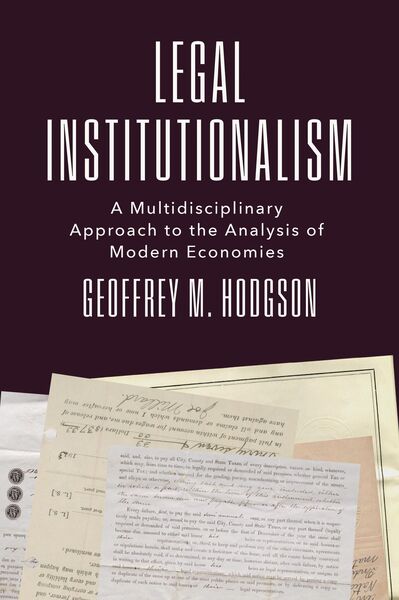
Legal Institutionalism A Multidisciplinary Approach to the Analysis of Modern Economies
55,00 €
inkl. gesetzl. MwSt.Artikel erhalten
Beschreibung
Produktdetails
Format
ePUB
Kopierschutz
Ja
Family Sharing
Nein
Text-to-Speech
Ja
Erscheinungsdatum
25.05.2027
Verlag
Princeton University PressSeitenzahl
408 (Printausgabe)
Sprache
Englisch
EAN
9780691306230
The legal concepts that can fundamentally inform the economics of institutions
In Legal Institutionalism, the eminent economist Geoffrey Hodgson proposes a new analytic approach for understanding modern economic institutions. Law helps to constitute some of the key features of modern market economies. Moreover, there is evidence that many people believe that obeying the law is important in itself, especially when it is deemed just, legitimate, and uncorrupt. Consequently, he argues, the role of law must be considered in analyses of the nature and dynamics of modern economic institutions and the motivations of economic agents.
Hodgson lays out the basic approach and intellectual assumptions of legal institutionalism, citing such thinkers as Adam Smith and Karl Marx as well as insights from institutional economics, law, philosophy, psychology, and social theory. He considers how legal institutions emerged and evolved throughout history, stressing their importance in large-scale, complex economies. Informal rules and relations are vital as well, he explains, but these often rely on face-to-face contact, with smaller numbers of people. He shows that by examining relevant legal rules and relations alongside important informal rules, we can improve our understanding of the nature and role of property, contracts, money, and firms. Revisiting the socialist calculation debate on the feasibility of socialist planning, Hodgson argues that both sides paid insufficient attention to legal issues and underestimated the importance and inevitability of mixed economies.
This milestone work by Hodgson has major implications for both theory and policy, suggesting new approaches to economic development, the theory of the firm, and countering the policy extremes of markets versus states.
Noch keine Bewertungen vorhanden
Verfassen Sie die erste Bewertung zu diesem Artikel
Helfen Sie anderen Kundinnen und Kunden durch Ihre Meinung.
Kurze Frage zu unserer Seite
Vielen Dank für Ihr Feedback
Wir nutzen Ihr Feedback, um unsere Produktseiten zu verbessern. Bitte haben Sie Verständnis, dass wir Ihnen keine Rückmeldung geben können. Falls Sie Kontakt mit uns aufnehmen möchten, können Sie sich aber gerne an unseren Kund*innenservice wenden.
zum Kundenservice