KI-Beratung Beta

Produktbild: Making Better Humans
Vorbesteller Neu

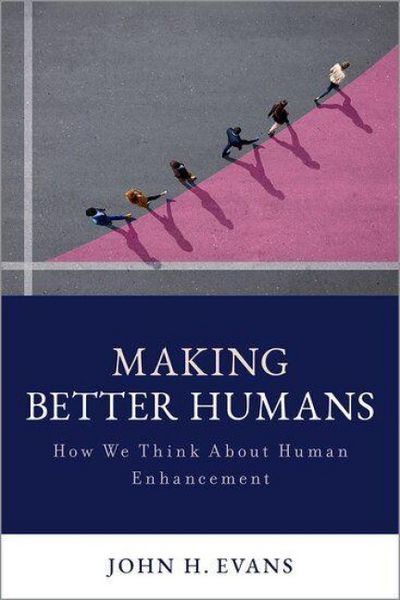
Making Better Humans How We Think about Human Enhancement

62,99 €

inkl. gesetzl. MwSt., Versandkostenfrei


Beschreibung

Silicon Valley technology leaders want to radically enhance humans, giving us traits that no human has had before. Plans for radical life extension, improved cognitive traits, mood enhancement, disease immunity and much more are under way, and these technology leaders have a cultural and political influence...

Beschreibung

Silicon Valley technology leaders want to radically enhance humans, giving us traits that no human has had before. Plans for radical life extension, improved cognitive traits, mood enhancement, disease immunity and much more are under way, and these technology leaders have a cultural and political influence that they have not had before. Should we engage in radical human enhancement? In this book, John H. Evans starts with serious engagement with the ethical, philosophical, and theological literature. Then, he brings in the largest social science study ever conducted on enhancement, looking at both the public and the bioengineers who would create any such enhancements. He finds a surprising degree of support for radical enhancement, and surprising enthusiasm for some particular enhancements that have long been opposed by experts, such as enhancing intelligence. Moreover, the groups we would think are supportive and opposed to such enhancements are often not. Making Better Humans shows that, in contrast to the academic debate about enhancements, the public uses two distinct ethical languages in debating them, and inattentiveness to how these languages work in concert can mislead policy makers about the public's actual views. Evans examines long held assumptions in the expert debate about enhancement, such as the claims that enhancement will lead to the loss of critical human experiences, will be driven by the public's desire to satisfy their authentic selves, and will result in our dehumanization and objectification. With the first evidence ever produced on these questions, he finds some of these assumptions, like objectification, to be correct^-^an enhanced human would be considered by others as slightly more of an object. He further adds nuance to other assumptions, finding that while a good-sized portion of the public would indeed want to pursue non-radical enhancements to fulfil their true selves, but are unlikely to be able to justify radical enhancements. Society is moving toward radical enhancements with no social or political debate. Making Better Humans starts that debate, armed with accurate information about how both the public and the bioengineers who would create such technologies view radical enhancements.

Produktdetails

Einband

Gebundene Ausgabe

Erscheinungsdatum

31.12.2026

Verlag Oxford University Press
Seitenzahl

304

Produktdetails

Einband

Gebundene Ausgabe

Erscheinungsdatum

31.12.2026

Verlag Oxford University Press
Seitenzahl

304

Sprache

Englisch

ISBN

978-0-19-786749-5

Herstelleradresse

Libri GmbH
Europaallee 1
36244 Bad Hersfeld
DE

Email: gpsr@libri.de

Noch keine Bewertungen vorhanden

Verfassen Sie die erste Bewertung zu diesem Artikel

Helfen Sie anderen Kundinnen und Kunden durch Ihre Meinung.

Kundinnen und Kunden meinen

Bewertungen (0)

  • Produktbild: Making Better Humans
    • 1: Introduction
    • Part I. Explaining Support for and Opposition to Radical Human Enhancement
    • 2: What to Expect from the Public and the Bioengineers
    • 3: Support for and Opposition to Radical Human Enhancement
    • 4: Gratitude, Creativity, and Support for Enhancement
    • 5: Collective Moral Constraint, the Cultural Authority of Science, and Radical Human Enhancement
    • "
    • 6: Ethical Arguments
    • Part III. Contributions to Philosophical and Theological Arguments about Enhancement
    • 7: Will We Lose Something Important from Enhancing Humans?
    • 8: Will Enhancement Be Brought On by the Pursuit of Authenticity?
    • 9: Will The Enhanced Be Dehumanized?
    • 10: Conclusion
    • Methodological Appendix