KI-Beratung Beta

Gutscheinbedingungen

**Gültig bis 11.11.2026 auf Spielzeug, Schreibwaren, Filme, Geschenke & Trends, Musik, tolino eReader & Zubehör, Hörbücher und Hörbuch-Downloads, nicht preisgebundene Bücher und Kalender online auf thalia.at und in der Thalia App. Einzelne Artikel können ausgeschlossen sein. Aufgrund der Buchpreisbindung sind deutschsprachige Bücher und eBooks ausgenommen. Zusätzlich ausgenommen sind Abos & Flatrates, Games, Geschenkkarten/-boxen, Shelfies, Software, Zeitschriften sowie einzelne Artikel von tonies®. Pro Einkauf einmal einlösbar. Click & Collect nur bei Onlinevorabzahlung möglich. Keine Barauszahlung. Nicht kombinierbar mit anderen Aktionen und Gutscheinen. Gutschein wird auf max. 500€ Bestellwert angerechnet. Nicht gültig für Versandkosten und Services.

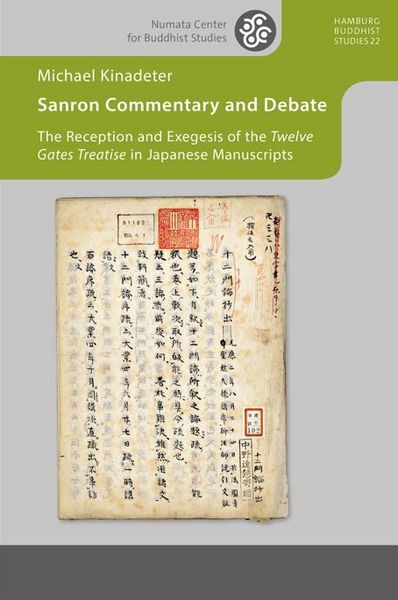
Produktbild: Sanron Commentary and Debate
Band 22

Sanron Commentary and Debate The Reception and Exegesis of the Twelve Gates Treatise in Japanese Manuscripts

Aus der Reihe Hamburg Buddhist Studies

29,60 €

inkl. gesetzl. MwSt., zzgl. Versandkosten


  • Kostenlose Lieferung ab 30 € Einkaufswert
  • Versandkostenfrei für Bonuscard-Kund*innen

Beschreibung

This volume traces the textual tradition and the reception in Japan of a short yet concise work known as the Twelve Gates Treatise 十二門論 (Chin. Shíèrménlùn; Jap. Jūnimonron; T 1568). The treatise is traditionally attributed to Nāgārjuna 龍樹 (c. 150–250 CE) and constitutes one of the eponymous ‘Three Treatises’...

Beschreibung

This volume traces the textual tradition and the reception in Japan of a short yet concise work known as the Twelve Gates Treatise 十二門論 (Chin. Shíèrménlùn; Jap. Jūnimonron; T 1568). The treatise is traditionally attributed to Nāgārjuna 龍樹 (c. 150–250 CE) and constitutes one of the eponymous ‘Three Treatises’ 三論 (Chin. sanlun, Jap. sanron) of the East-Asian development of Madhyamaka thought, known as Sanlun in Chinese and Sanron in Japanese. The treatise is devoted to the first aspect of the Eightfold Negation, the refutation of production (or arising) in order to illuminate the notion of emptiness 空 (Chin. kōng, Jap. kū). Even though the treatise and its most prominent commentary, the Shíèrménlùn Shū 十二門論疏 (T 1825) by the scholar-monk Jízàng 吉藏 (549–623), were transmitted to Japan already in the eighth century, the codified exegesis of this treatise began only in the eleventh century and reached its peak in the Kamakura period (1185–1333). On the basis of seven hitherto unstudied Japanese sub-commentaries, the present volume approaches this textual tradition in terms of its exegetical techniques, its literary style, and its doctrinal contents. The research is further substantiated by the study of the codicological and paleographic characteristics of the corresponding manuscripts and the reconstruction of the commentaries’ intertextual references as well as a biographical investigation into the authors of the texts, their genealogical relations, and their monastic networks. Through highlighting the commentarial literature, doctrinal debates 論議 (Jap. rongi), and the training of new monks this study sheds light on the revival of medieval Sanron studies and lays the foundation for future research on its subsequent historical development.

Produktdetails

Einband

Gebundene Ausgabe

Erscheinungsdatum

20.07.2026

Herausgeber Steffen Döll + weitere
Verlag Projekt

Produktdetails

Einband

Gebundene Ausgabe

Erscheinungsdatum

20.07.2026

Herausgeber
Verlag Projekt
Seitenzahl

352

Maße (L/B/H)

22,6/16,3/3,6 cm

Gewicht

705 g

Auflage

1

Sprache

Englisch

ISBN

978-3-89733-639-1

Herstelleradresse

Projekt Verlag
Oskar-Hoffmann-Strasse 25
44789 Bochum
DE

Email: lektorat@projektverlag.de

Noch keine Bewertungen vorhanden

Verfassen Sie die erste Bewertung zu diesem Artikel

Helfen Sie anderen Kundinnen und Kunden durch Ihre Meinung.

Kundinnen und Kunden meinen

Bewertungen (0)

  • Produktbild: Sanron Commentary and Debate