KI-Beratung Beta

Gutscheinbedingungen

**Gültig bis 11.11.2026 auf Spielzeug, Schreibwaren, Filme, Geschenke & Trends, Musik, tolino eReader & Zubehör, Hörbücher und Hörbuch-Downloads, nicht preisgebundene Bücher und Kalender online auf thalia.at und in der Thalia App. Einzelne Artikel können ausgeschlossen sein. Aufgrund der Buchpreisbindung sind deutschsprachige Bücher und eBooks ausgenommen. Zusätzlich ausgenommen sind Abos & Flatrates, Games, Geschenkkarten/-boxen, Shelfies, Software, Zeitschriften sowie einzelne Artikel von tonies®. Pro Einkauf einmal einlösbar. Click & Collect nur bei Onlinevorabzahlung möglich. Keine Barauszahlung. Nicht kombinierbar mit anderen Aktionen und Gutscheinen. Gutschein wird auf max. 500€ Bestellwert angerechnet. Nicht gültig für Versandkosten und Services.

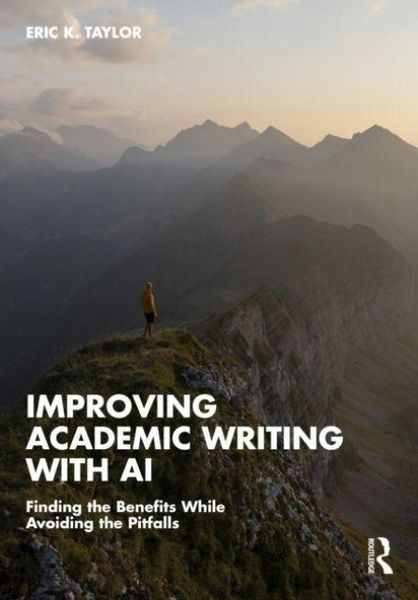
Produktbild: Improving Academic Writing with AI
Vorbesteller Neu

Improving Academic Writing with AI Finding the Benefits While Avoiding the Pitfalls

235,99 €

inkl. gesetzl. MwSt., Versandkostenfrei


Beschreibung

This key textbook harnesses AI to strengthen and expand writing skills through detailed, contextual critique.

Academia is facing a crisis of AI misuse. Students often use AI to bypass the writing process, getting citations for sources they haven't read, arguing based on hallucinated claims, and "polishing"...

Beschreibung

This key textbook harnesses AI to strengthen and expand writing skills through detailed, contextual critique.

Academia is facing a crisis of AI misuse. Students often use AI to bypass the writing process, getting citations for sources they haven't read, arguing based on hallucinated claims, and "polishing" drafts with inadequately developed ideas. This book transforms the narrative: AI goes from automated re-writer to writing teacher and sophisticated critique partner. The book reframes the AI-writing relationship: it steps writers through the revision process, teaching both foundational and advanced writing skills. AI is no longer an automated rewriter; it becomes a knowledgeable critique partner that identifies problems; the book then helps you evaluate a range of possible solutions. This approach demands that students think about their writing in new ways. It restores writer agency, making AI a learning tool instead of an escape or crutch. With 50 sequenced prompts that guide writers through the writing process, progressing from broad, structural concerns to narrow, line-level edits, the book offers a solution to the problem of AI misuse by offering a way to help writers learn from AI rather than risking AI rewriting that potentially changes content and makes the style more generic and abstract.

This is an ideal text for both non-native and native English speakers. It can help all academics seeking to improve their writing, including undergraduate and graduate students in courses on academic writing, rhetoric and composition, and language/literacy education.

Produktdetails

Einband

Gebundene Ausgabe

Erscheinungsdatum

27.01.2027

Abbildungen

schwarz-weiss Illustrationen, Raster,schwarz-weiss, Zeichnungen, schwarz-weiss, Tabellen, schwarz-weiss

Verlag Taylor and Francis

Produktdetails

Einband

Gebundene Ausgabe

Erscheinungsdatum

27.01.2027

Abbildungen

schwarz-weiss Illustrationen, Raster,schwarz-weiss, Zeichnungen, schwarz-weiss, Tabellen, schwarz-weiss

Verlag Taylor and Francis
Seitenzahl

240

Maße (L/B)

25,4/17,8 cm

Sprache

Englisch

ISBN

978-1-04-139537-9

Herstelleradresse

Libri GmbH
Europaallee 1
36244 Bad Hersfeld
DE

Email: gpsr@libri.de

Noch keine Bewertungen vorhanden

Verfassen Sie die erste Bewertung zu diesem Artikel

Helfen Sie anderen Kundinnen und Kunden durch Ihre Meinung.

Kundinnen und Kunden meinen

Bewertungen (0)

Weitere Artikel finden Sie in

  • Produktbild: Improving Academic Writing with AI
  • Introduction: Walking with an Untrustworthy Guide 1. Improving our Research 2. Improving our Writing 3. Improving Content 4. Improving Organization 5. Improving Style and Decluttering 6. Checking Grammar and Mechanics 7. Evaluating/Improving Publication Possibilities 8. Conclusion: Where Do We Go From Here Appendix: Selected Background & Research on AI Writing Problems