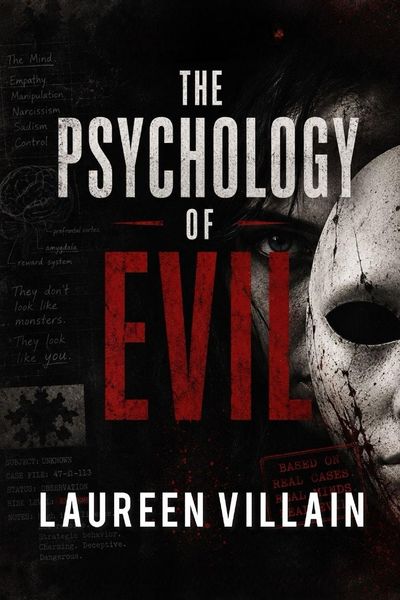
The Psychology of Evil Understanding the Minds Behind Cruelty, Manipulation, and Moral Collapse
-
- Englisch ausgewählt
14,99 €
inkl. gesetzl. MwSt.,
- Kostenlose Lieferung ab 30 € Einkaufswert
- Versandkostenfrei für Bonuscard-Kund*innen
Beschreibung
Produktdetails
Einband
Taschenbuch
Erscheinungsdatum
28.07.2026
Verlag
Amazon Digital Services LLC - KdpSeitenzahl
118
Maße (L/B/H)
22,9/15,2/0,8 cm
Gewicht
154 g
Sprache
Englisch
EAN
9798189577918
Most of what we call "evil" isn't monstrous - it's ordinary people, ordinary pressure, and a few psychological switches flipping in a predictable order.
The Psychology of Evil is an evidence-based guide to how cruelty, manipulation, and moral collapse actually happen - grounded in real research, not shock value. Drawing on landmark studies (Milgram's obedience experiments, Zimbardo's Stanford Prison Experiment, decades of work on psychopathy and the Dark Triad) and modern forensic and clinical psychology, this book traces harmful behavior back to its real sources: brain chemistry, personality, situational pressure, and the quiet cognitive tricks that let ordinary people live with what they've done.
Inside, you'll learn:
Why "evil" is a moral label, not a diagnosis - and what actually predicts dangerous behavior.
How narcissism, Machiavellianism, psychopathy, and everyday sadism differ, and why charm is often a warning sign, not reassurance.
Why psychologically healthy people obey harmful orders, conform to cruel groups, and stay silent as bystanders.
How gaslighting, coercive control, and love bombing work - explained from a victim-protection perspective, so you can recognize the pattern before it closes around you.
What cult leaders, extremists, and manipulators actually exploit in ordinary human psychology.
Whether any of this can be prevented - and what the research says really works.
Each chapter includes "Case in Point" and "Did You Know?" features built from real research, plus a full glossary, a myth-vs-fact compendium, guided reflection exercises, and a curated reading list.
This is not true crime. It's a clear-eyed, compassionate, and protective look at how ordinary minds are led toward harm - and how to recognize it in time.
Noch keine Bewertungen vorhanden
Verfassen Sie die erste Bewertung zu diesem Artikel
Helfen Sie anderen Kundinnen und Kunden durch Ihre Meinung.
Kurze Frage zu unserer Seite
Vielen Dank für Ihr Feedback
Wir nutzen Ihr Feedback, um unsere Produktseiten zu verbessern. Bitte haben Sie Verständnis, dass wir Ihnen keine Rückmeldung geben können. Falls Sie Kontakt mit uns aufnehmen möchten, können Sie sich aber gerne an unseren Kund*innenservice wenden.
zum Kundenservice