KI-Beratung Beta

Gutscheinbedingungen

**Gültig am 25.11.2026 auf fremdsprachige Bücher online auf thalia.at und in der Thalia App. Einzelne Artikel können ausgeschlossen sein. Ausgenommen sind preisgebundene Artikel & eBooks. Pro Einkauf einmal einlösbar. Click & Collect nur bei Onlinevorabzahlung möglich. Keine Barauszahlung. Nicht kombinierbar mit anderen Aktionen und Gutscheinen. Gutschein wird auf max. 500€ Bestellwert angerechnet. Nicht gültig für Geschenkkarten, Versandkosten und Services.

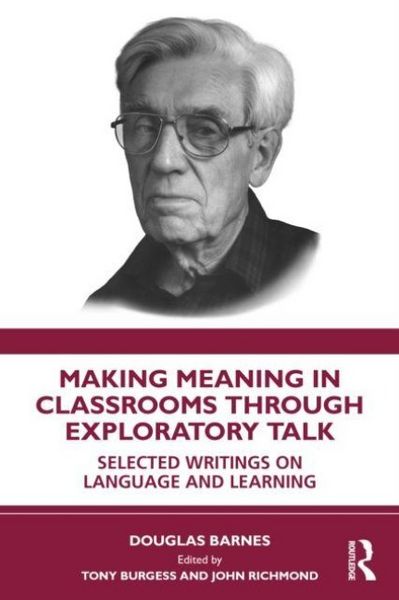
Produktbild: Making Meaning in Classrooms Through Exploratory Talk
Vorbesteller Neu

Making Meaning in Classrooms Through Exploratory Talk Selected Writings on Language and Learning

59,99 €

inkl. gesetzl. MwSt., Versandkostenfrei


Beschreibung

This book brings together the most influential writings of Douglas Barnes, a pioneering figure whose work transformed understandings of language, learning and classroom practice in the second half of the twentieth century, and continues to shape contemporary thought on oracy. Centred on Barnes's meticulous...

Beschreibung

This book brings together the most influential writings of Douglas Barnes, a pioneering figure whose work transformed understandings of language, learning and classroom practice in the second half of the twentieth century, and continues to shape contemporary thought on oracy. Centred on Barnes's meticulous attention to exploratory pupil talk and its role in meaning-making, the collection showcases how spoken language mediates learning across the curriculum.

The examples of Barnes's sustained investigations into classroom discourse in this volume demonstrate the lasting impact of his sociolinguistic and socially-oriented psychological approaches to language. Readers will gain insight into the ways Barnes has analysed pupil-teacher interactions, the cultural resources learners bring to school and the conditions under which classroom talk effectively supports conceptual development. The selected writings reveal why Barnes's research is foundational to debates on curriculum, pedagogy and the role of oracy in learning.

This book will serve scholars, teachers, policymakers and teacher-educators seeking a historically grounded understanding of how spoken language supports engagement, comprehension and knowledge-building. It offers an essential perspective on the evolution of language education and the enduring significance of Barnes's contribution to the field.

Produktdetails

Einband

Taschenbuch

Erscheinungsdatum

11.02.2027

Abbildungen

schwarz-weiss Illustrationen, Zeichnungen, schwarz-weiss, Tabellen, schwarz-weiss

Herausgeber Tony Burgess + weitere

Produktdetails

Einband

Taschenbuch

Erscheinungsdatum

11.02.2027

Abbildungen

schwarz-weiss Illustrationen, Zeichnungen, schwarz-weiss, Tabellen, schwarz-weiss

Herausgeber
Verlag Taylor & Francis
Seitenzahl

272

Maße (L/B)

23,4/15,6 cm

Sprache

Englisch

ISBN

978-1-04-137097-0

Herstelleradresse

Libri GmbH
Europaallee 1
36244 Bad Hersfeld
DE

Email: gpsr@libri.de

Noch keine Bewertungen vorhanden

Verfassen Sie die erste Bewertung zu diesem Artikel

Helfen Sie anderen Kundinnen und Kunden durch Ihre Meinung.

Kundinnen und Kunden meinen

Bewertungen (0)

Weitere Artikel finden Sie in

  • Produktbild: Making Meaning in Classrooms Through Exploratory Talk
  • List of figures

    About the author and editors

    Acknowledgements

    Note of appreciation

    Introduction

    Prelude: Shall we play the anthropologist?

    Part One: Talking to learn

    Chapter 1 Why talk is important

    Chapter 2 'The role of talk in learning'

    Chapter 3 'School knowledge and action knowledge'

    Chapter 4 'Supporting exploratory talk for learning'

    Chapter 5 'The politics of oracy'

    Part Two: Classroom connections

    Chapter 6 'The language of instruction'

    Chapter 7 The limitations of teacher-directed whole-class 'discussion'

    Chapter 8 Small-group talk including a teacher's intervention: some success?

    Part Three: Small-group talk: a study in collaboration

    Chapter 9 'Making the recordings'

    Chapter 10 'Collaboration in the groups'

    Part Four: Literacy

    Chapter 11 'Teachers' attitudes to written work: transmission and interpretation'

    Chapter 12 'Reading and writing as social action'

    Chapter 13 'The ground rules of school writing'

    Part Five: Curriculum

    Chapter 14 Two points of view on the content of the curriculum

    Chapter 15 The manifest and the hidden curriculum

    Chapter 16 The intended and the effective curriculum

    Chapter 17 'Studying communication or studying language?'

    Part Six: Teacher agency

    Chapter 18 'The teacher's control of knowledge'

    Chapter 19 'The significance of teachers' frames for teaching'

    Chapter 20 'Teaching styles'

    Chapter 21 Active learning
    Chapter 22 The PEEL project - teachers reflecting on their own practice

    Conclusion