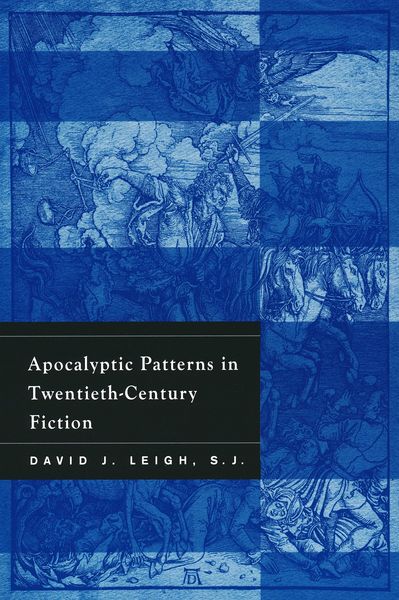
Apocalyptic Patterns in Twentieth-Century Fiction
-
- Hardcover
- Taschenbuch
- eBook ausgewählt
-
Form:Einzelkauf Download
-
Sprache:Englisch
25,29 €
inkl. gesetzl. MwSt.Beschreibung
Produktdetails
Format
Kopierschutz
Nein
Family Sharing
Nein
Text-to-Speech
Nein
Erscheinungsdatum
15.10.2008
Verlag
University Of Notre Dame PressSeitenzahl
(Printausgabe)
Dateigröße
11781 KB
Sprache
Englisch
EAN
9780268085674
David J. Leigh explores the innovative influences of the Book of Revelation and ideas of an end time on fiction of the twentieth century, and probes philosophical, political, and theological issues raised by apocalyptic writers from Walker Percy, C. S. Lewis, and Charles Williams to Doris Lessing, Thomas Pynchon, Don DeLillo.
Leigh tackles head on a fundamental question about Christian-inspired eschatology: Does it sanction, as theologically sacred or philosophically ultimate, the kind of "last battles" between good and evil that provoke human beings to demonize and destroy the other? Against the backdrop of this question, Leigh examines twenty modern and postmodern apocalyptic novels, juxtaposing them in ways that expose a new understanding of each. The novels are clustered for analysis in chapters that follow seven basic eschatological patterns-the last days imagined as an ultimate journey, a cosmic battle, a transformed self, an ultimate challenge, the organic union of human and divine, the new heaven and new earth, and the ultimate way of religious pluralism.
For religious novelists, these patterns point toward spiritual possibilities in the final days of human life or of the universe. For more political novelists-Ralph Ellison, Russell Hoban, and Salman Rushdie among them-the patterns are used to critique political or social movements of self-destruction. Beyond the twenty novels closely analyzed, Leigh makes pertinent reference to many more as well as to reflections from theologians Jürgen Moltmann, Zachary Hayes, Wolfhart Pannenberg, and Paul Ricoeur. Both a guidebook and a critical assessment, Leigh's work brings theological concepts to bear on end-of-the-world fiction in an admirably clear and accessible manner.
Noch keine Bewertungen vorhanden
Verfassen Sie die erste Bewertung zu diesem Artikel
Helfen Sie anderen Kundinnen und Kunden durch Ihre Meinung.
Kurze Frage zu unserer Seite
Vielen Dank für Ihr Feedback
Wir nutzen Ihr Feedback, um unsere Produktseiten zu verbessern. Bitte haben Sie Verständnis, dass wir Ihnen keine Rückmeldung geben können. Falls Sie Kontakt mit uns aufnehmen möchten, können Sie sich aber gerne an unseren Kund*innenservice wenden.
zum Kundenservice