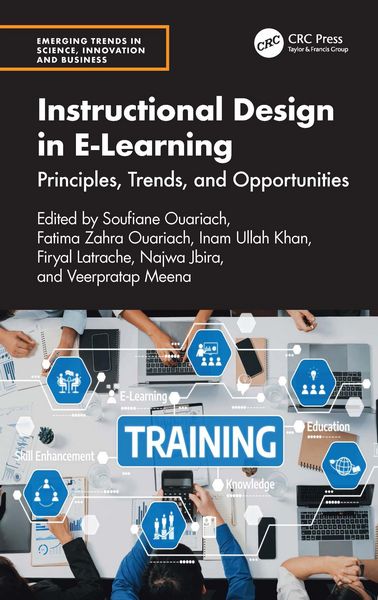
Instructional Design in E-Learning Principles, Trends, and Opportunities
-
- Einzelkauf Download ausgewählt
-
Sprache:Englisch
237,50 €
inkl. gesetzl. MwSt.Beschreibung
Produktdetails
Format
Kopierschutz
Nein
Family Sharing
Nein
Text-to-Speech
Nein
Erscheinungsdatum
24.07.2026
Herausgeber
Soufiane Ouariach + weitereVerlag
Taylor & Francis eBooksSeitenzahl
352 (Printausgabe)
Dateigröße
12517 KB
Auflage
1. Auflage
Sprache
Englisch
EAN
9781040855324
This comprehensive guide examines the restructuring of instructional design principles and practices for digital learning environments. It combines established pedagogical principles with the latest technological innovations to help practitioners create effective, learner-centered online experiences.
The volume grounds its recommendations in foundational instructional design models, including ADDIE, TPACK, and the Community of Inquiry framework, to demonstrate how these approaches are being reconfigured for digital transformation. It explores multimedia learning design through Cognitive Load Theory, Dual Coding Theory, and Mayer's Cognitive Theory of Multimedia Learning, offering guidance on optimizing the integration of text, images, audio, video and interactive elements. The text presents architectural frameworks for flipped classrooms using Small Private Online Courses and examines the integration of synchronous and asynchronous modalities in blended higher education. Accessibility is addressed through Universal Design for Learning and Web Content Accessibility Guidelines implementation strategies, while emotional design principles illustrate the creation of meaningful learner-content connections. The volume explores emerging technologies, including GenAI integration within learning management systems for personalized feedback and intelligent tutoring, AI-driven adaptive learning systems, and virtual reality and augmented reality applications that foster embodied cognition and situated learning across disciplines, from medical education to historical reconstruction.
This collection is designed for instructional designers, educational technologists and faculty members seeking evidence-based strategies for digital course development. It will help graduate students, curriculum developers, and policymakers in promoting equitable access to quality online education.
Noch keine Bewertungen vorhanden
Verfassen Sie die erste Bewertung zu diesem Artikel
Helfen Sie anderen Kundinnen und Kunden durch Ihre Meinung.
Kurze Frage zu unserer Seite
Vielen Dank für Ihr Feedback
Wir nutzen Ihr Feedback, um unsere Produktseiten zu verbessern. Bitte haben Sie Verständnis, dass wir Ihnen keine Rückmeldung geben können. Falls Sie Kontakt mit uns aufnehmen möchten, können Sie sich aber gerne an unseren Kund*innenservice wenden.
zum Kundenservice