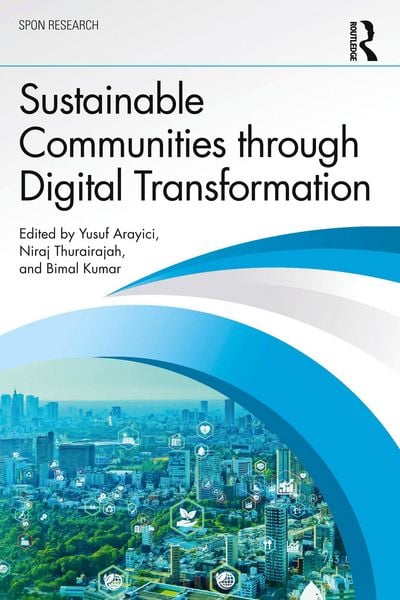
Sustainable Communities through Digital Transformation
-
- Hardcover
- Taschenbuch ausgewählt
- eBook
-
Sprache:Englisch
63,99 €
inkl. gesetzl. MwSt.,
Beschreibung
Produktdetails
Einband
Taschenbuch
Erscheinungsdatum
20.07.2026
Abbildungen
schwarz-weiss Illustrationen, Raster,schwarz-weiss, Zeichnungen, schwarz-weiss, Tabellen, schwarz-weiss
Verlag
Taylor and FrancisSeitenzahl
428
Maße (L/B/H)
23,4/15,6/2,4 cm
Gewicht
646 g
Auflage
1. Auflage
Sprache
Englisch
ISBN
978-1-03-246204-2
This book brings together cutting-edge exploratory research findings to show how a vision for sustainable communities can be enabled by digital transformation. It attempts to apply existing knowledge about digital transformation and sustainable communities and compare, interpret, diagnose, and evaluate a variety of digital solutions to ascertain their suitability for the delivery of a more sustainable built environment. Chapters examine a breadth of issues including how digital transformations could: Provide digital/physical working/living environments that anticipate emerging lifestyles Blend digital engagements into the physical engagements within the built environment Support business and social activity in physical and online venues Use advanced information and community-oriented technologies for efficient management of urban services Promote sustainability Express narratives that celebrate the experience of place and community Leverage transformation of educational systems Foster linkages between universities, and between universities and businesses Facilitate working relationships among small and large companies Foster new processes and arrangements for innovation in the built environment By comparing the key principles of digital transformation with those of sustainable communities, the contributors seek to justify or discount the applicability of digital change for achieving more sustainable communities. The research presented in this book is essential reading for architecture, urban planning, quantity surveying, building surveying, real estate, and construction management professionals and academics.
Noch keine Bewertungen vorhanden
Verfassen Sie die erste Bewertung zu diesem Artikel
Helfen Sie anderen Kundinnen und Kunden durch Ihre Meinung.
Kurze Frage zu unserer Seite
Vielen Dank für Ihr Feedback
Wir nutzen Ihr Feedback, um unsere Produktseiten zu verbessern. Bitte haben Sie Verständnis, dass wir Ihnen keine Rückmeldung geben können. Falls Sie Kontakt mit uns aufnehmen möchten, können Sie sich aber gerne an unseren Kund*innenservice wenden.
zum Kundenservice