Gutscheinbedingungen

**Gültig bis 12.08.2026 auf fremdsprachige Bücher online auf thalia.at und in der Thalia App. Einzelne Artikel können ausgeschlossen sein. Ausgenommen sind preisgebundene Artikel & eBooks. Pro Einkauf einmal einlösbar. Click & Collect nur bei Onlinevorabzahlung möglich. Keine Barauszahlung. Nicht kombinierbar mit anderen Aktionen und Gutscheinen. Gutschein wird auf max. 500€ Bestellwert angerechnet. Nicht gültig für Geschenkkarten, Versandkosten und Services.

Produktbild: Omics and System Biology Approaches for Delivering Better Cereals
Neu

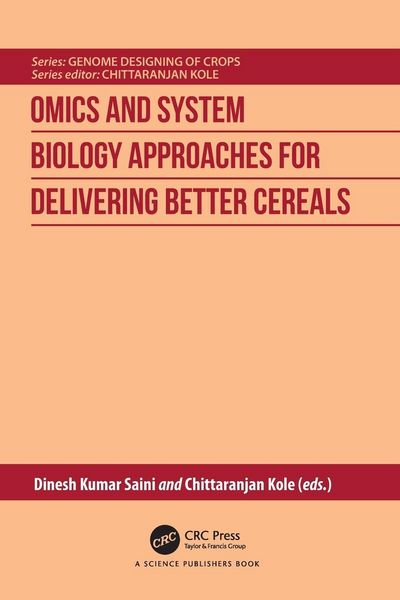
Omics and System Biology Approaches for Delivering Better Cereals

86,99 €

inkl. gesetzl. MwSt., Versandkostenfrei


Beschreibung

Produktdetails

Einband

Taschenbuch

Erscheinungsdatum

20.07.2026

Abbildungen

schwarz-weiss Illustrationen, farbige Illustrationen, Raster,schwarz-weiss, Raster, farbig, Zeichnungen, schwarz-weiss, Zeichnungen, farbig, Tabellen, schwarz-weiss

Herausgeber

Dinesh Kumar Saini + weitere

Verlag

Taylor and Francis

Seitenzahl

452

Maße (L/B/H)

23,4/15,6/2,3 cm

Gewicht

630 g

Sprache

Englisch

ISBN

978-1-03-269335-4

Beschreibung

Portrait

Dinesh Kumar Saini, a post-doctoral research associate in the Department of Plant and Soil Science at Texas Tech University, Texas, USA, has significant research expertise in Plant Breeding, Genomics, Crop Biotechnology, and Physiology. He earned his Bachelor of Science (Agriculture) and Master of Science (Genetics and Plant Breeding) degrees from Chaudhary Charan Singh University, Meerut, Uttar Pradesh (India). He has qualified for several national level exams (in India), including ICAR-SRF and ASRB-NET in Plant Breeding and Genetics, as well as GATE in Life Science. During his Ph.D. program at Punjab Agricultural University in Ludhiana, Punjab, he was also awarded prestigious fellowships such as DST-INSPIRE and ICAR-SRF. He has received a number of medals, including the Chancellor Silver Medal, Vice-Chancellor Gold Medal (twice), University Gold Medal in Crop Improvement and Protection, Dr. M.S. Randhawa Medal, Best Research Scholar Award(s), Student of the Year Award, etc. He has co-authored more than 40 articles published in high impact factor journals. Further, he has co-authored 13 book chapters, 8 popular articles, and 25 abstracts and contributed to two international annual wheat newsletters. He is also continuously involved in reviewing the articles for more than 20 reputed journals. He is a member of several professional societies including Crop Science Society of America, American Society of Agronomy, Society for Advancement of Wheat and Barley Research, Indian Society of Genetics and Plant Breeding, Bioinformatics Club for Experimenting Scientists. Additionally, he is actively engaged in serving reputed journals, such as The Plant Phenome Journal, BMC Genomics, and Frontiers in Plant Science, in various editorial capacities.

Prof. Chittaranjan Kole is an internationally reputed scientist with an illustrious professional career spanning over forty years and original contributions in the fields of plant genomics, biotechnology, and molecular breeding leading to the publication of more than 160 quality research articles. He has edited over 190 books for the leading publishers of the world including Springer Nature, Wiley-Blackwell and Taylor and Francis Group. His scientific contributions and editing acumen have been appreciated by seven Nobel Laureates including Profs. Norman Borlaug, Arthur Kornberg, Werner Arber, Phillip Sharp, Günter Blobel, Lee Hartwell and Roger Kornberg. He has been honored with a number of Fellowships, Honorary Fellowships, and national and international awards including the Outstanding Crop Scientist award conferred by the International Crop Science Society. He was awarded with the Raja Ramanna Fellow by the Department of Energy, Government of India. He has served at all prestigious positions in academia including as Vice-Chancellor of Bidhan Chandra Krishi Viswavidyalaya, Project Coordinator of Indo-Russian Center of Biotechnology in India, and Director of Research of Institute of Nutraceutical Research of Clemson University, in USA. He worked also in the Pennsylvania State University and Clemson University as Visiting Professor. He has been heading the International Climate-Resilient Crop Genomics Consortium, International Phytomedomics and Nutriomics Consortium and Genome India Internationalas their Founder President. He is also the Founder Chairman of Prof. Chittaranjan Kole Foundation for Science and Society.

Produktdetails

Einband

Taschenbuch

Erscheinungsdatum

20.07.2026

Abbildungen

schwarz-weiss Illustrationen, farbige Illustrationen, Raster,schwarz-weiss, Raster, farbig, Zeichnungen, schwarz-weiss, Zeichnungen, farbig, Tabellen, schwarz-weiss

Herausgeber

Verlag

Taylor and Francis

Seitenzahl

452

Maße (L/B/H)

23,4/15,6/2,3 cm

Gewicht

630 g

Sprache

Englisch

ISBN

978-1-03-269335-4

Herstelleradresse

Libri GmbH
Europaallee 1
36244 Bad Hersfeld
DE

Email: GPSR Kontakt

Noch keine Bewertungen vorhanden

Verfassen Sie die erste Bewertung zu diesem Artikel

Helfen Sie anderen Kundinnen und Kunden durch Ihre Meinung.

Kundinnen und Kunden meinen

Bewertungen (0)

Die Leseprobe wird geladen.
  • Produktbild: Omics and System Biology Approaches for Delivering Better Cereals
  • Series Preface. Preface. Omics and System Biology for Developing Climate-ready Cereals: An Overview. Databases: A Tool in the Bioinformatics Armory for Cereals Research. Genomes, Pangenomes, and Super Pangenomes of Cereals: How to Translate the Generated Information into Genetic Gains. QTL omics-based Genetic Dissection of Key Traits in Major Cereals: Challenges and Prospects. Potential Applications of CRISPR/Cas9 Mediated Genome-Editing Approaches in Improvements of Cereals. Advancements in Functional Genomics in Exploring Abiotic Stress Tolerance Mechanisms in Cereals. MicroRNA-mediated (Micromics) Approaches to Unravel the Molecular Mechanisms Underlying Stress Tolerance in Cereals. Breeding Climate-smart Cultivars: Can Transcriptomics Enable Strategic Cereal Breeding? Proteomics and Cereals Breeding: Current Progress and A Look Ahead to the Next Decade. Plant Metabolomic Profiling to Better Understand Biotic and Abiotic Stress Resistance in Cereals. Epigenomics for Abiotic Stress Tolerance in Cereals. Multi-omics Assisted Breeding in Cereals: Applications and Challenges. Utilizing Advanced Omics Approaches for Extricating the Hidden Genetic Variability from Wild Repository for Reviving Genetic Gains in Cereals with Major Emphasis on Rice. Establishing the Proper Links: Network-based Techniques for Comprehending Gene Functions in Cereals. Index. About the Editors.